Left out in the cold

Published 15th July 2021

Doctors of the World (DOTW) has released a recording of the webinar Left out in the cold: The extreme unmet health and service needs of street sex workers in East London before and during the COVID-19 pandemic.

This webinar follows the publication of a report of the same name, written by Rachel Stuart from the University of Kent, and Pippa Grenfell, from the London School of Hygiene and Tropical Medicine (LSHTM).

Hosted by Amardeep Kamboz, Head of Services at DOTW, and the webinar features an expert panel consisting of report authors Rachel Stuart and Pippa Grenfell, as well as Melanie Rosario, a former homeless street worker with experience of having worked as a sex worker in Newham, and Lucy Platt, who is a researcher from LSHTM.

This report was prompted by our awareness of the cuts over the last few years which are affecting a broad range of healthcare services, specifically specialist sex worker services throughout London.

As an organisation, DOTW is interested in identifying gaps in support for people excluded from healthcare and other services, and so began conversations with partners, including colleagues at LSHTM, to see how we could broaden our understanding of this issue, and to understand better what sex workers were asking for in terms of support.

The relocation of the DOTW clinic to Newham two year ago was one of the reasons we chose to look at this borough, but we’re aware that cuts to services have had an impact in many other places across London, and throughout the country.

The webinar presents the key findings and recommendations from the report, as well as a question-and-answer session with the panel of experts.

Beyond the production of the report, Left out in the cold: The extreme unmet health and service needs of street sex workers in East London before and during the COVID-19 pandemic, DOTW supports sex workers through our drop in clinic in Stratford.

DOTW has also supported other sex worker support services such as Open Doors and CLASH over the years by joining them on outreach, or running outreach sessions at their clinics.

Watch the Left out in the cold: The extreme unmet health and service needs of street sex workers in East London before and during the COVID-19 pandemic webinar

Read the executive summary: Left out in the cold: The extreme unmet health and service needs of street sex workers in East London before and during the COVID-19 pandemic

Read the full report: Left out in the cold: The extreme unmet health and service needs of street sex workers in East London before and during the COVID-19 pandemic

Welcome to the normal of an undocumented migrant – Joseph’s story

Published 17th June 2021

This Refugee Week, Doctors of the World are introducing the members of its National Health Advisors. This advisory group is made up of people with lived experience of migration and healthcare exclusion, with the aim of ensuring that migrants have a greater influence over healthcare policy and practice.     

Joseph is one of the DOTW National Health Advisors, and he wants to share his story with you. 
– 
In March 2020, I had some severe symptoms of COVID-19. I was struggling to breathe so I phoned 111 and was told to go to A&E. When I arrived, I saw a big sign outside and inside the A&E saying that you need to pay your health surcharge if you are a migrant, or you should have the right to use the NHS.  

In my whole life I have never had breathing problems like I started to have that day. 

At the entrance there was a triage nurse, who made sure everyone was wearing a mask and she decided where all the patients went. Some went to the children’s ward, others went straight past the waiting reception area and were admitted right away, I was told to wait in the reception area of A&E. 

I was told to wait in an isolated area in the reception area of A&E, where only those suspected COVID-19 patients were waiting. After waiting a few hours in that isolation area where suspected COVID-19 patients wait, I was seen by the doctor, then held for observation for eight hours.  

No COVID-19 test was done because they were only for patients who were fully admitted with severe COVID-19 symptoms. Indeed, I did see others getting admitted because their breathing and coughing was much worse than mine. They were walking, but only just, I was more able to walk than them. 

After the doctor was satisfied that I was unlikely to get worse, I was given some tablets to take, and I quickly took them. The doctor told me what they were, but I have forgotten what they were. He also gave me some to take home with me, then he told me to present it to the reception.  

The reception then asked me for proof of whether I am entitled to NHS care. As an asylum seeker I had an Application Registration Card (ARC) and I presented it along with my HC2 certificate. 

On reflection, as far as I am concerned, the signs in the A&E and the attitude from the receptionist was clearly indicating that if you don’t have an immigration status, they likely have no business with you even if you are ill with COVID-19. 

The law might have been changed around COVID-19 testing and treatment being free, but the attitude and culture of some in the NHS has not changed. If I was undocumented, I could have turned back and maybe I wouldn’t be able to get the healthcare I needed.  

When I was undocumented, I was turned away from a GP practice more than twice when I tried to register whilst I was ill, because they asked for a passport and proof of residence. I was struggling physically and mentally. I put on a lot of weight, my back was killing me, and I had suicidal thoughts. I hadn’t had a check-up for a lot of years.  

When I was an asylum seeker, I was able to show my ARC to show that I am in the immigration system. Unfortunately, even with this card, the process of registering with a GP was not sympathetic and easy. The staff at the GP surgery almost didn’t know what an ARC was, they wanted to see my ARC, proof of address and they asked me a bunch of questions, which also made me feel like I was going through another immigration check.  

When the lockdown came, many people found it difficult, yet I was used to being in lockdown when being undocumented and when seeking asylum. I simply said, “Welcome to my normal. Welcome to the normal of an undocumented migrant or to the normal of an asylum seeker. You will not be the same at the end of it.” 

The COVID-19 symptoms lasted for some six months, and I have nearly completely recovered from them. 

Joseph – DOTW National Health Advisor 

If you want to find out more about the work of our National Health Advisors, please visit our teams page, and to support DOTW, you can visit our website. If you want to find out more about the DOTW clinic, you can here. 

DOTW clinic reopens

Published 15th June 2021

Doctors of the World Clinic in East London, is now open on Tuesdays and Thursdays from 10am. There will be a limited number of drop-in appointments on the day.

If the clinic reaches capacity, service users will be turned away or signposted to alternate providers. We will priortise offering our limited appointments to:

• People experiencing homelessness;

• People facing digital exclusion (no access to phone etc needed for remote consulting);

• People with safeguarding concerns or concerns regarding their social situation;

• People with an acute medical need.

To avoid a wasted journey, wherever possible, please call the advice line to book an appointment.

0808 164 7686 (free phone) Tuesdays to Thursday from 10am-12pm

Please note that the service will be running with limited staff and volunteer capacity, so there may be days where the clinic will remain closed on Tuesdays and Thursdays.

If you have Coronavirus symptoms, or have a positive test result., head straight home and avoid public transport if possible. Once home, order a free PCR test and follow the advice at nhs.uk/coronavirus or call 119.

If you are worried about the symptoms get help from NHS 111 at 111.nhs.uk

In any emergency, please call 999 or attend the nearest Accident and Emergency.

Why we care – Meet the DOTW National Health Advisors

This Refugee Week, Doctors of the World are introducing the members of its National Health Advisors, an advisory group of people with lived experience of migration and healthcare exclusion, to ensure migrants have a greater influence over healthcare policy and practice.

Migrants with lived experience of health exclusion know the negative impact of policies and services that don’t include them, and their voice and insights should be at the centre of changing perspectives among the general public, as well as playing an essential role in ensuring that DOTW takes well-informed decisions and provides inclusive services. Their voices will drive sustainable, systemic policy change in healthcare.

The launch of the National Health Advisors aligns with DOTW’s strategic objective to “strengthen our movement with greater numbers of healthcare professionals, activists and service users who together support and set the direction of the organisation”. In line with this objective, our approach will be to “work hand-in-hand with those benefiting from our services, advocacy or activism.”

National Health Advisors work as an equal partner in the project, bringing their voices, views and insights to our services, policy influencing and strategic engagement work, and media work and campaigns.

Meet DOTW National Health Advisors.

Abie is one of the new DOTW National Health Advisors, and she took on the role to make a difference.

“I joined the DOTW National Health Advisors because I want to make a change, and because of the way migrants are treated.” Abie continued, “my dream is to see all refugees and asylum seeker being treated as equal.”

She believes Refugee Week can shine a light on the immense contribution that refugees make to society here in the UK. “Being a refugee is like going on a journey where you don’t know the destination. I think Refugee Week is an umbrella under which we can celebrate refugees’ contribution to the UK and promote better understanding between different communities and encourage successful cohesion with the community.”

The theme for this year’s Refugee Week is We Cannot Walk Alone, which is “an invitation to extend your hand to someone new. Someone who is outside your current circle, has had an experience you haven’t, or is fighting for a cause you aren’t yet involved in”.

Abie said of this, “the theme for this year has a lot of meaning to me as I have been able to meet and make friends through the National Health Advisors and also I have found out how I can help other people to know how they can access their GP.”

When DOTW National Heath Advisor Chantelle made her own refugee journey, she was not alone, and she wants to pass on her experiences during this Refugee Week, and beyond, to others.

“When it was my refugee journey I didn’t walk alone, I walked with DOTW, the Red Cross, Women for Refugee Women,” Chantelle said. “This journey is not meant for one person. Walking with my fellow refugees inspired me so much, and making a difference to them to continue this journey fulfils me more than anything.

“It is obvious that we cannot walk alone. We can’t afford to walk alone.”

The chance to help others through her role as a National Health Advisor has also given Chantelle the opportunity to make friends and feel supported in the UK.

“Being a National Health Advisor helps me a lot to connect with everybody. The crew I am working with is just an amazing bunch of sweethearts. Same ambition, same goal, it is just a pact. Having meetings from time to time with the National Health Advisors is therapeutic in a way for me as I have still ongoing health issues up and down. It helps me so much to connect, it is a kind of spiritual feeling for me.”

Chantelle believes that everyone has a part to play in helping refugees feel more welcome when they arrive in the UK. She believes that there are some simple and practical things that everyone can do to show that they stand with, and support, refugees.

“Go online, read more about what we do as National Health Advisors, read more about organisations like DOTW. Each and every service in the UK could have information for people in the immigration system, to tell them how to go about everything.

“We need to have more content on social media about helping migrants, organising events to let others know how they can give help to people trying to make this country their home. We did have information and there were people on the ground to assist us… we need to make sure that information reaches everybody, and everybody understands what it means to be a refugee.”

If you want to find out more about the work of Abie, Chantelle, and our other National Health Advisors, please visit our NHA team page, and to support DOTW, you can visit our website.

Putting migrant voices at the heart of our organisation

Published 14th June 2021

This Refugee Week, Doctors of the World are introducing the members of its National Health Advisors, an advisory group of people with lived experience of migration and healthcare exclusion, to ensure migrants have a greater influence over healthcare policy and practice.    

Migrants with lived experience of healthcare exclusion know best the impact of policies and services that affect and are available to them. Their voices and insights should be at the centre of changing attitudes among the general public, making well-informed decisions, ensuring services are inclusive, and driving sustainable policy change in healthcare. 

The launch of the National Health Advisors aligns with our strategic objective to “strengthen our movement with greater numbers of healthcare professionals, activists and service users who together support and set the direction of the organisation”. In line with this objective, our approach will be to “work hand-in-hand with those benefiting from our services, advocacy or activism”. 

National Health Advisors work as an equal partner in the project, bringing their voices, views and insights to DOTW’s services, policy influencing and strategic engagement work, media, and campaigns. 

Some key achievements of the National Health Advisors since it started in 2020, include: 

  • Developing and delivering a training module on the right to healthcare for migrant groups. 
  • In the first 10 months, the National Health Advisors co-produced a training module and delivered nine sessions to 111 migrants.  
  • Engaging with DOTW teams, NHS England and Public Health England. 
  • In the first 10 months, the National Health Advisors attended 10 external meetings and 13 contributions in different formats done; for example, speaking at NHS England-led webinars and conferences about effective communication and meaningful engagement between health professionals and migrant patients, and joining a focus groups with Public Health England and NHS England to shape COVID-19 guidance and to modernise GP registration. 
  • Joining recruitment panels and supporting the inclusive employment of new staff. 
  • Speaking to the media about challenges accessing healthcare during COVID-19. 
  • Contributing to research reports: 
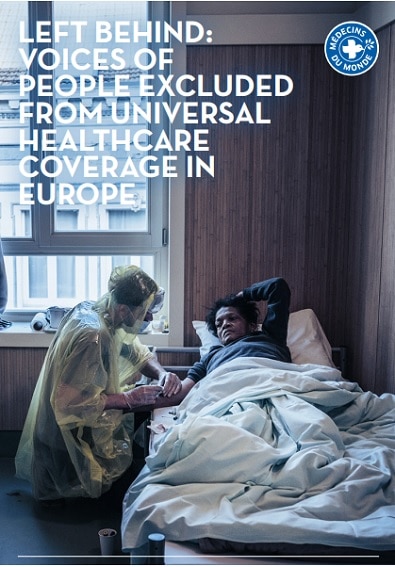
Left Behind: Voices of people excluded from universal healthcare coverage in Europe

Left Behind: Voices of people excluded from universal healthcare coverage in Europe 

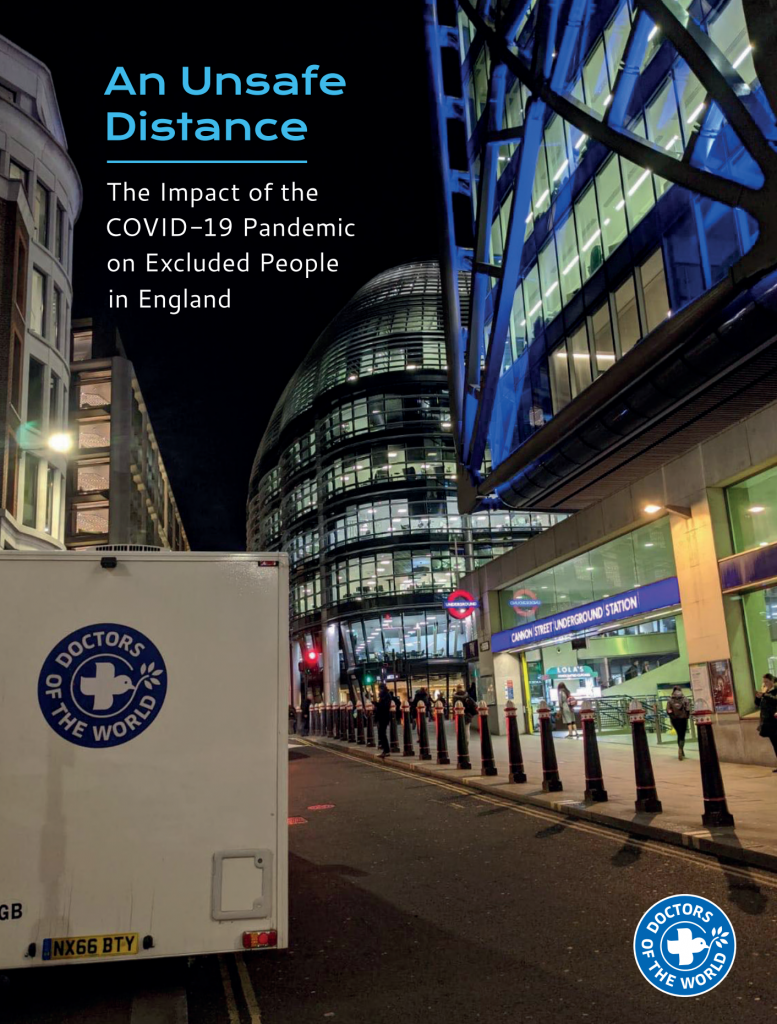
A Rapid Needs Assessment of Excluded People in England during the 2020 COVID19 pandemic.

A Rapid Needs Assessment of Excluded People in England During the 2020 COVID-19 Pandemic 

If you want to find out more about the work of our National Health Advisors, please visit the team’s page, and to support DOTW, you can visit our website.  

“There’s so much deprivation on your doorstep”: The volunteers tackling health inequalities, one phone call at a time

Published 28th May 2021

“I think volunteering at Doctors of the World really humbles me because I’ve had access to healthcare all my life. But to see how difficult it is for some members of the population in this country, it’s an eye-opening experience… there’s just so much inequality and so much deprivation on your doorstep.”

Ga Kitada is a fourth-year medical student at Barts and The London School of Medicine and Dentistry in London. He’s also a Doctors of the World UK (DOTW) volunteer.

During Volunteers’ Week, June 1-7, we’re honouring Ga and some 100 others who selflessly give their time to DOTW and keeping our clinics and advice line running.

Clinic and Helpline Lead, Rita D’Alessio said volunteers are at the heart of the organisation.

“We are grateful and privileged to work with such a beautiful team made up of amazing people who donate their time and expertise to support people to access mainstream healthcare,” she said.

“The service would not exist without our volunteers!”

Ga Kitada is a medical student and DOTW volunteer.

Ga first joined DOTW as a clinic support worker during a student placement in 2018 and has continued to volunteer as a caseworker during the COVID-19 pandemic.

The medical student said his time at DOTW has given him more of a holistic understanding of everything that underpins individuals’ health.

It has also inspired a passion for ensuring access to healthcare for undocumented migrants, who make up the majority of DOTW’s patients.

“I feel a certain connection as someone who’s not from this country, who, arriving 11 years ago, didn’t speak much English and found it really disorientating,” said Ga, who emigrated to the UK from Japan when he was a child.

“I found that connection with the experience of the migrants (DOTW supports). Obviously, their experiences are a lot more difficult than mine – I went to a good school, I had all those opportunities, and it doesn’t compare in any way to the experience of a migrant, but I felt a certain connection I think.”

There are many reasons why a person may become undocumented, for example, their asylum claim may have been unsuccessful, or they can’t afford to renew their visa.

While often members of our local communities, undocumented migrants still face exclusion from regular services and so experience health inequalities.

Sheila Doctors of the World Volunteer
Retired nurse Sheila Goff has been volunteering with DOTW since 2016.

“The stories I hear, it feels that they’ve been through so much and are coping with systems that are so opaque sometimes and so difficult to get your head around,” said Sheila Goff, a retired nurse with 35 years’ experience.

“Even if you’re a native of this country it’s sometimes incredibly difficult to get access to things. But for people, service users that we see, they’ve very often been through so much and hit so many brick walls with people either refusing to help them or not listening to their story.

“I think at Doctors of the World, we can provide an opportunity to hear them. Of course, we’re not always able to help, but it’s quite powerful I think for people to be able to be heard, properly heard.”

Sheila first joined the clinic in 2016 and has been volunteering ever since. She said she enjoys the supportive environment and dynamic nature of DOTW.

“I think that’s exemplified by how they so quickly got to grips with going online when all this pandemic broke, it was really impressive but that’s typical I’ve found of them,” she said.

“There seems to be such a can-do attitude to really trying to do everything that they can to help some of the most vulnerable and dispossessed people in our society. That’s what drives me.”

I think at Doctors of the World, we can provide an opportunity to hear them. Of course, we’re not always able to help, but it’s quite powerful I think for people to be able to be heard, properly heard.

Sheila Goff, Doctors of the World volunteer

For Isabelle Pereira, it’s the chance to empower people in vulnerable situations to exercise their basic human right to health, and access to healthcare.

“They can be in a very dark place… and they need to be helped, to be supported to get out of that dark place,” she said. “I think they appreciate the friendly face, the friendly smile… and not being judged.

Isabelle Pereira  Doctors of the World Volunteer
DOTW volunteer Isabelle Pereira.

“Basically, they feel safe when they are in the clinic, or when they talk to us, so it’s nice to support people who have lost their hope or lost trust in the system.

“The first day, it’s a lot to take in, to learn all the systems and all that stuff, but it’s really rewarding to help people to get access to basic primary care.”

Volunteers played a vital role in helping DOTW transition to a fully remote, national service at the start of the pandemic as COVID-19 forced the temporary closure of the East London clinic.

Through three national lockdowns, they have kept the clinic and advice line running, and service users and communities safe.

“We can’t thank our volunteers enough for their support and hard work this past year,” said Rita.

“The Doctors of the World clinic team had to swiftly adapt the services to operate remotely, and our volunteers have worked so hard to make this happen and quickly adjusted to a new way of delivering the service. They have been brilliant, and we wouldn’t have made it without them!”

Tiva, Doctors of the World volunteer
Our advice line is the first point of call for our service users, who are among the most marginalised groups in the country.

Of DOTW’s 100 volunteers, 25 are currently supporting the clinic via the advice line, casework, remote GP consultations and post-natal follow ups.

In addition to providing remote consultations and advice on the right to healthcare in the UK, our volunteer doctors, nurses and caseworkers now screen patients for COVID-19, offer information on government guidance in the service user’s language, and explain how to access COVID-19 tests and vaccines.

They have also helped service users access food via foodbanks and mutual aid groups as the pandemic led to job losses and plunged already vulnerable people into further poverty and destitution.  

We can’t thank our volunteers enough for their support and hard work this past year.

Rita D’Alessio, Clinic and Helpline Lead

Ga, Sheila and Isabelle all agreed COVID-19 has created huge challenges, both for service delivery and service users.

“You really miss the face-to-face communication. I find it really hard on the phone and it’s made me realise how much we do communicate with all of ourselves, seeing expressions and just seeing how people are looking and whether they are looking very thin, hungry, tired, those sorts of things. I think it’s hard to get a sense of how people are (over the phone),” she said.

The rapid shift to digital health – not just at DOTW but across all health services in the UK – has left some of those without the skills or means to access it cut off from vital care and support.

Digital exclusion was a key finding of DOTW’s COVID-19 Rapid Needs Assessment, which looked at the impact of the first lockdown on excluded groups in England, such as asylum seekers, undocumented migrants, Travellers and sex workers.

“There had already been massive inequalities to do with accessing healthcare and the NHS, particularly with the rhetoric of the hostile environment, secondary care charging, Home Office data sharing, etc.,” said Ga. “But with COVID-19, I think the barriers have just deepened significantly… barriers to accessing digital health is a huge issue.

“For some migrants who are on the verge of destitution or who are destitute, trying to make an appointment for a remote consultation at a GP practice is actually a huge undertaking because… they have barely any phone credit because they’re so deprived.

The key findings from Doctors of the World’s COVID-19 Rapid Needs Assessment.

“A lot of our work as caseworkers I think nowadays is just going back and forth sometimes between GP surgeries and service users trying to arrange phone consultations. On the digital divide as well, the language barrier that was always a problem for access has just gotten worse.”

DOTW will soon reopen the East London clinic to ensure everyone can access our services, while continuing to offer remote GP consultations and run the national advice line.

This will be essential for ensuring access to COVID-19 services, including vaccination, for a patient group that is often too scared to get medical help – even when they are fully entitled to it.

“Usually when people first contact us on the advice line… they are desperate, they are very fearful, even fearful of telling us their name or details, address, etc., and fearful of accessing services in the NHS,” said Ga.

Years of charging migrants for healthcare and sharing patient data with the Home Office have eroded trust between the NHS and migrant communities, creating a situation where patients don’t trust nurses and doctors and avoid healthcare services.

They (patients) can be in a very dark place… and they need to be helped, to be supported to get out of that dark place

Isabelle Pereira, Doctors of the World volunteer

Sheila said helping service users to understand the system and their rights, then supporting them to access NHS services is hugely reassuring for them.

“It does make a big difference hooking people into the system,” she said.

“I still believe that the NHS and the healthcare system is very good in this country. The vast majority of people working in it are fantastic and they want to give very good care, it’s just if people can’t access it, they can’t do it.

“So, it’s really important that we keep trying to push that.”

DOTW has been fortunate to have the support of many generous individuals who have selflessly given their time and/or money to keep the clinics and advice line running.

It’s thanks to our volunteers and donors that the organisation has been able to continue ensuring access to healthcare throughout COVID-19.  

Ga had a message for our supporters: “It would be an understatement to say this past year has been a hugely challenging year and the inequalities that the migrant population face, and the barriers to accessing healthcare have just widened and widened.

“Without having the support of the donors and being able to deliver these kinds of charity initiatives, many, many more people will suffer.

“I hugely admire the mission of DOTW and its will to make a difference and I think it’s thanks to the donors that we can do this and it’s something that I hope DOTW can continue to do and develop in many different directions in the coming years.”

If you would like to support our work, please consider making a one-off donation or signing up for a monthly gift – every £1 makes a difference.

To find out more about volunteering at Doctors of the World, visit the Jobs and Volunteering page.

Video: See inside Doctors of the World’s new mobile medical clinic

Published 9th April 2021

Doctors of the World (DOTW) is committed to going where others won’t, to provide life-saving medical care and support to excluded communities.

We recently took delivery of a second mobile doctor’s clinic, which will help our outreach staff and volunteers reach even more people in need.

In this short clip, Outreach Coordinator Fatima gives a tour of the custom-built van.

Converted by Stanford Coachworks, the van contains everything our mobile clinic team needs to provide basic medical care on the road.

Being mobile means our staff and volunteers can go directly to communities that may be scared or unable to visit a GP.

As you’ll see, the van is kitted out and ready to roll. But we need your help to get it on the road, which is why we’ve launched the Mobile Medics Appeal.

Mobile Clinic Coordinator Dr Durga Sivasathiaseelan at work inside the new mobile clinic.

With each clinic session costing around £1,200, any gift you can make would be a huge help towards the running costs.

Help us put the brakes on poor access to healthcare and reach even more people in need by supporting the Mobile Medics Appeal.

Doctors of the World launches project to improve access to COVID-19 vaccines

Published 4th February 2021

Doctors of the World UK (DOTW) has launched a project to ensure that everyone in the UK has access to COVID-19 vaccines, regardless of immigration status.

As well as producing translated COVID-19 information resources, DOTW will play a proactive advocacy and coordination role in the roll-out of the UK’s vaccination programme, under its new COVID-19 Vaccine Advocacy Project.

It is essential that everyone living in the UK is included in this programme, regardless of immigration status, both from a public health perspective and a moral one. But some communities face being missed in the roll-out.

At the sharp end of the pandemic

Migrants, refugees, people experiencing homelessness, sex workers, and Gypsy, Roma, and Traveller communities in the UK have been disproportionately impacted by the pandemic.

These communities are at increased risk of contracting the virus, experience worse health outcomes, and face more barriers to healthcare services than the general population, as highlighted in various reports, including DOTW’s COVID-19 Rapid Needs Assessment.

However, the UK Government’s efforts to include these communities in public health measures and social safety nets have been woefully inadequate.

Tackling barriers to GP registration

As the roll-out of vaccines will be predominately via primary care, it is essential that everyone living in the UK is registered with a GP.

However, there are well-documented issues with GP registration for people subject to immigration control and other marginalised populations and the pandemic has only created additional challenges.

Fear of charging and data sharing, lack of trust in statutory agencies, and a glaring absence of translated information are all issues that are repeatedly raised by patients and the charities and services that support them.

We are pleased there will now be a renewed push by NHS England to get everyone registered with a GP through new resources for both patients and practices. But the issue is complex and the communities we work with are often hard to reach.

DOTW is particularly concerned that those with underlying vulnerabilities, which should make them eligible for early phases of the vaccine, will be missed.

Ensuring equal vaccine access

Over the next 12 months, DOTW will work with excluded populations and the sector to influence the UK’s vaccination programme and ensure equal access to vaccines.

This will be done by drawing on links with clinicians and migration and health organisations, and the experiences of patients accessing DOTW’s clinical services.

We will do this in three ways:

  1. Producing a regular briefing on how the vaccine is being rolled out in the UK and access challenges experienced by excluded populations. The briefing will include recommendations for change and propose workable solutions for service providers.
  2. Working with migrant communities and the sector to influence vaccine roll-out policy and plans.
  3. Producing translated COVID-19 information for migrant and other excluded communities. This will include public health materials around vaccination, as well as reinforcing messages about public health measures, test and trace, and access to healthcare.

If you’d like to receive an email whenever our translated resources and policy briefing are updated, please sign up using the link below:

For more information on vaccine entitlement and rollout in England, read DOTW’s latest COVID-19 Vaccine Policy Brief.

This briefing outlines in more detail vaccine entitlement in England and the barriers excluded groups face.

If you’re a healthcare provider involved in vaccine delivery, see our advice on tailored outreach vaccination delivery services for socially excluded groups in the UK.

This briefing presents our recommendations for delivering tailored outreach vaccination servicers to socially excluded groups.

Five ways you can help people access healthcare (and feel good) during Lockdown 3.0

Published 15th January 2021

England is in lockdown again. With the constant upheaval and uncertainty, it’s easy to feel powerless and overwhelmed.

That’s why we wanted to let you know how Doctors of the World is responding and what you can do to help people who will need to see a doctor during this time.

With many businesses closed and health services under pressure amid rising COVID-19 cases, it’s even harder for the most vulnerable and at-risk people in our communities to access healthcare and support.

Doctors of the World’s services will continue to operate as they have done since March. The advice line will remain open and our clinic team will be on hand to answer questions and support patients to access NHS services.

We’ll also provide medical outreach to at-risk communities in London throughout Lockdown 3.0 and continue to look at new ways to support migrant communities across the UK with translated health information.

Together with the Hands Up for Our Health coalition, Doctors of the World will continue to call for universal and equitable access to the NHS, during COVID-19 and beyond.

Here are five ways you can help vulnerable people access healthcare (and feel good) during Lockdown 3.0.

1. Chip in to keep our clinic and helpline running

During Lockdown 3.0, the helpline will continue to operate remotely, from 10am-midday Monday to Friday, with remote GP consultations available to those patients with urgent health needs. In September, we trialled a new clinic model that will allow our London clinic to operate safely during COVID-19 and we hope to reopen it soon. Chip in to keep our clinic and helpline running.

2. Help us ensure those most at-risk can see a doctor

Our mobile clinic team continues to provide medical outreach to rough sleepers in the City of London. During winter, this work is even more important to see who is still rough sleeping and to offer them emergency accommodation, as well as help to register with a GP and access other services. We’re also supporting asylum seekers in Home Office accommodation, where healthcare access is typically very poor. At a hotel in London, our mobile outreach coordinator Dr Durga is offering urgent health assessments and helping residents to register with a GP. Help us ensure everyone can see a doctor when they need to by letting your GP practice know about our Safe Surgeries initiative.

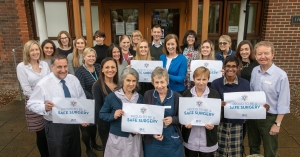
Over 300 GP practices have committed to being safe surgeries.

3. Tackle language barriers with our translated resources

We are updating our coronavirus guidance in over 60 languages and have launched a new translated patient health information hub with scrolling menus that make it easier than ever to navigate our growing library of translated resources. We will continue to update our translated resources and look at new ways to support migrant communities in the UK. You can help by sharing our translated resources with your networks and on social media.

4. Read more about the box that gives babies the best start to life

We’ve partnered with PramDepot to provide our most vulnerable mums and mums to be with emergency baby boxes. They contain high quality recycled baby clothes and equipment, delivered in a box that can then be used as a bed for the baby. Baby boxes are commonplace in Scandinavian countries and Scotland and are touted as a way to reduce the risks of unsafe co-sleeping. Read more about this new partnership and how a simple box can help children get the best start to life.

Baby boxes contain essential baby items, including a mattress so that the box can be turned into a bed for the baby. Photo courtesy of PramDepot

5. Join the campaign for our health

In October, we launched the Hands Up for Our Health campaign to call for universal and equitable access to the NHS, during COVID-19 and beyond. Our coalition continues to grow, with over 60 organisations signed up. We have three asks for the UK Government: immediately suspend the NHS charging regulations, investigate the impact of NHS charging on patient and public health, and improve access to all NHS services. Will you put your hands up for our health?

Join the campaign for our health.

Please also don’t forget to take care of you. As we face another long stretch of limited social interaction and restrictions on our movement, it’s more important than ever to take care of our mental health and wellbeing.

If you feel like you’d benefit from some tips and advice, our wellbeing guidance is free to download and available in 27 languages. Remember, you’re not alone – we’re all in this together. 

Seven moments that mattered in 2020

Published 23rd December 2020

Whatever your experience of COVID-19 has been, it’s undeniable that we and the world we live in have been altered irrevocably.

What hasn’t changed is Doctors of the World’s determination to ensure universal and equitable access to healthcare, both at home and abroad.

As we begin a new year, the pandemic continues to hit the most vulnerable in our society hardest.

Health and social inequalities have widened. New barriers to healthcare have emerged, with the rapid shift to online healthcare leaving those without the means to access it cut off from vital care and support.

Our staff, volunteers and supporters have consistently risen to these challenges, working tirelessly to ensure Doctors of the World can continue to help people in vulnerable circumstances get medical care and advice.

Here are seven moments that mattered in 2020.

1. Adapting our UK services to COVID-19

COVID-19 has challenged all of us to think differently about the way we live and work. It has also forced Doctors of the World to rethink the way we deliver our services.

In March 2020, as the UK went into lockdown for the first time, we moved quickly to adapt the east London clinic and helpline to a fully remote, national service.

DOTW’s Remote Consulting and New Projects Lead, Amardeep Kamboz, remembers the “most extraordinary” team collaboration during those trying times.

“Those first weeks were very, very challenging while we found our feet and dealt with a myriad of adjustments in our own lives,” she said. “But by six weeks in we were established, systematic and responsive, and as always offering the best services we could, and advocating for what mattered for those left most vulnerable.

“It was amazing to witness what we were achieving week by week and to be able to support our service users in such difficult times.”

Thanks to the generosity of our supporters, we continue to offer medical care and advice through remote GP consultations and a national helpline, which is open from 10am-12pm Monday-Friday.

2. Overcoming language barriers with translated health information

The UK is a multilingual society. In England and Wales over four million people speak a main language other than English with 864,000 speaking little to no English.

To stop the spread of COVID-19 and end this pandemic, it is essential that everyone receives accurate information about the virus and public health measures in place.

When the country went into lockdown in March, it quickly became clear to Doctors of the World that many communities didn’t have access to this vital information in their language.

Throughout the pandemic, we’ve been working with our partners to translate UK-wide coronavirus guidance into over 60 languages. These translated resources have been accessed over 59,000 times.

We also joined with other 20 local authorities, public health bodies and non-profit organisations to call on the UK government to produce and maintain accessible COVID-19 guidance in languages that reflect our multilingual communities.

Thanks to our partners and supporters, we’ve continued to expand our translated resources. These now include information on a wide range of health topics in a variety of formats and in up to 61 languages.

All our translated resources are available to download and share for free.

3. Highlighting the pandemic’s impact on the most vulnerable

In April, Doctors of the World carried out a rapid assessment of the circumstances and needs of communities excluded from healthcare services during the pandemic.

Working with service providers and people with lived experience, our researchers looked at COVID-19’s effect on a wide range of groups: refugees; people seeking asylum, including unaccompanied asylum-seeking children; undocumented migrants, including survivors of trafficking; people in and recently released from immigration detention; people experiencing homelessness; Gypsy, Roma and Traveller communities; sex workers; and people recently released from prison.

The key findings from Doctors of the World’s COVID-19 Rapid Needs Assessment.

They found COVID-19 and UK control measures had amplified existing inequalities and created additional barriers, further reducing these groups’ access to healthcare and services.

Sadly, many of these problems continue to persist, nine months into the UK’s COVID-19 response and seven months since the release of our Rapid Needs Assessment (RNA).

The RNA makes 12 recommendations for the UK government, the NHS, local authorities, charities, and health service providers on how to mitigate the impact of COVID-19 on these communities.

4. Helping excluded groups to access healthcare

In 2019, we launched the Mobile Clinic, a purpose-built vehicle that provides everything a GP or nurse might need for primary care consultations, as well as a private space for caseworkers to provide in-depth support to our patients.

When COVID-19 arrived and the van became too risky, our Mobile Clinic Coordinator Dr Durga Sivasathiaseelan donned PPE and hit the streets to deliver medical outreach to people experiencing homelessness in London.

St Mungo’s outreach coordinator, Eddie, and DOTW’s mobile clinic coordinator, Durga, during an outreach session in the City of London in 2020.

In June, we secured new funding from the City of London Corporation to continue this vital work for another 12 months.

In 2020, we also ran a four-week pilot project focused on improving access to healthcare for Traveller communities camped in the London Borough of Enfield and started supporting asylum seekers living in Home Office accommodation, where healthcare access is typically very poor.

We’ll continue to adapt our services to where the need is greatest.

5. Responding to emergencies

Crises didn’t stop for COVID-19 and in some countries Doctors of the World was responding to multiple health emergencies.

In 2020, the Doctors of the World network launched emergency responses to support those affected by the Beirut explosion and the fires in Moria refugee camp, which left thousands in need of medical and humanitarian assistance.

We also supported the global COVID-19 response both at home and abroad.

In July, our expert teams were fighting the pandemic in 67 countries, working to limit the spread of COVID-19 and protect the most vulnerable.

We were also able to adapt many of our existing health programmes to COVID-19, to continue supporting excluded communities and ensuring access to healthcare.

6. Cheering on Dr Nikki in the virtual London Marathon

As a non-profit organisation that doesn’t receive any funding from the UK Government, we rely on donations and community fundraising to keep our clinics and helpline running.

COVID-19 disrupted many events in 2020, including the 40th annual London Marathon. Undeterred, our London Marathon participant Dr Nikki Kanani signed up for the virtual event.

She also pledged to walk 60 miles – double the distance of the world-famous event – from her London home to Greenham Common in Newbury, where her dad spent six months in a refugee camp.

Dr Nikki Kanani (centre) with her support walkers at the start of her 60-mile walk from London to Newbury in October. Photo: Kimberley Vlasic/Doctors of the World UK

Nikki’s dad was one of 55,000 Ugandan Asians forced to flee the persecution of the country’s military dictatorship, arriving in the UK as a refugee in 1972.

“He arrived at a time which feels similar to now in some ways – toxic and divisive,” Nikki, who is a GP and NHS England’s Director of Primary Care, said in the lead up to her walk. “But I believe we can show what we are really made of, by supporting those who support others.”

On the weekend of Nikki’s walk, conditions were less than ideal. But Nikki and her supporters powered through the wind and rain to complete the 60-mile walk and her virtual London Marathon.

She raised an incredible £14,000 for Doctors of the World, which will help us to provide life-saving care and advice to refugees and other vulnerable communities over the coming year.

7. Launching the Hands Up for Our Health campaign

Our vision is a world where barriers to healthcare have been overcome, where healthcare is acknowledged as a fundamental right.

In 2020, we moved one step closer to achieving our vision with the launch of the Hands Up for Our Health campaign.

Hands Up for Our Health is a coalition of organisations fighting for everyone in the UK to have the chance to access healthcare, during COVID-19 and beyond.

We have three asks for the UK government:

  1. Suspend NHS charging during the pandemic
  2. Investigate the impact of charging on patient and public health
  3. Improve access to all NHS services

Hands Up for Our Health has grown to include over 60 organisations and hundreds of individuals.

Together, we will continue to call for better health for all.


For many of us, 2020 has been a difficult year and one we’d prefer to forget. But it has also shown the strength of the human spirit and what we can achieve we all come together.

Doctors of the World greatly appreciates the kindness and compassion shown by people like you over the past year.

It is thanks to this support that we’ve been able to adapt and respond to the pandemic, and to continue helping vulnerable people to access healthcare. People like Mary, a pregnant service user we supported in 2020.

“There are not enough words to say how thankful me and my husband are… I cannot imagine what would have happened to me without Doctors of the World, especially when I was looking for a hospital. Also, regarding my emotional stress and the problems I have experienced.

“I will never forget how much you have helped me and the baby. I hope you will help more people like us in the future.”

International Migrants Day: The young refugee women spreading hope and acceptance

Published 18th December 2020

Shaima is a young refugee woman from Afghanistan.

GMD was born in Angola and dreams of becoming a civil engineer.

Sumia is 19 and from Balochistan, a region divided among Pakistan, Afghanistan, and Iran. She loves art and trying new things.

Together these three young women are spreading hope and acceptance at a time when we need it most, as millions in the UK prepare for tougher restrictions amid rising COVID-19 cases, and on International Migrants Day.

“I hope the new year (2021) start with lots of joys and a life filled with happiness. May this new year bring a peaceful and healthy life.” – Shaima, a young Afghan refugee

Sumia, GMD, and Shaima have been taking part in online education and wellbeing workshops run by the British Red Cross and supported by Doctors of the World.

Through this partnership, we aim to improve the health of young refugees and asylum-seeking children and increase their confidence in accessing health services in the UK.

With Christmas and a new year upon us, we asked Sumia, GMD, and Shaima to share their hopes for 2021 and to use their artistic skills to create illustrations to support their words.

By GMD

“My love for arts became when I was younger. I used to express my feelings and also try something new,” said GMD.

“For 2021 I hope the situation we are in ends – meaning no coronavirus anymore, and that we have an opportunity to continue do what we love and that maybe I find a place that I can learning more drawings.”

By Sumia

“Blessing for the new year. Time for another year to begin. The year will be gone, and we will start again. As the new year begins stay focussed on your goals and let your attitude be happy, keep your position, and be encouraging to others. Happy new year,” wrote Sumia.

Sumia submitted not just one but three illustrations. She hopes to become a professional artist.

By Sumia

December 18 is International Migrants Day, a chance to reflect on the challenges migrants face and their contributions to societies everywhere.

COVID-19 has clearly shown the vital role migrants play and how we can all benefit from making them feel welcome.

Sumia, Shaima, and GMD have displayed courage, strength, and resilience in overcoming adversity to live a better life. Just like the migrant couple who developed the BioNTech/Pfizer vaccine and the key workers keeping our hospitals and essential businesses running.

We hope that you’ll join us in celebrating these three extraordinary women and all migrants by sharing their messages of hope and acceptance with your friends and family.

By Sumia
x

With your support, Doctors of the World will make sure nobody suffers or dies due to lack of access to healthcare.