The UK is forcing health workers to be proxy border guards

Published 19th September 2017

UPDATE, 17 October 2017: Our open letter was sent to Jeremy Hunt on 9 October 2017. Since that date, a number of other bodies have also endorsed the letter, including Unison and the TUC. An updated letter with a full list of signatories can be found here.

The UK government is ratcheting up its strategy to inflict misery on undocumented migrants – and it’s forcing charities and community health organisations to help.

While the British government has long charged undocumented migrants for many types of non-emergency NHS hospital care, charges are now also being introduced for services provided by community health organisations. This includes community-interest companies and charities.

The new regulations will affect a wide range of health services, such as school nursing, community midwifery, community mental health services, termination of pregnancy services, advocacy services, and specialist services for homeless people and asylum seekers. GP surgeries are exempt.

From 23 October, all community health organisations in England that receive NHS funding will be legally required to check every patient’s immigration status to see whether they should pay for their care. If the patient is an undocumented migrant, they will have to pay in full before receiving any treatment.

Doctors of the World is calling for these heartless rules to be withdrawn, and for the impact of charges to be properly assessed.

“The human impact is likely to be huge. People who have experienced trauma and violence, such as victims of trafficking and exploitation, will no longer be able to access essential community services as they simply can’t afford them,” Lucy Jones, who runs our UK programmes, told The Independent this week.

“The government is effectively making a whole host of community health workers into proxy border guards – from school nurses to charity workers to trauma counsellors. It’s a huge burden on people who just want to do their jobs, not carry out the Home Office’s work.”

At our clinics across London, we treat vulnerable patients including asylum seekers, undocumented migrants, victims of trafficking and homeless people. Almost 9 in 10 of our patients live in poverty. We have no doubt that the new rules will deter many of the people we help from accessing services they need, and we’re particularly concerned about the impact on mental health services.

Abortion services, often provided in the community and by charities, are another big area of concern. Many women who are excluded from free NHS care, such as sex workers and trafficking victims who are undocumented, have limited access to contraception. They are also at increased risk of sexual violence.

Public health services commissioned through Local Authorities, which include drug and alcohol services, are also likely to be affected. Many community-based services prevent people needing specialist care or emergency treatment further down the line, both of which are more costly for the NHS.

The UK government has made multiple commitments to assess how extending NHS charges will impact vulnerable people, pregnant women and children, but this has not happened. There is little evidence regarding the anticipated financial saving for the NHS but it is likely to be around £200,000 a year – just 0.00016% of its total annual budget.

Community health services are often specifically commissioned to reach marginalised communities. There are estimated to be more than half a million undocumented migrants living in the UK, many of whom are highly vulnerable.

What can you do?

  • Read and sign our letter to Health Secretary Jeremy Hunt by 5pm on 6 October (the deadline for this has now passed)
  • Write to your MP
  • If you’re a healthcare professional, raise your concerns with your employer. Ask your employer what measures they’re taking to ensure the new regulations won’t prevent patients from accessing care or increase health inequalities. You could also raise these concerns with your union and royal college.
  • If you’re part of a charity or social enterprise which receives NHS funding, write to your MP raising your concern that this legal requirement will put an unworkable bureaucratic burden on your organisation and prevent you from providing essential services to those who need them.

Doctors of the World’s teams in Haiti prepare for Hurricane Irma

Published 7th September 2017

Hurricane Irma is causing major destruction as it passes through the Caribbean.

Irma, one of the worst Atlantic storms in a century, is due to pass by Haiti’s coast on 7 September. This impoverished island nation is still recovering from a hurricane last year that killed 500 people and affected 1.8 million others.

Doctors of the World’s medical teams in Haiti are preparing to respond to this potential emergency. Our teams are poised to deploy mobile clinics and have prepared medical supplies for emergency distribution.

Irma has left a trail of destruction in its wake since it made landfall in the Caribbean on 6 September. Ten people have died so far across four islands and hundreds have been left homeless, the BBC has reported.

We’re highly concerned about Haiti’s northern coast. The city of Port de Paix’s hospital is particularly at risk. Approximately 2.2 million Haitians live in the northern areas of the island that are most likely to be affected by Irma, the UN has estimated.

Haiti is the poorest country in the Americas and its residents are still reeling from a devastating hurricane last year and a severe earthquake in 2010. There are only three doctors and nurses, and less than seven hospital beds, for every 10,000 inhabitants. More than one in ten Haitians rely on aid.

Doctors of the World’s network has been working in Haiti since 1989. We’ve responded to several emergencies there, while also strengthening the local health system and preventing cholera outbreaks. When Hurricane Matthew struck the island last year, we sent dozens of mobile clinics to remote areas.

We’re monitoring the situation and we’ll share updates as soon as we can. In the meantime you can donate to support our teams on the ground.

Two years after Nepal’s earthquake, mental health issues persist

Published 30th August 2017

In 2015, Nepal was hit by its worst earthquake in over a century. Over 8,500 people died and half a million homes were destroyed.

Doctors of the World was one of the first aid agencies on hand to help. And, two years after the disaster, we’re still working there to help rebuild communities shattered by the earthquake.

This month we’ve compiled a report that looks at our work so far in Sindhupalchok, one of the worst-hit districts, and sets out the future work we plan to do.

When the earthquake hit in April 2015, we provided emergency medical assistance. Over 50 people were dispatched to the region, along with 15 tonnes of essential supplies and medicines. In the following days and weeks, we provided emergency care and helped battle outbreaks of typhoid and shigella.

Once the emergency phase was over, our teams got to work rebuilding Sindhupalchok’s healthcare infrastructure – 61 out of 79 health facilities had been destroyed and another 14 badly damaged. We have worked with local communities to set up new health facilities, provide community healthcare, and rebuild wells to provide clean water.

However, even though two years have now passed since the earthquake, many of Sindhupalchok’s families are still struggling with its psychological impacts. Residents say mental health issues and drinking are on the rise, partly as many people are still unable to rebuild their houses and start anew.

“Two years after the earthquake, people are still struggling with reconstruction of houses…the other main challenges are economic breakdown and psychosocial issues. Alcohol consumption has also increased in the community,” says Chitra Kumari Shrestha, one of the community leaders we’ve worked with.

Mental health support is just one reason why we will keep working in Sindhupalchok for at least another year. We will continue holding sessions where we teach women’s co-operatives how to run micro-loan projects, build health facilities and offer counselling.

Even before the earthquake, there was no real mental health support in Sindhupalchok. There was some limited care for psychotic patients, but no counselling or a referral system that enabled people to get the help they needed. One recent study found that 90% of people with a mental illness in Nepal have no access to treatment.

At the Kalika health post in Sindhupalchok, we recently helped an elderly woman who’d been shunned by her neighbours because she was displaying symptoms of schizophrenia. We arranged for her to travel to Nepal’s capital Kathmandu with her adult son for diagnosis and treatment.

This is just one example of the work that we continue to do in Nepal, long after the earthquake has dropped out of the headlines.

Much of our post-earthquake work in Nepal has been made possible by a grant from the Big Lottery Fund. Please donate whatever you can today to help us treat people affected by natural disasters, conflict, poverty, and discrimination around the world.

World Humanitarian Day: Attacks on health workers must end

Published 17th August 2017

Everyday, aid workers around the world go into dangerous and difficult places, from conflict zones in Syria to drought-hit areas of Somalia. These places are unsafe for everyone but aid workers, such as our medics, often face an extra risk – they are specifically attacked for helping people in need.

As aid organisations come together to mark World Humanitarian Day on 19 August, Doctors of the World is both celebrating aid workers’ bravery and calling for an end to these deplorable attacks. Last year, 101 aid workers were killed, 98 wounded and 89 kidnapped in major assaults on aid projects.

“Attacks on doctors and other aid workers are always unacceptable. We’re seeing a flagrant and widespread disregard for international humanitarian law, which is meant to protect aid workers on the frontline, including by states that have agreed to uphold it,” says Leigh Daynes, Doctors of the World UK’s executive director.

“The way wars are fought has reached a particularly low ebb. Civilians, as well as those seeking to protect them, are paying with their lives.”

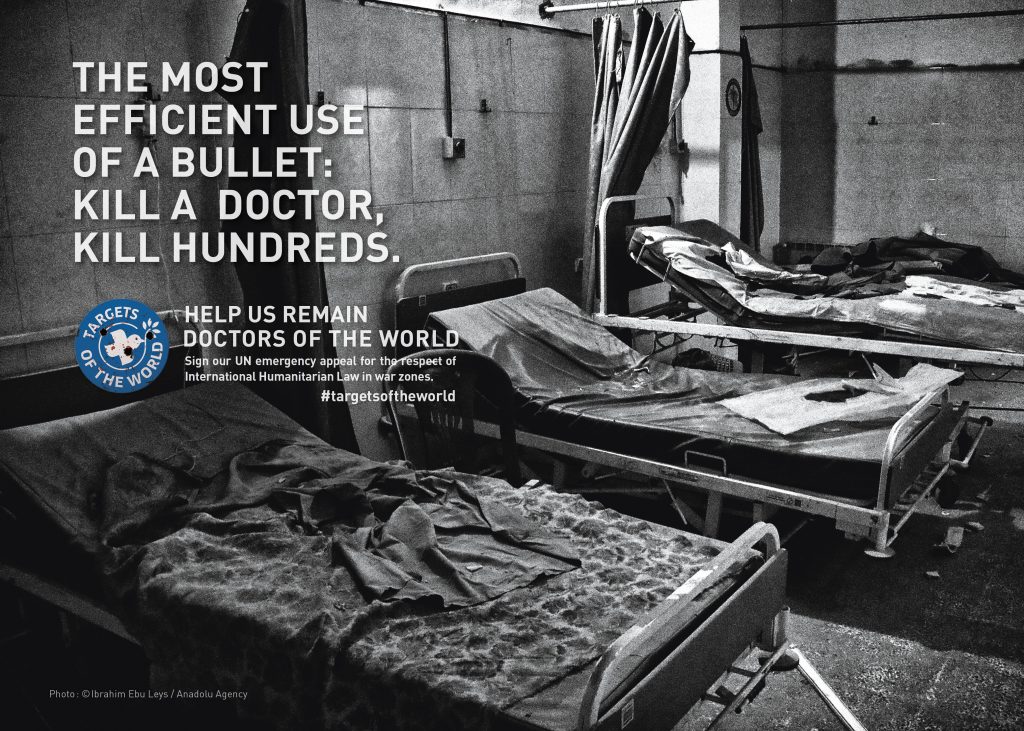
Our network’s #TargetsoftheWorld petition calls on the UN to do more to protect health workers in humanitarian crises. Leigh Daynes will also be discussing the risks our medics face at a panel event in London on 17 August that will be streamed online.

In Yemen, which is gripped by both a vicious conflict and a cholera epidemic, there have been 93 attacks on hospitals over the last two years and half of the country’s hospitals are no longer functioning. Doctors of the World is supporting hospitals in the capital Sana’a.

In Syria, there were 338 attacks on hospitals last year alone and six medical units supported by Doctors of the World were targeted. Around 15,000 Syrian medics were forced to flee the country between 2011 and 2015.

Ahmad Alhameed is a Syrian doctor who was jailed and tortured simply for treating wounded people. He fled Syria in 2014 and is now a refugee in the UK, where he volunteers at our London clinic.

“I was detained just because I was saving lives. I’d been going to clinics in towns under government siege, sometimes using secret underground passages to get there,” Ahmad recalls. “It was impossible for me, as a doctor and as a human being, to do nothing when I knew that people were in need.”

Our medics work in dangerous and remote places around the world. Please support them by donating today.

This NHS form is making people scared to see a doctor

Published 10th August 2017

By Shyamantha Asokan

For most people, filling out a form at your local doctor’s surgery or hospital is no big deal. You just tick a few boxes and think nothing more of it.

But for some, it can be an anxiety-ridden experience that puts people off seeing a doctor completely – even if they urgently need an antenatal check-up or a test to check for breast cancer.

Many NHS hospitals ask people to fill out this form before their appointment, which explains that a hospital may share a patient’s personal details with the Home Office, the government department that oversees immigration. The Home Office can then use this information to find and deport undocumented migrants.

This pre-attendance form is part of a government pack for NHS surgeries and hospitals.

Doctors of the World believes healthcare and immigration are separate issues, and we are against the Home Office using surgeries and hospitals as avenues to track down undocumented migrants. The Home Office should never use or retain information from NHS patients’ records to carry out immigration control.

We also believe such forms should not be sent to patients before they have come to hospital and before the urgency of their medical issue has been assessed.

At our clinics across London, we see the direct impact that this data-sharing has on people’s lives. Earlier this year we met Patricia, a Ugandan woman who was almost six months pregnant and hadn’t had any antenatal care at all.

Patricia, an undocumented migrant, had been missing her scans and midwife appointments because she was scared off by the pre-attendance form. “I feel trapped,” she said at the time. “I need to go to the hospital but I can’t because I feel my information might not be confidential.”

Patricia eventually summed up the courage to go to her appointments, but others simply stay away. In January, a woman even arrived at our east London clinic in labour. She hadn’t had any ante-natal care at all.

The UK government and NHS Digital, the NHS body that shares patient information, has this year published a deal that further expands their data-sharing. Doctors of the World’s #StopSharing campaign calls for an end to this unethical deal, and you can support the campaign by signing our petition.

It also emerged this week that Guy’s and St Thomas’ Hospital in London had for several months issued a form that asked pregnant women to state if they were “economic migrants”. The hospital had used this form for two years, up until last month, Buzzfeed reported.

“This shows the chaos behind the Department of Health’s attempts to identify and charge overseas patients. These forms aren’t standardised across all hospitals, even though they ask for sensitive information such as immigration status,” Lucy Jones, Doctors of the World’s head of UK programmes, told Buzzfeed.

“In the end, it’s the most vulnerable patients who suffer.”

Please support our #StopSharing campaign by signing our petition and downloading our toolkit for GP surgeries. 

Greece’s refugees suffer deepening mental health issues as limbo drags on

Published 2nd August 2017

In recent weeks, several reports have highlighted a “silent crisis” amongst Greece’s refugees. Stuck in limbo in unsafe camps, many families are suffering from increasingly serious mental health problems.

A new Human Rights Watch report, which includes contributions from Doctors of the World, has documented cases of self-harm, suicide attempts, aggression and anxiety. Another recent report has found that one in three refugees in camps on the island of Chios had witnessed a suicide there.

“We see a lot of people with mental health problems like depression, and it gets worse the longer they are in the camps. People get frustrated because they don’t know what’s happening with their lives,” says Kharman Adhim, a volunteer translator for Doctors of the World who works primarily with refugee women.

“The majority of people we see need counselling – and not just the women, but their children too.”

Over the past year, thousands of refugee families have become stuck in Greece while they are assessed for a possible return to Turkey or apply to join relatives in Europe. A March 2016 deal deemed that many refugees arriving in Greece could be returned to Turkey, but in practice a backlog of claims and appeals has left vulnerable people confined to Greece’s islands for months.

To complicate things further, this week the EU has ended most of its funding for aid organisations’ work with these refugees and is funding the Greek government to take over services instead. You can see an Al Jazeera report on this, which includes a visit to our mobile clinic in Chios, below:

Doctors of the World and several other charities are concerned that the handover will create gaps in vital services for refugees, especially as few details about the transition have been released. We have called on the Greek government to release a national plan for this transition.

“A month ago, we did not renew the contracts of our 58 employees, including those responsible for more vulnerable people such as victims of torture, unaccompanied minors, and pregnant women,” says Stathis Poularakis, a spokesman for Doctors of the World Greece.

Many of Greece’s refugees are already suffering from trauma upon arrival, after fleeing war, losing loved ones, and undertaking dangerous journeys. Any gaps in support for refugees in the camps could further exacerbate this existing trauma.

“I recently translated for a Syrian woman in her 50s who would suddenly bring up memories of happy times and cry,” says Kharman, who was interpreting for the woman during a session with one of our psychologists in the camps.

“She would say things like ‘My children and I always used to celebrate my birthday together’, or ‘I miss my neighbour’. The life that she knew is just memories now. She has no normality.”

Doctors of the World’s medics treat refugees in camps, shelters, and unfamiliar new homes across the globe. Please donate now to make a difference and help save lives. 

Kenya’s drought: Here’s what we’re seeing at our outreach clinics

Published 25th July 2017

By Lucy Coley

In northern Kenya, the demand at our outreach clinics is overwhelming – sometimes people start crowding around our van as soon as we arrive. Our clinic space is often just two plastic chairs under the shade of a tree and it’s hot, it’s dusty, it’s chaotic. No one queues as they’re so desperate to see a doctor.

Kenya is experiencing its worst drought in three decades and around 2.6 million people urgently need humanitarian assistance. Doctors of the World is holding outreach clinics to treat malnutrition in remote villages in Isiolo and Marsabit, two of Kenya’s worst affected counties. I’ve been running this project from London and visiting Kenya regularly.

During my latest trip this month, I went on three outreach sessions with our brilliant team: Muna, a Kenyan nurse and our team leader, Mary, a Kenyan doctor, and Patricia, a volunteer nurse from the UK.

When we went to the village of Daraja, we set off at 6am and drove for almost 4 hours – and that was just the journey to collect our medical supplies. We then drove for another 90 minutes to reach the village. Many of the villages we work in are several days’ walk from the nearest hospital or health clinic.

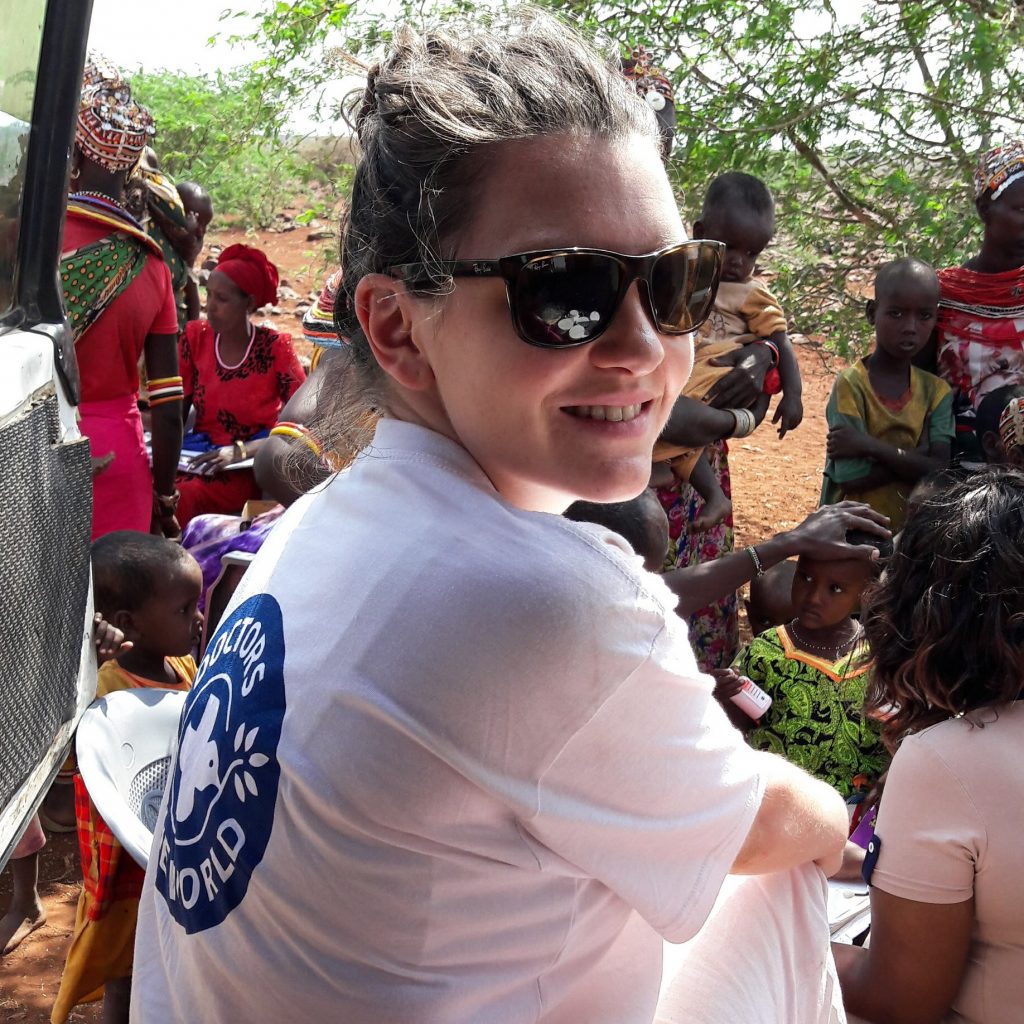
Here’s a photo of me in the outreach van:

At our outreach sessions, everyone we meet is sick in some way. The drought is causing both malnutrition and respiratory problems. Kenya’s drought has brought with it a pervasive dry red dust – it gets in your eyes, in your throat, under your fingernails. Many people we see also need our help with chronic health problems such as diabetes. They don’t have any other access to a doctor.

We screen children under five, pregnant women, and breast-feeding women for malnutrition. This is because malnourished children must be identified and treated before the age of five, to avoid lifelong physical and cognitive impacts. We also provide vaccinations for babies and primary healthcare for anyone in need.

Marsabit’s malnutrition rate is 30% and Isiolo’s is 19%, both far above the emergency threshold of 15%. During my trip, all of the pregnant and breast-feeding women we screened in Loglogo village were malnourished. In another village, we saw 12 severely malnourished babies (“severe” is the most life-threatening level of malnutrition, one level above “acute”).

Sometimes you initially think these babies don’t look too unhealthy – until you learn their age. We saw one baby who was 11 months old, but he was so stunted due to malnutrition that he looked closer to 11 weeks old.

When someone is acutely malnourished, we give them a paste fortified with vitamins. We give them enough sachets to last them until our next outreach in their village, when we’ll assess them again.

When someone is severely malnourished, they must be admitted to hospital. We help families with transport and other costs, but it’s still very hard to persuade them to go. The idea of being admitted to a faraway hospital is daunting for someone who isn’t even used to seeing a doctor.

As soon as we get back in the van after our frenetic outreach in Daraja, Mary starts writing up the report for the day. The team have so much energy, they’re all amazing. We see 75 patients on average per outreach and we do at least four outreaches per week.

Kenya’s northern communities will continue to see malnutrition rise at least until the next rains in October – and worryingly these are predicted to be poor. The drought has stoked violent clashes between cattle farmers, as good land for grazing is so scarce, and political tensions are rising in the lead-up to a national election on 8 August.

I know that, for many people reading this, northern Kenya’s villages feel like they’re a world away. But I really want people to know just how important Doctors of the World’s presence is in these areas. We really are saving lives.
You can save a life today. Please donate £8.41 to help treat a child facing acute malnutrition. You can also watch Lucy’s Facebook Live Q&A about our Kenya work here.

FP2020: Doctors of the World joins global push to help women access contraception

Published 10th July 2017

In the Democratic Republic of Congo (DRC), many women cannot afford a $20 contraceptive injection that they desperately want. On the Gaza Strip, health centres run out of contraceptives due to a blockade that has lasted several years. In Peru, giving condoms to young people is often frowned upon as encouraging premarital sex.

Doctors of the World’s medics see first-hand how limited access to both contraception and abortions affects women – the examples above are just a few glimpses of what we encounter. That’s why we’re supporting Family Planning 2020 (FP2020), a global partnership that supports a woman’s right to decide if and when to have children.

Over the next three years, the Doctors of the World (Médecins du Monde) network will run sexual and reproductive health projects that help a million women in 13 countries access family planning services and information. We will announce this commitment today at an international family planning summit in London that forms part of the FP2020 initiative.

“Every woman has the right to be in control of her body, and to decide if and when she wants to have children,” says Leigh Daynes, Doctors of the World UK’s executive director. “Following Donald Trump’s outrageous decision to reinstate the “Global Gag Rule”, it’s more important than ever to stand up for this right.”

There are around 214 million women in developing countries who want to prevent or time a pregnancy, but who are not using the modern contraception they need. FP2020 wants to enable 120 million of these women to use contraception by 2020.

This year alone, an estimated 308,000 women in developing countries will die from pregnancy-related causes, according to the Guttmacher Institute. Around one in four of these deaths could be prevented simply by full access to contraception.

Giving women access to family planning, which allows them to have children when they are financially and emotionally ready, also boosts a country’s economy and development levels. By contrast, unwanted pregnancies can create health and money worries for mother and baby.

Irene, a woman in the Democratic Republic of Congo, who became pregnant unintentionally when she was 19

Irene (pictured above) is just one example. As a 19-year-old in Kinshasa, the capital of the DRC, she knew little about contraception. When she fell pregnant by her boyfriend, he soon left her. She wanted to have an abortion but could not afford one.

Irene’s boyfriend returned after their baby was born and she now insists that they use condoms. But her unwanted pregnancy meant the end of her education, even though she was a brilliant pupil in her final year of studies.

The DRC is one of the 13 countries we’ll be focusing on, in our promise to help a million women access family planning. We’ll also be running programmes in Burkina Faso, Central African Republic, Côte d’Ivoire, Madagascar, Nigeria, Niger, Somalia, Nepal, Pakistan, Sri Lanka, Haiti and Iraq.

We’re already working in two areas of Kinshasa to educate adolescent girls about sexual and reproductive health. We’ve run similar projects for women in Nepal for a decade. In Haiti, we advocate for abortion to be decriminalised and train health workers to treat abortion-related complications.

Abortions are banned or strictly limited in several countries where we work, forcing women to resort to illegal clinics or dangerous methods such as drinking coffee mixed with antibiotics. Unsafe abortions kill tens of thousands of women every year.

“Every woman should be able to decide if and when to become a mother without risking her life,” says Daynes. “It’s as simple as that.”

The most sobering stories of unwanted pregnancies that we encounter are those resulting from rape. In the Central African Republic, our teams treat women such as Estelle, a 21-year-old who had her third child after being raped by fighters in the Seleka militia.

“After what happened to me, my husband abandoned me with my children, saying that he could not continue to live in such shame,” she says. Estelle was afraid to go to her local hospital because of the stigma around rape victims, but at our health centre in the capital Bangui she saw a midwife and was referred for counselling.

“I greatly appreciated the support,” she says. “And I have encouraged several women in the same situation to come to this centre.”

We’ve committed to help 1 million women around the world access the family planning they need. Please support our medical work on this and other pressing issues by donating today.

Maria

Published 4th July 2017

When Maria* discovered a lump on her breast last autumn, she needed to see a doctor urgently. But Maria had been too scared to go to a doctor for years.

Maria is an undocumented migrant from the Philippines who has lived in the UK for several years and works as a cleaner. She sends the few extra scraps of money she earns, as well as the unwanted clothes that her employer sometimes gives her, to her children back home.

“For years I had just tried to protect myself from getting sick, like by always wearing warm clothes, because I thought it wasn’t safe to go to the doctor,” recalls Maria, a slight middle-aged woman with a gentle manner.

Maria knew the lump was too serious to ignore – her father had died of cancer and her sister had also had breast cancer. But when she tried to register with her local GP surgery, the staff repeatedly asked her for immigration papers she didn’t have, even though everyone in the UK has the right to see a GP for free and no such documents are needed.

“When they kept asking for my visa, I was so scared and embarrassed,” she says. “In those weeks, when I didn’t know if the lump was benign or not, I wished I had the power to just disappear.”

Maria heard about Doctors of the World’s London clinic from a friend. Our clinic team advocated on her behalf, explaining her rights to GP surgery staff and writing letters to support her registration. When the first surgery still refused to take her on, we found one that would. We also made sure she was referred for an emergency biopsy.

Maria didn’t go for her first biopsy appointment – she was too scared after receiving hospital letters saying that the hospital might pass her details on to the Home Office, the government department that handles immigration. We’ve launched a major campaign to get the government to halt such data-sharing because it’s a growing concern amongst our patients.

After returning to our clinic to talk her through her worries, Maria went to her second appointment. The lump was now over 4cm wide. It was found to be benign but, due to her family history of cancer, doctors decided to remove it.

Maria had her surgery this year and is now doing well.

“You helped me a lot,” she says of Doctors of the World. “Without you, maybe I would never have gone to the doctor and maybe the lump would still be there, getting bigger.”

*Name has been changed

Doctors of the World launches clinic for Grenfell Tower survivors

Published 29th June 2017

Doctors of the World has launched a clinic for Grenfell Tower fire survivors in North Kensington to reach people who urgently need medical care but fear using the NHS.

Our safe and confidential “pop-up” clinic near the tower started on 30 June and is staffed by volunteer GPs and caseworkers. Grenfell Tower was destroyed by a fire earlier this month – at least 80 people are presumed dead so far and scores of residents are still missing.

In recent days, volunteers at the scene have reported that many undocumented migrants and asylum seekers who lived in the tower are not coming to official relief centres or institutions, even if they have serious injuries, because they fear being referred to Home Office immigration teams.

“When we visited the area around Grenfell Tower, volunteers immediately started telling us about families who were too scared to see a doctor even though they were suffering from smoke inhalation, or had been injured while escaping the tower, or were traumatised by the fire,” says Phil Murwill, who runs our Grenfell clinic.

Our team spent this week visiting people at local community centres, legal advice centres, mosques, and churches.

“I was shocked when I learned that people are afraid to come forward in the aftermath of such a big emergency,” says Helen Richardson (pictured above), one of the volunteer GPs who has helped set up our clinic.

“Our clinic will be here for everyone, for as long as we’re needed.”

Grenfell survivors’ fears are sadly not unfounded – following a controversial deal, the Home Office can now routinely access NHS patients’ private records to track down undocumented migrants.

Doctors of the World, which has run clinics in the UK for undocumented migrants and other vulnerable groups since 2006, has stood firmly against the deal since it was made public in January. Our #StopSharing campaign has brought together hundreds of NHS medics to call for this unethical data-sharing to end.

“This fire highlights a particularly shocking example of something that is actually widespread across the UK – vulnerable people are not getting basic healthcare because they are too afraid,” says Paquita de Zulueta, one of our volunteer GPs, who has given her time to several Grenfell relief projects.

“At Doctors of the World’s clinics, we often see sick people who have struggled along for years without seeing a doctor.”

Theresa May stated last week that Grenfell survivors and relatives of those who died would not face immigration checks while accessing services, but this is not allaying the fears of many people on the ground.

May has not made it clear how these exemptions will work in practice or how long they will last. She has backed government moves to create a “hostile environment” for undocumented migrants for several years.

Doctors of the World has written to Health Minister Jeremy Hunt and local NHS hospitals to urge them to publicly state that survivors will not have their details shared with the Home Office, undergo ID checks, or receive hospital bills.

“This is the reality of life in the UK for many people,” says Phil Murwill. “This is how the government’s ‘hostile environment’ is affecting real lives.”

Do you want the Home Office to stop making doctors into border guards and making patients scared to get healthcare? Please sign our #StopSharing petition

Some Grenfell Tower survivors are scared to see a doctor

Published 23rd June 2017

By Shyamantha Asokan

Some survivors of London’s Grenfell Tower fire are scared to come forward and get the medical care they urgently need because of their immigration status, volunteer doctors at the scene say.

Grenfell Tower, a 24-storey block of flats, was destroyed in a fire last week and at least 79 deaths have been confirmed so far. Scores more people are missing and the death toll is expected to rise.

Some undocumented migrants and asylum seekers who lived at the tower are scared of getting help for fear of being referred to Home Office immigration teams, according to volunteers offering survivors medical, legal and housing support.

Dr Paquita de Zulueta, a GP who has been volunteering at a pop-up clinic for Grenfell survivors and who also volunteers at Doctors of the World’s east London clinic, spoke to the Guardian this week about this issue. She said she and her colleagues had dealt with at least three patients who were reluctant to go to hospital because of their immigration status.

Dr Paquita Zulueta at Westway centre after the Grenfell Tower fire
De Zulueta at the Westway sports centre, which has become a hub for relief efforts and donations after the fire

De Zulueta last week saw an African woman in her early 40s who had fallen down the stairs while escaping from the tower and whose partner and relatives were missing. The woman was suffering from dizziness and memory loss, symptoms that suggested she could have a brain injury, but she didn’t want to go to A&E.

“She was frightened that she would be reported to the Home Office. I had to persuade her and reassure her, and eventually she went with an escort,” De Zulueta said.

“What we’re seeing after this fire is a particularly shocking example of something that is actually widespread – there are invisible and vulnerable people across the UK who can’t get basic and necessary healthcare,” she added.

Doctors of the World’s UK clinics regularly see seriously unwell people who fear going to a doctor because of their immigration status. Home Office immigration teams can access NHS patients’ records in order to obtain private details, such as home addresses, and track down undocumented migrants.

Our #StopSharing campaign has brought together hundreds of NHS medics to stand against this data-sharing. The British Medical Association and Public Health England have also voiced serious concerns about this issue.

At Westway, a sports centre near the tower that has been converted into a relief centre, brilliant volunteer doctors and nurses are staffing a 24-hour pop-up clinic. They have helped people with psychological trauma, diabetes sufferers who lost their medication in the fire, and families who need dressings for burns.

“Things could actually get worse after a few weeks have passed,” said a nurse who did not want to be named. “That’s when the psychological impact will truly hit some people.”

Clinic volunteers have started doing outreach visits to hotels where survivors have been rehoused – there are concerns that some people are even too scared to come to Westway, where police officers are stationed at the door.

UK Prime Minister Theresa May, who has backed government moves to create a “hostile environment” for undocumented migrants for several years, said on Thursday that no immigration checks would be carried out on survivors or relatives of the dead. It’s not yet clear how much this will allay fears on the ground.

“In a situation like this, you need to remove all barriers to someone getting help,” said De Zulueta. “We’re talking about people who have lost everything – some don’t even have proper clothes anymore.”

Please help us put an end to the Home Office accessing NHS patients’ private records and making people too scared to see a doctor. Sign our #StopSharing petition.

x

With your support, Doctors of the World will make sure nobody suffers or dies due to lack of access to healthcare.