Refugee Week: Our team share stories of working in Greece’s camps

Published 21st June 2017

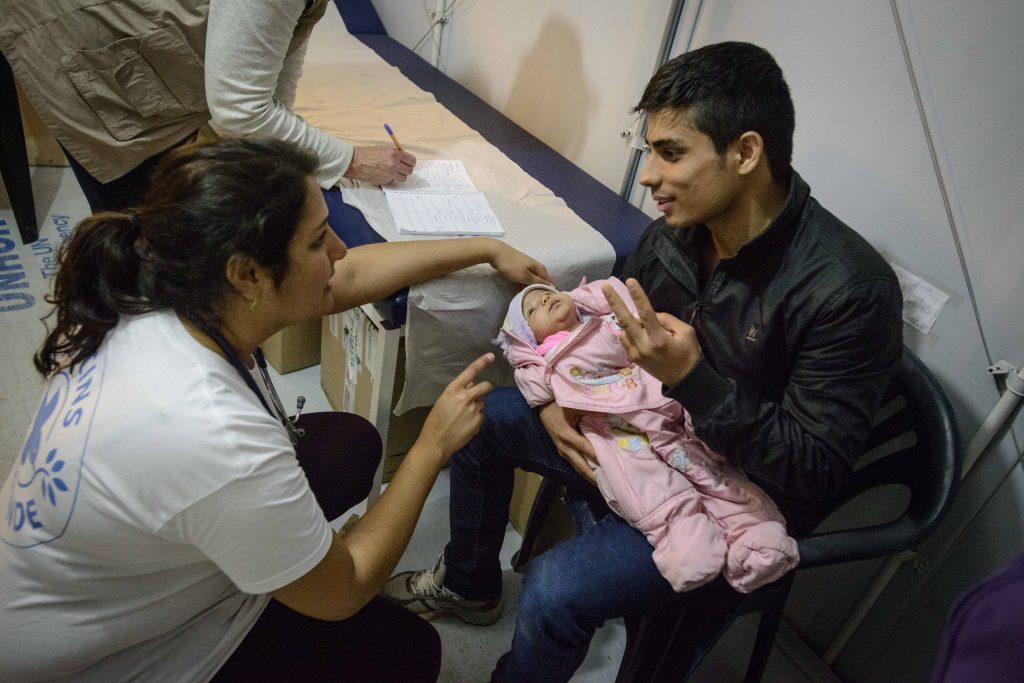
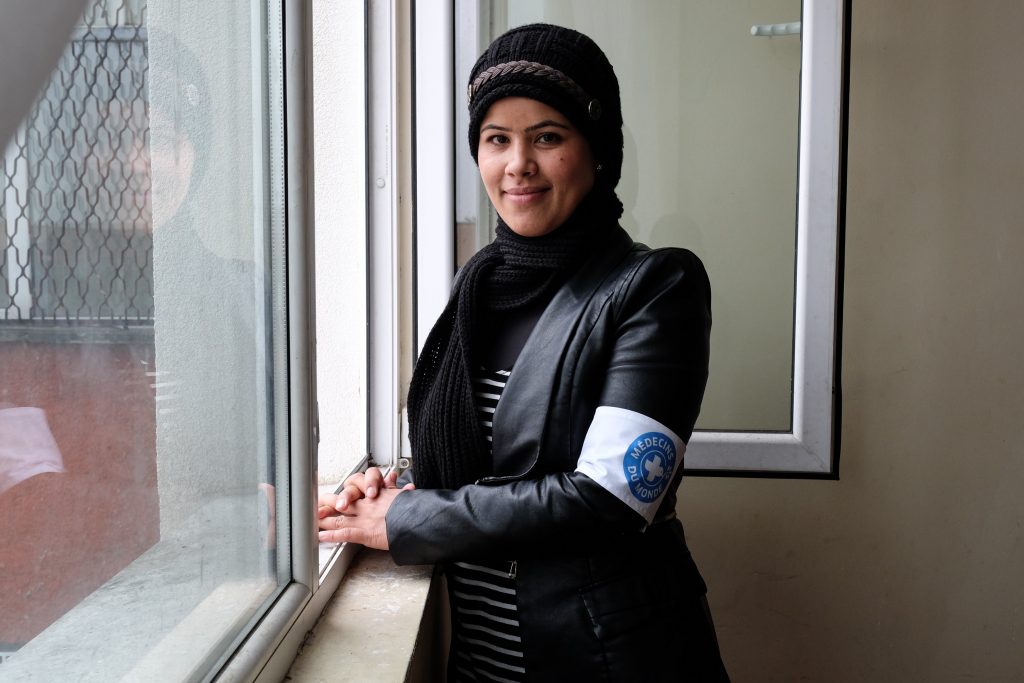
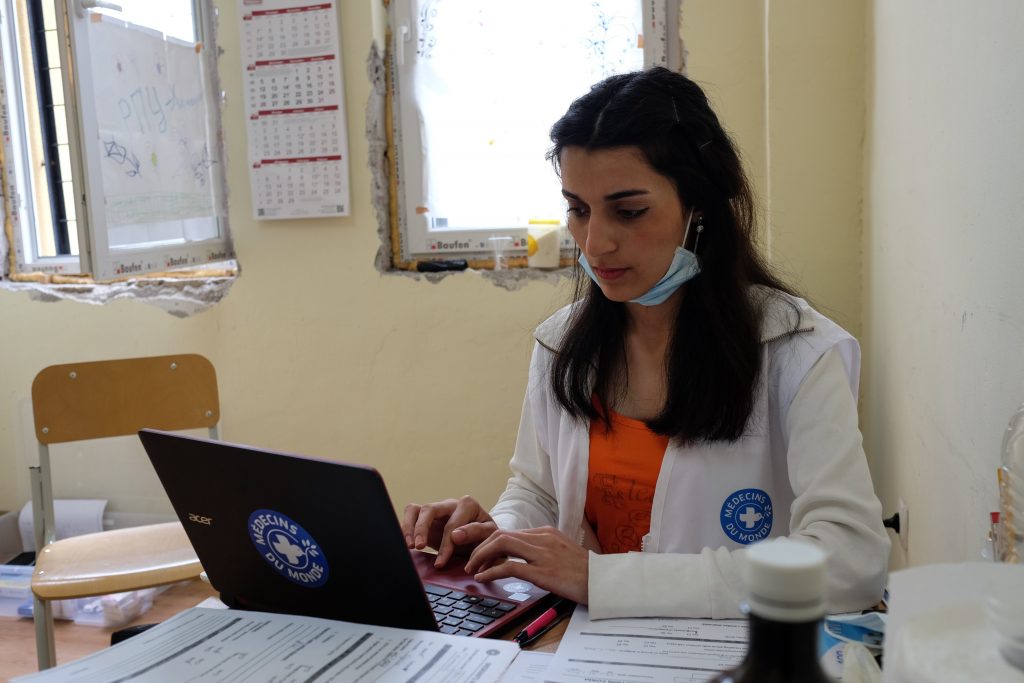
Kharman Adhim, a 55-year-old Londoner, spends her days in northern Greece’s refugee camps. As one of our interpreters, she helps the camps’ pregnant women and new mothers explain their health problems to our medics. When our team has to refer a woman to hospital, she heads there with them.

“We see a lot of Yazidi women who are fleeing ISIS. These are people who have lost everything,” says Kharman, a fluent Kurdish and Arabic speaker who moved to the UK from Iraq almost 30 years ago. “We see people who owned land and had jobs – and now they have nothing. There are women who are going to give birth soon and they don’t even have clothes for their baby.”

The UK’s annual Refugee Week takes place this week, throwing a spotlight on people around the world who have been forced to flee their homes. Over 65 million people, slightly more than the entire population of the UK, were displaced in 2016. Around half of the world’s refugees are children.

In Greece’s Kavala and Drama camps, Kharman translates during our nutrition workshops for pregnant women and one-to-one consultations with our midwife. Doctors of the World works in refugee camps across Europe and the Middle East to give medical care to people in need.

“We see a lot of people with mental health problems like depression – and it gets worse the longer they are in the camps. People get frustrated because they don’t know what’s happening to their lives,” says Kharman, who also translates for refugee women during their consultations with our psychologist.

“I recently translated for a Syrian woman in her 50s who would suddenly bring up memories of happy times and cry – she would say things like ‘My children and I always used to celebrate my birthday together’, or ‘I miss my neighbour’. The life that she knew is just memories now. She has no normality.”

Greece is home to 62,000 refugees and continues to disproportionately bear the burden of people arriving in Europe. Many other European countries have closed borders or stalled on commitments to support those in need – the UK abruptly ended a scheme to take in child refugees in February and some EU assistance in Greece’s camps is due to be reduced.

Many camps in Greece are highly unsafe for women and girls, who are even afraid to go to the toilet alone at night.

“It’s so hard for pregnant women and newborn babies to live like this – socially, financially, psychologically, on all levels. Some of the women I see are just exhausted,” says Hanna Yacoub, who also works as one of our interpreters. Everyday, along with a midwife, she visits camps near the northern Greek town of Larissa in our mobile clinic van.

Kharman, a qualified solicitor who herself first settled in the UK as a refugee, says she knows all too well how these women are feeling.

“I left everything behind – my career, my house, everything. It’s a long process to start building your life again and you keep asking yourself: ‘What is my future?’ ” she says.

“It’s been a struggle but I’m settled in the UK now. I have friends there. It’s my home.”

Doctors of the World works around the clock to treat refugees in camps, shelters, and unfamiliar new homes. Please donate NOW to make a difference and help save lives. 

Preventing famine in Kenya’s villages, one child at a time

Published 12th June 2017

By Jelle Boone

Emma and her husband Lekhison run a primary school for 30 children in Ngaredare, a remote village in northern Kenya. Every day they grow more concerned about the drought that has gripped swathes of east Africa.

“From August, when the last river will be dried out, I expect dramatic scenes,” says Emma. “I hold my heart for the children.”

In Kenya, around 2.6 million people are facing the threat of famine. The drought has not only wiped out livestock but has also lead to increased tensions between communities. Families are being forced to flee their homes due to drought, food shortages and violence. Women and children are increasingly at risk.

Doctors of the World has launched an emergency project in Kenya’s Isiolo county, in order to find and treat malnourished children, pregnant women, and new mothers. We believe we can prevent a famine if we act now. You can support this work by clicking here.

Our teams are visiting Isiolo’s remote villages and settlements to provide malnutrition screening and treatment, while referring severely malnourished people to local hospitals. We have focused on areas that are not yet receiving any humanitarian aid.

“The drought we are seeing this year has been one of the worst since 1945. The rains last November failed, and the rains failed again this April-May,” says Lucy Obolensky, a British doctor who spent a month volunteering in Isiolo this spring to set up our new project.

“In the communities that we have visited in response to the drought, we are picking up cases of malnutrition, but what we are really trying to do is prevent them falling into acute malnutrition”, says Lucy. “We are trying preventative programs, particularly for the children and the pregnant women.”

No more rains are predicted until October and it is anticipated that some parts of Kenya could reach emergency levels of need in the coming months. The food shortages also leave people vulnerable to cholera outbreaks, life-threatening stomach conditions, and measles.

“As a result of the drought, we must move further south, further from our native region, to find further grassland for our goats,” says Asya, a woman who received food supplements and vitamin A from the Doctors of the World team.

“My husband is often forced away for days with our animals to graze them. We can still survive with the food we have but I’m very worried about the future. We cannot continue to run.”

Doctors of the World’s team is visiting settlements in and around the villages of Ngaredare and Gotu each week. We check children for signs of malnutrition and, if necessary, start treatment. Between the settlements, which are usually temporary camps of nomadic shepherds, there is often an hour’s ride by 4×4 along rough terrain.

In addition, our team also provides first aid for people who are often several days’ walk away from the nearest medical centre. An estimated 2.9 million Kenyans urgently need medical care, but in remote and rural communities access to even basic healthcare is scarce.

Back at the school, Emma continues to worry about the months ahead and her pupils’ fates. “Many will probably flee, others will suffer hunger. Our own livestock will probably not survive,” she says. “Chances are that we will have to close our school after 12 years. And I do not know if I will find the courage to reopen it.”

You can save a life today. Please donate £8.41 to help treat a child facing acute malnutrition.

Meet the volunteers helping excluded people get healthcare

Published 1st June 2017

In our clinics around the world, volunteer doctors, nurses, caseworkers and co-ordinators give their time to help us reach people in need. We have over 120 current volunteers in our UK clinics, while the wider Médecins du Monde network has around 3,000 volunteers.

As part of the UK’s annual Volunteer Week, we’d like you to meet just a few of the people we rely on.

Maria Zavala, nurse

Our volunteer nurse Maria

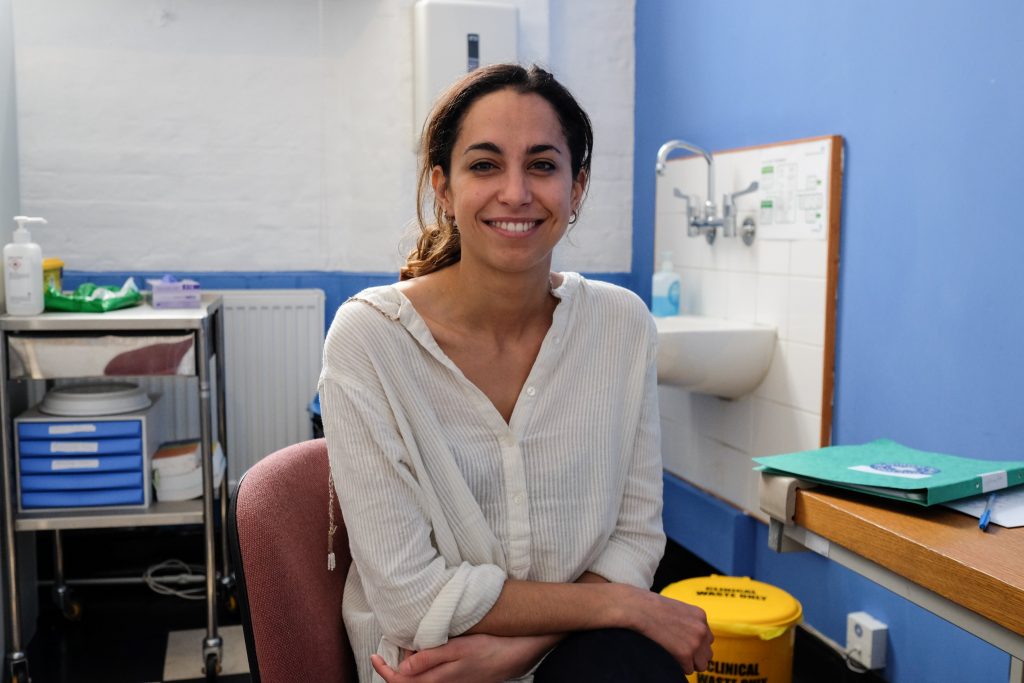
Maria is a 25-year-old nurse who volunteers at our clinic in London, where we work with vulnerable groups including asylum seekers, undocumented migrants, victims of trafficking, and homeless people. “I’ve always felt that it’s important to do something to help others. It doesn’t have to be something big – small things can make a big difference,” she says.

Maria’s patients are often heavily pregnant women who are not accessing NHS antenatal care, even though they have a right to do so, because they’ve been wrongly turned away from their GP or fear being sent huge bills they can’t pay.

“This is very different to my hospital work and it’s useful to have these different experiences,” Maria says. “Here, you work closely with the caseworkers so you get a wider picture of the patients’ situations and social needs. There’s so much happening to people in London that you just don’t know about.”

Aaminah Verity, doctor

Our volunteer doctor Aaminah in Greece

In Greece’s refugee camps, when Aaminah put infrared thermometers to the children’s foreheads, she was shocked to see them scream and drop to the floor.

“We realised it was making them think of a gun to the head,” she says. “We had to demonstrate by putting the thermometers on our own heads first to calm them down.”

Aaminah volunteered for us several times in 2015 and 2016, working in refugee camps in Slovenia and Greece. During her three-month stint on the Greek island of Chios, where people would arrive on dinghies to seek safety in Europe, she saw patients aged between five months and 84 years. “Every person I met had lost someone they loved,” she says.

You can watch a video about Aaminah’s time in Chios here and read her blog about her stint in Slovenia here.

Max Moloney, caseworker

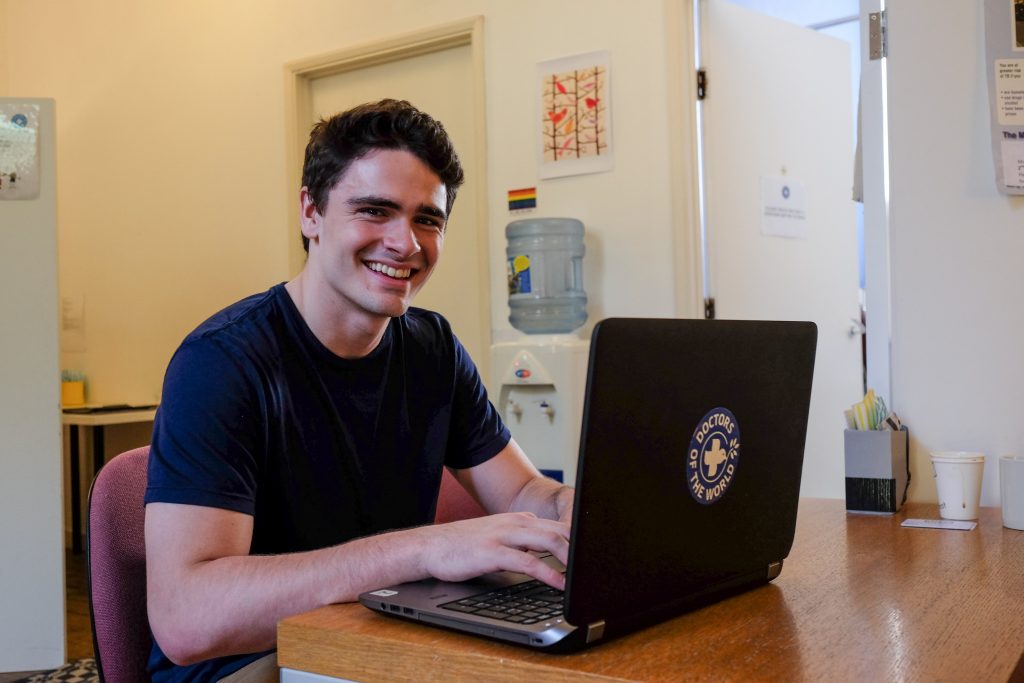
Max is a 19-year-old Canadian student who’s doing a summer volunteer placement with Doctors of the World’s UK team. Working at our London clinic and on our advice line, he helps vulnerable people such as asylum seekers and undocumented migrants to register with a GP. Many of our patients have been wrongly turned away by their local surgery before we step in.

“These patients need and deserve to see a doctor,” Max says. “If I help someone register with a GP on one day, I’ll put in a call the next week to make sure everything has gone okay. I like following up, making sure that what you’ve done for someone will have an impact that lasts.”

Max’s work involves difficult moments too. He recently saw a Filipino domestic worker at our clinic who decided not to register with a GP because the Home Office, the government department that handles immigration, is using NHS patients’ private records to obtain addresses and deport undocumented migrants. “What’s happening isn’t right. It’s a travesty,” he says.

Lucy Obolensky, doctor

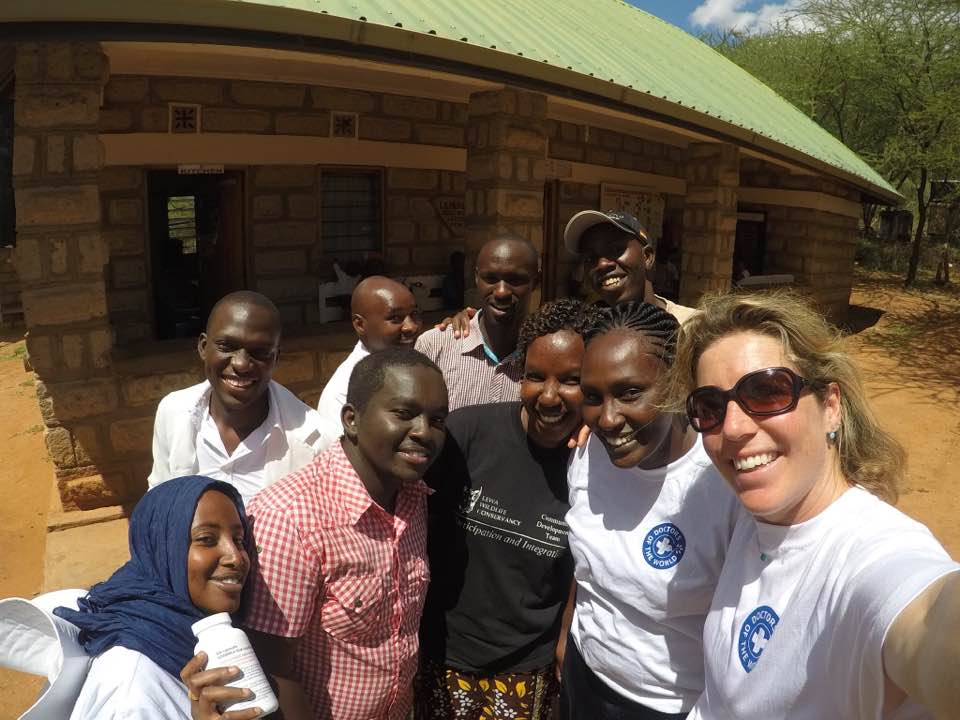
Lucy is a GP and emergency services doctor who spent a month volunteering for us as a medical co-ordinator in Kenya this spring. Here’s her farewell selfie with our Kenya team, just before she returned home to the UK.

Lucy was in Kenya to help us set up our new emergency malnutrition project. We’re doing weekly outreach sessions in remote villages, in order to find and treat children who are at risk as a terrible drought takes hold. One of the villages we’re working in is a three-day walk from the nearest health facility.

“With this drought comes a huge need for primary and public healthcare. We’re seeing huge amounts of hunger, for example in schools we’ve visited and among pregnant women,” Lucy says.

Mai Seida, caseworker

Mai says that volunteering at our London clinic has given her an insight into countries around the world. She has worked with patients from countries such as Afghanistan, Pakistan, Bangladesh, China and several African nations.

“You learn how difficult life is in many countries,” she says. “I’ve met mothers who’ve left their home countries, and have had to leave their children behind because there weren’t any jobs and they couldn’t support their families. So they have to work here and send money home. Sometimes they haven’t seen their children for 10 years.”

Mai says anxiety is one of the most common problems she sees in our patients, who have often been through traumatic experiences in their home countries. She recently helped a Brazilian patient who was deaf and struggling to get counselling, because he couldn’t explain his needs.

“Even if you only have time to volunteer once a month, you should do it,” says Mai, a 34-year-old trained pharmacist. “You’re using your time in a good way, to help others. And you get out of your routine – you learn about new activities, new things, new worlds.”

Ibrahim, clinic support worker

Seven years ago, Ibrahim was a high-profile doctor in Sudan. But when he sensed that members of the government didn’t approve of a peace-building project he was setting up, he feared for his safety and fled to the UK.

Ibrahim started volunteering at our London clinic in 2014. He hadn’t passed the exams required to practice as a doctor in the UK and the setback had hit him hard, but at our clinic he began to learn the language and teamwork skills he needed. He passed his exams in 2016 and is now on a paid tring programme that integrates refugee doctors into the NHS.

As a clinic support worker, Ibrahim took patients’ histories and helped them register with a GP. He says every patient had a story that moved him – he met one woman who had given birth in her kitchen because she was too afraid to go to an NHS hospital.

“I gained a sense of belonging and of worth at Doctors of the World,” he says. “Volunteering is not just about helping others – I myself gained a lot.”

NHS staff are furious that the Home Office is snooping on their patients

Published 12th May 2017

On weekday mornings in east London, NHS doctors, nurses, therapists and administrative staff rush to the Royal London Hospital to hit the wards for the 8am shift. But many of them do not know that the NHS data records they create for their patients are being shared with the UK government.

“This [data-sharing] is quite unacceptable,” said Niki Margari, an NHS endocrinologist who was interviewed by Doctors of the World one morning this week. “People should have access to the NHS and healthcare without being afraid of being arrested.”

Please click on the video above to hear from Niki and other medics who work at the Royal London Hospital.

Doctors of the World’s #StopSharing campaign is calling on the UK government to stop using NHS patients’ personal records to find, arrest and deport undocumented migrants. You can support our campaign by signing our petition and taking part in our online protest.

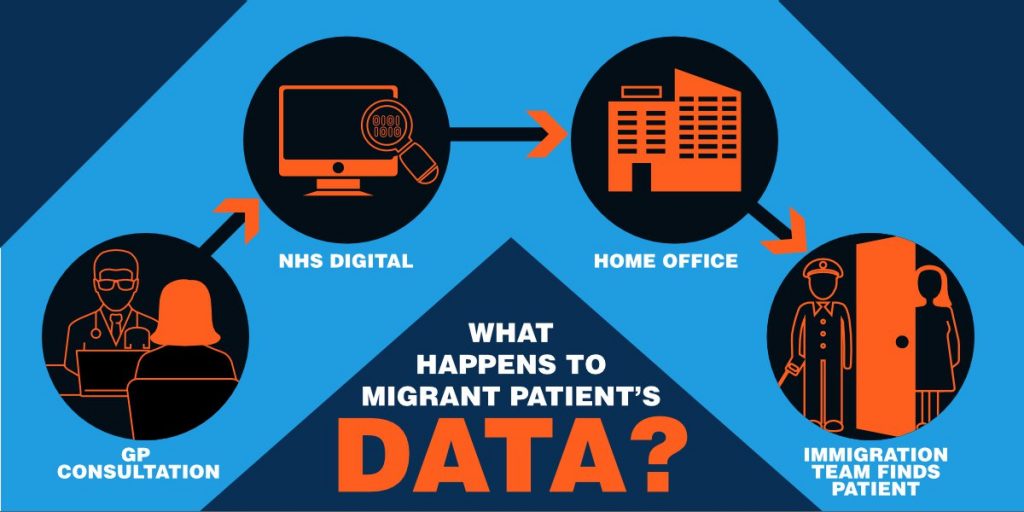
Our clinics in the UK regularly see people in urgent need, including pregnant women and cancer sufferers, who are not going to a doctor because they fear their details will be passed on. The UK government and NHS Digital, the NHS body that stores patient data, made a deal published this year to further widen data-sharing.

“This is going to make people fall ill unnecessarily, and even cause deaths,” said Esther, a mental health nurse at the Royal London Hospital who did not want to give her full name. “Everyone is entitled to healthcare, whether they have their immigration papers or not.”

NHS staff have not been consulted about the deal, even though confidentiality is central to their job. The British Medical Association, the General Medical Council, Public Health England, and the National Data Guardian have all raised serious concerns about it – but they have been ignored.

“It’s really concerning because I don’t think anyone in the medical profession or nursing profession actually knows very much about this,” said Melania Ishak, a gynaecologist on her way into the hospital. “And I think we’d all be quite appalled by it.”

Mike Brandabur, a therapy support worker, said his main concern that his patients would “lose trust” in him if he couldn’t promise them confidentiality.

The NHS staff we spoke to simply wanted to treat people in need, regardless of their immigration status, income, or any other such factor.

“I think everyone should be entitled to healthcare,” said Ian Renfrew, a radiologist. “I don’t think there should be any border or boundary on that.”

Please support our #StopSharing campaign by signing our petition, downloading our GP_toolkit_final for GP surgeries that want to keep their patients’ data safe, and taking part in our online protest.

#StopSharing: The women too afraid to see an NHS doctor

Published 24th April 2017

By Shyamantha Asokan

Patricia* sits in the flat where she works as a babysitter, surrounded by messy heaps of children’s toys. She’s almost six months pregnant – but she hasn’t had any antenatal care at all. In recent weeks, she’s missed several scans and midwife appointments.

“I feel trapped,” says Patricia, a young Ugandan woman who is bright and articulate. “I’m in a situation where I need to go to the hospital but I can’t because I feel my information might not be confidential.”

Patricia has no idea if her baby is healthy – she thinks her bump might be too small for someone near the end of their second trimester and she isn’t sure what vitamins or supplements to take. But she’s still too afraid to get the healthcare that she needs and that she’s legally entitled to.

Doctors of the World’s UK clinics regularly see undocumented migrants like Patricia who are too scared to see a doctor, due to the government’s growing access to NHS patients’ personal details. The government this year made a secret deal to get easier access to NHS data, in order to use patients’ home addresses and other non-clinical details to track down undocumented migrants.

We want this to stop. Our #StopSharing campaign is asking people across the UK, including medical professionals, to tell the government to end this unethical data-sharing.

“At this time of carrying a child, the last thing you want to worry about is being separated from that child,” says Patricia, who’s lived in the UK for several years and whose partner is a British citizen. She fears that her hospital will share her address with the Home Office, the UK government department in charge of immigration, who will then find and deport her.

One morning last autumn, Maria* discovered a lump on her breast. She was terrified due to a history of cancer in her family – her father had died of cancer and her sister had had breast cancer. Doctors of World helped her to register with a GP and made sure she was referred for an emergency biopsy.

But Maria didn’t go for her biopsy. As the day approached, she became terrified that the hospital would share her details with the Home Office. Maria is an undocumented migrant from the Philippines, who has lived in the UK for several years and works as a cleaner. She sends the few extra scraps of money she earns, as well as the unwanted clothes that her employer sometimes gives her, to her children back home.

“I felt like I was carrying the weight of the whole world during those days,” she says. “I was so worried that if I went to the hospital, then the immigration authorities would know about it – maybe they would get me and deport me. But if I didn’t go to hospital, then what about the lump?”

According to UK government figures, the Home Office submitted 8,127 data requests to the Department of Health in the first 11 months of 2016 alone. These requests led to 5,854 people being traced by immigration teams. This tactic is also on the rise – the number of Home Office requests to NHS Digital, the NHS body that stores patient information, has tripled since 2014.

Maria eventually mustered the courage to make a second appointment. Her lump was found to be benign, but doctors wanted to remove it due to her family history. She had her surgery this year – but to this day she remains terrified of getting healthcare.

“When I walk past an optician, I want to enquire,” she says, as she has recently noticed that her vision is deteriorating. “But then I think ‘No, Maria, you shouldn’t go.’ ”

*Names have been changed

Please support our #StopSharing campaign by signing our petition, supporting our social media push, and downloading our Safe Surgeries toolkit for GP practices.

Take action against the Home Office accessing NHS data!

Published 20th April 2017

We’re asking people across the UK, including medical professionals, to tell the UK government to stop using NHS patients’ personal information to track down undocumented migrants – and we need your help.

The #StopSharing campaign will use a petition and social media push to put pressure on the government to stop a policy that’s frightening people away from the healthcare they desperately need.

We’ve also made a toolkit for healthcare professionals who want to defy the data-sharing and ensure their surgeries are places where everyone feels safe to visit.

What’s the problem?

The UK government and NHS Digital, which stores NHS patients’ data, published a deal in January 2017 to give the Home Office easier access to migrant patients’ information. This allows immigration officials to get hold of patients’ personal details, such as addresses, and then to track down, arrest and deport undocumented migrants.

The deal makes vulnerable patients scared of getting healthcare. Doctors of the World’s UK clinics regularly see people in urgent need, including pregnant women and cancer sufferers, who are afraid to see a doctor due to data-sharing.

Patient confidentiality is essential for NHS staff to be able to do their job – and yet they have not been consulted about this deal. Concerns raised by medical organisations have been ignored and the agreement was made in secret.

According to the Department of Health, the Home Office made 8,127 requests for data in the first 11 months of 2016 alone. This led to 5,854 people being traced by immigration teams.

How can I help?

STEP 1:
Sign the petition. We’ve launched a petition with the National Aids Trust and Liberty against the deal. We will take the petition to the government and ask them to respond. Use the suggested social media posts in step 3 to promote the petition and help us get more than 10,000 signatures.

STEP 2:
Download the toolkit. The “Safe Surgeries” toolkit for healthcare professionals gives GP practices concrete ways to defy the data-sharing deal by keeping their patients’ addresses off NHS records, including using the GP practice address as c/o address. All suggestions are in line with NHS guidelines.

STEP 3:
Contribute to the viral campaign. Download our social media pack with suggested Tweets, Facebook posts and graphics to spread the #stopsharing message far and wide. If you prefer to write your own posts, please always use the hashtag #StopSharing.

As the #stopsharing movement grows we will keep you informed about the Safe Surgeries created across the nation. Please contact us if you’re planning on making your surgery a safe space for migrants, or if it already is!

We will also present the petition to the new government after the election as part of our advocacy to get this deal stopped.

Put simply, deterring people from the healthcare can have deadly consequences. Take action against it today.

Press enquiries

Please contact Ella Abraham on eabraham@doctorsoftheworld.org.uk

General Enquiries

SafeSurgeries@doctorsoftheworld.org.uk

Famine crisis: 20 million people need urgent help

Published 13th April 2017

More than 20 million people in four countries – Yemen, Somalia, South Sudan and Nigeria – are facing starvation and famine, in what the UN says could become the world’s largest humanitarian crisis since 1945.

Doctors of the World has been working in Yemen, Somalia and Nigeria for several months, delivering health and nutrition programmes to the most vulnerable. We have launched an urgent appeal to help us scale up our emergency activities, as the situation has taken a turn for the worse.

“It is vital that doctors and aid workers reach people in desperate need. In many areas, we could prevent the threat of famine from becoming a reality,” says Leigh Daynes, executive director of Doctors of the World UK. “No one should die of starvation in the 21st century.”

The four countries concerned are all in or directly next to the arid belt of the Sahel desert, where droughts often occur. But the driving reasons for this emergency are man-made – there are violent conflicts in each country that stop many people getting enough to eat.

Yemen, where 17 million people face severe shortages of food, is gripped by a civil war between the government army, supported by Saudi Arabia, and Houthi rebels. We have worked in the capital Sana’a and in western Yemen since 2015, supporting five health centres and one maternity clinic, and focusing on food supply and on children. We have already put one emergency team in place in Yemen’s worst affected areas.

We also work in north-eastern Nigeria, where the terrorist group Boko Haram has operated since 2012. As the Nigerian government has pushed Boko Haram out of certain territories in recent months, the extent of people’s suffering in these areas has become clearer. In December, the UN described the situation as “the largest crisis on the African continent.”

“The situation is alarming and the access to food is at risk, because cattle breeding, farming and fishing are impossible to do,” says Jean-François Corty, the director of international operations for the Médecins du Monde network, to which Doctors of the World UK belongs. “Boko Haram’s attacks have also destroyed health centres and killed medical personnel – 90% of the current health infrastructure is not equipped to take in undernourished children.”

The UN has officially declared famine in parts of South Sudan, and humanitarian agencies urgently need donations to reach the most vulnerable in all the countries concerned. The last time the UN declared famine was six years ago in Somalia, when 260,000 people died.

In Somalia today, 2.9 million people are at risk of dying from starvation. Nearly 1 million children under five will be acutely malnourished this year if assistance does not reach them. Large areas of central and southern Somalia are controlled by the Islamist group Al-Shabaab. This is severely exacerbating the impacts of a drought that is killing crops and livestock.

Our network is the only international health agency operating in Bosaso, northern Somalia.  Working with local partners, we support and a mobile nutrition team, as well as eight health facilities and five primary healthcare units.

Please donate to our appeal and help us send more doctors, nurses and urgently needed medical supplies to these countries, as well recruit more staff locally.

Finding and helping Bulgaria’s refugee children

Published 12th April 2017

By Shyamantha Asokan

“As soon as they saw me, they knew it was an emergency,” says Ibtisam*, a 17-year-old Somalian refugee.

When Doctors of the World found Ibtisam in her bedroom in a Bulgarian refugee camp, we rushed her to hospital immediately. She had frostbite and gangrenous spots on her feet that could have led to amputations if left untreated.

In order to reach safety in Europe, Ibtisam had walked for several days with a group of strangers over the mountains along Bulgaria’s border with Turkey. It was January and temperatures were regularly below -10 degrees celsius.

There are hundreds of unaccompanied refugee children in Bulgaria, one of the EU’s easternmost countries and an entry point into the bloc. One in every 13 people who claimed asylum in Europe in 2015 was an unaccompanied child, and preliminary 2016 figures show a similar trend.

That’s why we started a special support project for Bulgaria’s unaccompanied minors in January. Our teams work in four refugee camps to find unaccompanied minors, give them winter clothes and hygiene kits (pictured below), assess their health needs, and help them compile the documents they need to join any relatives they have in Europe.

We worked with over 500 minors between mid-January and mid-March alone. We aim to check in with these minors once a week while they live in the camps.

“Everyone I see is different – some need a psychologist, some need to be reunited with their families, some just need a blanket,” says Ali Zalzar, one of our social workers. “The more you observe them, the more you see what they need.”

When our team took Ibtisam to hospital, she was terrified about what would happen next – she said very little and kept hugging herself. We translated for her and advocated for her to stay there overnight and get all the help she needed, even though the local doctors were reluctant to keep her on. She stayed for three days and was successfully treated.

We will stay in close contact with Ibtisam for as long as she needs us. Her father sent her alone out of Somalia, which has been wracked by civil war and Islamist groups for over 25 years, as he could only afford one plane ticket.

Yet life in Bulgaria also carries many risks. Bulgaria’s authorities have been keeping some unaccompanied minors in detention centres and deporting them, the Times has reported. The camps where we work have problems ranging from power cuts to broken toilets, and there are relatively few unaccompanied girls.

Around 10,000 unaccompanied migrant children have gone missing in Europe since 2014, according to the EU’s police intelligence unit.

Abdul*, another of the unaccompanied children we’re helping, is 15-years-old and desperate to make something of his life. He fled Iran after he was discriminated against for having Afghan parents and refused a place at high school.

We’ve helped Abdul to compile the documents he needs to apply to join his sister in western Europe. He’s living in a camp in Bulgaria while waiting for the response to his application.

Abdul’s ambition is to be a mechanical engineer. When he talks about car engines, he suddenly breaks into a boyish smile. His hopes for the future are simple: “To study, to have a job, to have a normal life.”

*Names have been changed

========================================

We’re hugely grateful to the Start Network and UK aid for funding our two-month emergency projects in Bulgaria. The Start Network runs an emergency migration response fund, financed by UK aid, that can release money in less than 72 hours. 

We’ve decided to keep working in Bulgaria’s camps beyond this emergency phase, which ended in late March. Please donate to help us continue our work with refugees in Bulgaria around the world.

Meet our brilliant refugee doctors, social workers and translators

Published 4th April 2017

By Shyamantha Asokan

In January, when temperatures in the Balkans fell to -20 degrees, Doctors of the World began an emergency project in Bulgaria’s refugee camps. We’re still the only medical organisation in Harmanli, Bulgaria’s largest refugee camp. We also run clinics in three refugee camps in the capital Sofia. Everyday, we find and treat people who would otherwise have no one.

But refugees aren’t just our patients – they’re also our colleagues. Our Bulgarian team includes doctors, social workers, and translators who are themselves refugees and who often live in the camps where we work. We simply couldn’t do our work without them. And so we’d like you to meet some of them!

Sunila Mohammedi, translator

Sunila was a high achiever in Afghanistan. With five languages under her belt – Pashto, Dari, Farsi, Urdu, and English – she worked as a translator for the US Army. She’s now one of our translators in Sofia, where she works on our support project for unaccompanied minors in the camps.

“These boys and girls feel so sad about being alone here. Sometimes, when I go into their rooms to talk to them, I can see it straightaway,” the 24-year-old says.

Sunila fled Afghanistan in 2015 and lives in Ovcha Kupel, one of the camps where we work. She has seen large mice scurrying around the camp and there is often only hot water for one hour a day. She says her job makes life there far more bearable. She can buy food and cook her favourite meals – chicken and rice with plenty of spices – rather than relying on the camp’s handouts.

Ali Zalzar, social worker

Everyday, Ali finds and helps unaccompanied minors in Bulgaria’s refugee camps – sometimes he even goes from room to room to check for people who need us. “I know just how easily someone’s life can get ruined if they don’t get help,” the 27-year-old says.

Ali is from a well-off family in Iran – he jokes that he used to be too pampered to travel anywhere on foot, let alone trek across forests and mountains to reach Europe. But in 2015 he had to flee after getting into an argument with a member of Iran’s notorious special forces. After a tough journey, and after living in two Bulgarian refugee camps, he got leave to remain in February.

“Everyone I see is different – some need a psychologist, some need to be reunited with their families, some just need a blanket,” he says of the teenagers he helps. “The more you observe each person’s situation, the more you see what they need.”

Raghavamma Rifai, doctor

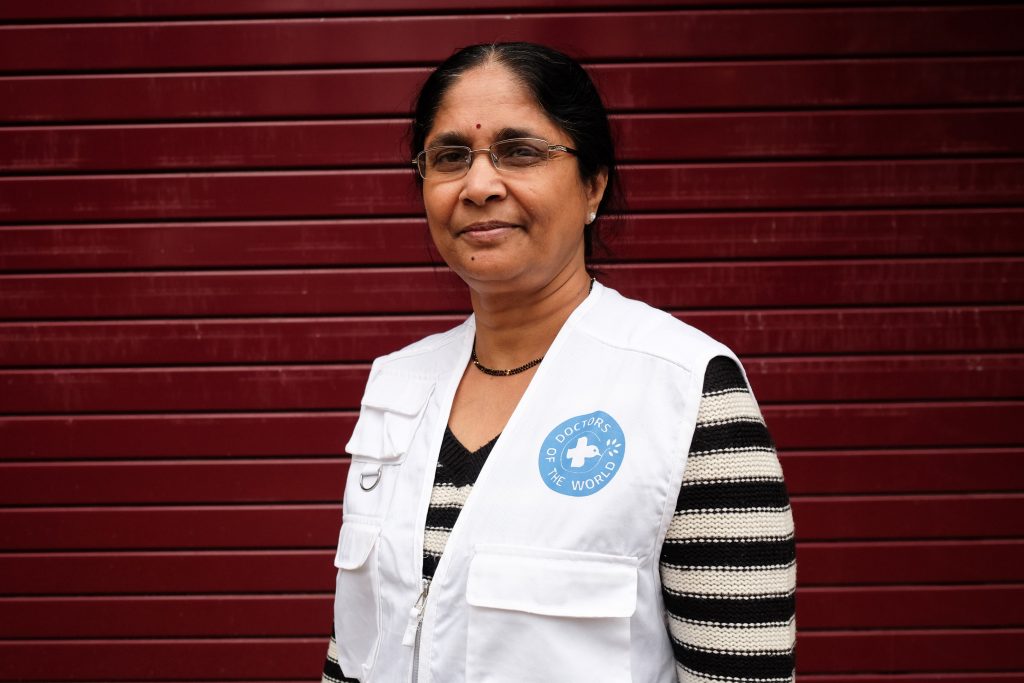
Raghavamma and her medical team work in three of Sofia’s refugee camps. She diagnoses health problems from simple colds caused by winter weather to broken bones caused by treks across mountainous borders.

Raghavamma and her family themselves fled Syria in 2013. After growing up in India, she had met her Syrian husband while at medical school in the 1980s and soon moved to the city of Homs with him.

She says her role isn’t just about diagnosing illnesses – it’s also about simply listening to people who have no one else to turn to. “In this job, there is a medical part but also a human part,” she says.

Sherzad Yousef, translator and data collector

“It’s nice to help people who need someone – and because I myself am a refugee in this camp, I know what these people suffer,” says Sherzad.

Sherzad is one of our translators and data collectors in Harmanli. He finds unaccompanied minors and registers them on our support programme, as well as distributing hygiene kits, coats, and shoes to the children we help.

Sherzad, aged 31, worked as an English teacher before he had to flee his home in Syria. He says many Harmanli residents desperately want to work and be productive. Many refugees had successful careers back home but now face lonely and monotonous days in the camp.

Sisin Ali, translator

Sisin is a 22-year-old Syrian refugee who works as a translator in our Harmanli clinic. She helps us deal with problems from sore throats to suspected miscarriages. When patients who only speak Arabic or Kurdish have to go to hospital, she grabs her coat and goes with them.

Sisin has been living in Harmanli for six months and, before she started working for Doctors of the World, she hated having nothing productive to do in the camp. “You end up talking to the walls!” she says. “It’s so good to have this job, I wish I’d been doing it since I arrived.”

Sisin was studying education before her family fled Syria last year – they trekked for days over the mountains along Bulgaria’s border to reach safetv in Europe. She hopes to restart her studies soon. “I want to be someone useful,” she says.

=====================================

We’re hugely grateful to the Start Network and UK aid for funding our two-month emergency projects in Bulgaria. The Start Network runs an emergency migration response fund, financed by UK aid, that can release money in less than 72 hours. 

We’ve decided to keep working in Bulgaria’s camps beyond this emergency phase, which ended in late March. Please donate to help us continue our work with refugees in Bulgaria around the world.

Your questions answered: Harmanli refugee camp

Published 31st March 2017

In early March our communications officer Shyamantha Asokan visited Harmanli, Bulgaria’s largest refugee camp.

Doctors of the World is the only medical organisation in Harmanli, where roughly 2,500 people live. Our clinic there sees 80-100 patients a day. We also run clinics in three refugee camps in Bulgaria’s capital Sofia. Everyday, we find and treat people who would otherwise be unable to see a doctor.

Shyamantha (pictured left) visited Harmanli to document our work there and learn more about the people we’re helping. Ahead of the visit, we e-mailed our supporters to see if they had any questions for Shyamantha to ask during her trip. We received many great questions and you can see some of the answers below.

“This trip was so important for Doctors of the World. I met and interviewed many of the refugees we’re helping, from unaccompanied teenagers to entire families. I also interviewed our doctors, social workers, and translators about their work,” Shyamantha said. “The people I met will stay in my mind for a long time. I look forward to sharing the stories and photos on our website soon.”

We are grateful to everyone who donated to cover the costs of the visit. You can still give now and any additional gifts will be used for future trips.


What do the refugees you’re meeting in Harmanli most hope for?

“Just to be safe.” Leena Zakhil, a 28-year-old Afghan refugee in Harmanli.

“I want to complete my studies. I want to be someone useful.” Sisin Ali, a 22-year-old Syrian refugee and a translator at our clinic in Harmanli.

“I would like my grand-daughter to become a government minister in the UK!” Farhad Hassan, a Syrian refugee whose 3-month-old grand-daughter was born in a Bulgarian hospital soon after the family arrived in Harmanli.

What are the main health problems that Doctors of the World sees in the camp?

“We saw a lot of people with bronchitis, colds, and flu during the winter. We also see skin conditions such as bed bugs and scabies, because people do not have enough access to hot water, soap, or a clean place to wash their clothes,” says Dr Stephany Spìndola, our medical co-ordinator in Bulgaria.

“All of these illnesses and conditions spread quickly in crowded conditions, and in Harmanli around 6-8 people often have to share a single room. Another thing is that many people in the camp have walked for days just to reach Bulgaria from Turkey, taking journeys over the mountains on the border, so we see fractures or serious muscular strains too.”

Is there a school in the camp?

“The Afghan community in the camp has set up an informal school, which one family told us is only available for children over the age of 7. There is nothing that is provided by the authorities,” says Thierry Dutoit, who was running our projects in Bulgaria until late March. “Alongside our medical work here, Doctors of the World is running a project where we support unaccompanied minors and we advocate for them to have access to a local school. We’re starting to have some successes with this, but the challenges remain huge.”

I would like to donate some books to the camp. Is this possible? Is there an NGO that I can send them to?

“Currently there is no NGO that deals with handing out books for the refugees in Bulgaria,” says Thierry. “It’s sad to say, but for Doctors of the World we have to focus on medical needs and protection first. Another issue regarding donations of books is that many of the refugees speak languages such as Arabic, Farsi and Dari, but only a few speak fluent English.”

What’s the situation with organised supplies to Harmanli, e.g. which organisations supply nappies, sanitary towels, books, translators, clothing etc.? Who covers all the various areas?

“Harmanli residents face a lot of gaps in access to essential items, because handouts of such supplies are quite random and not organised,” says Thierry. “People living in the camp are allowed to go out during the day and there are shops in the town, but of course many people struggle to afford to buy the supplies they need (many camp residents had very good jobs back home but are now not working).

“We currently focus on helping people access good and clean bedsheets because this prevents scabies. During the winter, when it was -20c, we also distributed winter jackets, shoes and blankets for unaccompanied minors who didn’t have them.”

Are there targeted mechanisms for diagnosis and treatment in any of the camps to deal with HIV/AIDS and the various HCV viruses?

Doctors of the World has begun its medical work in Harmanli with an emergency response, so we currently focus on primary health care and emergency cases,” says Thierry. “We have started to provide drugs to patients diagnosed with HCV, but HIV will have to be a future step.”

Which major pharmaceutical companies stepped forward to assist with medicines supply chains? 

Doctors of the World works with organisations such as IHP to access medical supplies at the lowest possible cost. As such, we have not been in contact with pharmaceutical companies directly. We do not usually deal with pharmaceutical companies directly, as there is a clear possibility of a conflict of interest.


Trip to Harmanli Refugee Camp in Bulgaria: Your Questions Answered

Shyamantha and one of the families Doctors of the World has helped

Earlier in March, communications officer Shyamantha Asokan visited the Harmanli refugee camp in Bulgaria. She was visiting

the Doctors of the World clinic in the camp to learn

more about the people being helped and how they came to be in Harmanli.

Ahead of the visit we e-mailed our supporters to see if they had any questions they would like Shyamantha to ask whilst she was visiting.

We received numerous responses and have printed some of the questions and answers below.

“This trip was so important for Doctors of the World. I met and interviewed many of the refugees we’re helping, from unaccompanied teenagers to entire families.

“I also interviewed several of our doctors, social workers, and translators about the conditions in the camps.

“The people I met will stay in my mind for a long time. Thank you so much to everyone who donated so generously. I look forward to sharing the stories and photos.”

We are also grateful to everyone who donated to pay the travel costs of the visit.

You can still give now and any additional gifts will be used to fund future trips.


Your questions answered

Question 1: What do the refugees you meet most hope for?

“Just to be safe.” Leena Zakhil, 28-year-old Afghan refugee living in Harmanli.

“I want to complete my studies. I want to be someone useful.” Sisin Ali, 22-year-old Syrian refugee and a translator at our clinic in Harmanli.

“I would like my grand-daughter to become a government minister in the UK!” Farhad Hassan, a Syrian refugee whose 3-month-old grand-daughter was born in a Bulgarian hospital soon after the family arrived in Harmanli.

“I would like to be a teacher. I have applied for [refugee] status to remain in Bulgaria. I hope they will accept me as I want to start studying.” Sunila Mohammedi, a 24-year-old Afghan refugee and one of our translators in Sofia.

Question 2: What are the main health problems we see in the camp?

Dr Stephany Spìndola, our medical co-ordinator in Bulgaria: “We see a lot of people with bronchitis, colds, and flu because of the recent cold weather. We also see skin conditions such as bed bugs and scabies, because people do not have enough access to hot water, soap, or a clean place to wash their clothes. All of these illnesses and conditions spread quickly in crowded conditions, and in Harmanli around 6-8 people often have to share a single room. Another thing is that many people in the camp have walked for days just to reach Bulgaria from Turkey, taking journeys over the mountains on the border, so we see fractures or serious muscular strains too.”

Question 3: Is there a school in the camp?

Thierry Dutoit, who runs our projects in Bulgaria: “The Afghan community in the camp has set up an informal school, which one family told us is only available for children over the age of 7. There is nothing that is provided by the authorities. Alongside our medical work here, Doctors of the World is running a project where we support unaccompanied minors and we advocate for them to have access to a local school. We’re starting to have some successes with this, but the challenges remain huge.”

Question 4: I would like to donate some books to the camp. Is this possible? Is there an NGO that I can send them to?

Currently there is no NGO that deals with handing out books for the refugees in Bulgaria. It’s sad to say, but for Doctors of the World we have to focus on medical needs and protection first. Another issue regarding donations of books is that many of the refugees speak languages such as Arabic, Farsi and Dari, but only a few speak fluent English.

Question 5: What’s the situation with organised supplies to these camps, e.g. which organisations supply nappies, sanitary towels, books, translators, clothing etc.? Who covers all the various areas?

Doctors of the World:  This varies by camp. Some supplies come from local volunteers and local organisations. Some other agencies, such as Save the Children provide some of these in some places. We give out hygiene and baby kits in some of the camps. Translators are an issue and we try to find them locally.  Last year we sent over 20 volunteer translators to Greece to work in camps.

Thierry:  Harmanli residents face a lot of gaps in access to essential items, because handouts of such supplies are quite random and not organised. People living in the camp are allowed to go out during the day and there are shops in the town, but of course many people struggle to afford to buy the supplies they need (many camp residents had very good jobs back home but are now not working). We currently focus on helping people access good and clean bedsheets because this prevents scabies. During the winter, when it was -20c, we also distributed winter jackets, shoes and blankets for unaccompanied minors who didn’t have them.

Question 6: Are there targeted mechanisms for diagnosis and treatment in any of the camps to deal with HIV/AIDS and the various HCV viruses?

DOTW: There are no targeted mechanisms. We deliver primary health care services, and in the event of blood screening being required, we routinely refer clients to local hospitals. Be aware that a screening programme would be sensitive for the population, as anything that could define their “status” could be problematic for them.

Thierry: Doctors of the World has begun its medical work in Harmanli with an emergency response, so we currently focus on primary health care and emergency cases. We have started to provide drugs to patients diagnosed with HCV, but HIV will have to be a future step.

Question 7: Which major pharmaceutical companies stepped forward to assist with medicines supply chains? 

DOTW: We work with organisations such as IHP, (http://www.ihpuk.org)  to access medical supplies at the lowest possible cost. As such, we have not been in contact with pharmaceutical companies directly. We do not usually deal with pharmaceutical companies directly, as there is a clear possibility of a conflict of interest.

x

With your support, Doctors of the World will make sure nobody suffers or dies due to lack of access to healthcare.