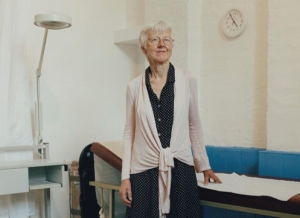
One year of Safe Surgeries!

Published 4th September 2019

What an incredible twelve months! One year after the launch of Safe Surgeries, over 220 GP practices across 28 cities and towns have joined the network. There are Safe Surgeries in 53 Clinical Commissioning Groups (CCGs) around the UK, stretching from Devon to Scotland, all taking a stand for inclusive and welcoming healthcare for everyone in their communities.

The initiative has been shortlisted for this year’s General Practice Awards for a Clinical Improvement Award in Public Health and Prevention, a fantastic recognition of the work of our members and their vital contribution to public health and community wellbeing in the UK. Furthermore, the Safe Surgeries toolkit, our flagship resource for reception teams, has been endorsed by the Royal College of General Practitioners (RCGP). This is a great recognition by the RCGP of the work practices are doing and the principles they go the extra mile to uphold.

Safe Surgeries for London

On 20 August we held our first London Safe Surgeries event, hosted by City Hall. We brought together over 60 Safe Surgeries, commissioners, Healthwatch, local authority and voluntary sector staff, to celebrate progress so far and discuss opportunities for creating truly inclusive primary care systems in London.

Our panellists included Dr Raj Patel, NHS England Deputy National Medical Director for Primary Care; Dr Victoria Tzortziou-Brown, Co-Honorary Secretary of the Royal College of GPs;Sultana Rahman, Assistant Programme Director, Healthy London Partnership; Dr Caroline Shulman, GP in Homeless and Inclusion Health; and Gisela Valle, Interim Director at Latin American Women’s Rights Service.

Here are some of their reflections on the role of Safe Surgeries driving more accessible primary care for all:

Dr Raj Patel, NHS England Deputy National Medical Director for Primary Care

Gisela Valle, Interim Director at Latin American Women’s Rights Service

Caroline Shulman, GP in Homeless and Inclusion Health

Why Safe Surgeries?

Doctors of the World launched the Safe Surgeries initiative to support general practice to provide holistic care to patients, like refugees, asylum seekers, undocumented migrants, and homeless people, who are often unable to provide documents. We provide resources, training and health policy updates, and we connect participating practices to each other to share their experiences.

The Safe Surgeries network was designed to support the most pivotal people in NHS access; primary care staff. Safe Surgeries don’t refuse to register patients without proof of address documentation or proof of identification. They never ask to see a visa or proof of immigration status. Staff do what they can to reassure patients that their personal information is safe and they use an interpreter when needed. They display posters reassuring patients that the surgery is a safe space and they empower frontline staff with training and an inclusive registration policy.

By following these steps, primary care staff can ensure that everybody can access healthcare when they need it.  

Joining is free – sign up here.

For more information, please email safesurgeries@doctorsoftheworld.org.uk

INGO statement on attacks in Dhamar that killed and injured scores of people

International non-governmental organisations working in Yemen strongly condemn a series of attacks by the Saudi-led coalition on a former community college that has lately been used as a detention facility in Dhamar city. These attacks have reportedly led to the deaths of over 100 people, with many injured. This latest incident once again demonstrates the absolute disregard for civilian life that has been consistently shown by all parties to the conflict in Yemen.

Those being held at the facility in Dhamar were detainees and as such they are civilians who must be protected from harm under International Humanitarian Law (IHL). We urgently call for an independent, credible investigation into this incident, to find out what happened and hold the perpetrators to account.

As we approach the Human Rights Council session in Geneva next week, these attacks are a reminder of the continual and unrelenting violence being perpetrated against Yemen and its people, and of the imperative to hold to account those who continue to breach IHL.

Further, it is also unacceptable that a community college is being used as a detention centre. Schools and colleges constitute essential civilian infrastructure and should be providing educational opportunities to a generation of young Yemenis who at this stage in the almost five-year conflict are seeing their futures vanish – it is essential that these facilities are protected from being used as prisons or military facilities. It is also essential that all civilian infrastructure such as schools, hospitals, water supply systems, agriculture facilities and others remain protected from harm by all sides in the conflict.

We call on all parties to the conflict to do everything possible to prevent harm to civilians and to respect and protect civilian life and infrastructure. The only way forward for Yemen and the only way out of this war is a constructive, inclusive, sustainable political solution that puts the Yemeni people at the centre.


Response to the Ebola crisis in DRC

Published 3rd September 2019

Update: 10/9/2019


Currently, our teams are training medical staff on the front line in prevention and control of the infection. We have started with the 51 most at-risk structures, to ensure early identification of suspected Ebola cases, and will carry it out in 130 facilities.

Thanks to our experience working with survivors of sexual violence treated at Dr. Mukwege’s Panzi Hospital, we are providing specialist support to families affected by the virus and supporting the integration of cured patients into their families and communities


Olivier van Eyll, desk officer for DRC, said:

“This response is complicated by several factors: several Ebola outbreaks locations are situated in eastern DRC (some in conflict zones), there is a lack of trust from the population and finally, Ebola is added to other health problems such as measles, malaria, and malnutrition. It is therefore essential to stay engaged and work with communities. ”


——-

More than 2,000 people have died since the Ebola outbreak a year ago in the eastern regions of the Democratic Republic of Congo (DRC).

Medical professionals there have to work hard to contain the virus, and they face daily adversity due to the presence of armed groups, widespread violence, and in an environment of mistrust towards health workers. There are about 120 armed groups in the region, who regularly harass and attack Ebola treatment centres. Political friction and socio-economic degradation have been exasperated by a sharp increase in violence and tension between different communities.

Butembo and Katwa are the epicentres of the crisis and where our emergency response team have set up. They have begun to work in healthcare centres to add strength to the response, while educating the community about the disease, to try to prevent further spread.

Supporting the work with the local healthcare system is fundamental to contain the epidemic. The priority activity is to run training courses with health personnel so that they can quickly identify the virus and therefore reduce the risk of contagion, which can be lifesaving for themselves and other patients. They can then make referrals to help those infected get treatment. In the first week of August, 36 staff members in five health centres attended training on the best practices to reduce the spread of Ebola, and treat patients who have caught it.

Following that, further training in psychosocial care focusses on the skills needed to help people who are dealing with loss of loved family members and traumatised by the devastating impact of the disease on family and community.  This is a key step to reconstruct social support networks, which have otherwise been destroyed by violence, poverty, social exclusion and conflict.

The emergency teams work to improve the communication, mediation, and negotiation skills of healthcare staff, to help them rebuild trust and gain the confidence of the communities affected.

Overall, more than 10,000 people will benefit from this initial response and we remain alert to the risk of a further spread of the epidemic.
We continue to work to provide care for all those affected and to contain further outbreaks. Please consider making a donation today to ensure our work can continue.


The stick, do you remember that? On Calais, Dunkirk, and the Channel

“If we allow our humanity to be undermined by allowing people to drown at sea on our coasts, or by allowing lifesaving healthcare to be withheld, we risk turning our backs on the most vulnerable as well as the principles by which we provide healthcare”.
                                                                        Lucy Jones, Director of Programmes


Today, around 600 people live in informal camps in Calais, and around 800 in Dunkirk. On a daily basis, they are evicted from these makeshift settlements, the police take their tents and sometimes even remove personal objects such as food, medication, and phones.

People are exhausted, stressed, angry, and because of the constant evictions feel like they have no personal space in which to retreat, rest and be at peace. Many suffer from Post Traumatic Stress Disorder (PTSD) because of their journey or their life back home. They are forced to live life in limbo, with little support and in very difficult circumstances.

We conducted a survey in Dunkirk in March 2019, and we found that:

  • Nearly 60% of responders say they don’t have sufficient access to drinking water. 80% don’t have access to a shower and 87% don’t have access to toilets
  • More than 50% report that they haven’t received medical care when they experienced a health issue
  • Around 52% said they don’t have enough to eat
  • Almost 69% say they don’t know the emergency number to request accommodation

Refugees in Calais and Dunkirk are stuck, surrounded by uncertainty, without support. Hospitals are often very far from the settlements and they are very hard to reach for the refugees. There is no psychological support for them in Calais, and a state psychologist is available in Dunkirk for just one afternoon a week. In the last few months, there have been cases of self-harm and suicide attempts.

The terrible living conditions in Calais and Dunkirk have a negative impact not only on the mental and physical health of refugees now, but will have an impact on their future as well. In the UK, we met two unaccompanied children who had recently arrived from Calais. Over dinner, they joked between themselves about lorry drivers in France, and how they remembered the angry ones more than anything.

“Yes, the ones that come out with those long sticks – like this big! Do you remember that? Do you want to go back to Calais?”, they jokingly asked each other.

In these days of political debates and alarmist headlines, we need to remember who the refugees in Calais and Dunkirk are. They are people, they are sons and daughters, fathers and mothers, students and engineers, political activists and artists. They are people with a past and a future who want to be reunited with their families and communities, to live in a country where they can speak the language and work, where they can be safe.

In Calais and Dunkirk, we run a mobile clinic providing medical care in the camps, psychosocial support activities, we provide information on their right to healthcare and liaise between them and the hospitals. In our UK clinic, we help them register with a doctor and access care.

Britain has a proud history of providing safety to those in need. Now, we need not to turn our backs now to those who need us the most.


Two Years On: Rohingya Deserve Justice, A Place at the Table

Published 21st August 2019

61 NGOs warn of worsening crisis in Myanmar; call for refugees’ engagement on safe, voluntary returns

21 August 2019

Two years after mass atrocities in Myanmar forced more than 740,000 people to flee for their lives, the Government and the people of Bangladesh continue to generously host nearly 1 million Rohingya refugees. While UN agencies and over 130 local, national, and international NGOs have supported the Government of Bangladesh to provide life-sustaining assistance, refugees require much more than basic support for survival; they need their rights, security and dignity. Many long to return but fear further violence and persecution back home.

Refugees report feeling fearful and anxious following recent reports about possible expedited repatriation to Myanmar in the current conditions which do not guarantee their safety and rights. Current levels of engagement do not afford them their right to make informed decisions about their future, including voluntary return.

Worsening Conditions in Rakhine State (Myanmar)

Discriminatory policies in Myanmar mean that Rohingya communities in Rakhine State continue to face severe movement restrictions, as well as limited access to education, healthcare, and livelihoods opportunities. Some 128,000 displaced Rohingya and other Muslim communities have remained trapped in confined camps in central Rakhine State since 2012, unable to return home.

Since April 2017, the Government of Myanmar has taken initial steps towards the “closure” of some of these camps for internally displaced people in Rakhine State. New structures have been built on or next to existing sites, but there has been no meaningful progress on freedom of movement or human rights. Consultation with displaced communities is limited, and they remain unable to return to their original communities or another location of choice. Achieving durable solutions requires that the Myanmar government address the fundamental issues of equal rights and ensure that all communities in Rakhine State can live in safety, access basic services and pursue livelihoods opportunities.

The conditions in Myanmar are not conducive to the Rohingya refugees’ return at this time. As a recent report by the Australian Strategic Policy Institute found, not only have preparations for return been minimal, but authorities continue to raze Rohingya villages to make room for military bases and potential repatriation camps. The recent upsurge in violence has worsened the already precarious humanitarian situation in central and northern Rakhine State.

Striving for Dignity in Cox’s Bazar (Bangladesh)

For the past two years, Rohingya refugees have remained dependent on humanitarian aid in the camps in Cox’sBazar. The collective efforts of the humanitarian community under the leadership of the Government of Bangladesh have improved camp conditions, strengthened monsoon preparedness and helped prevent disease outbreaks.

Yet, living conditions in the camps remain dire, with growing concerns about safety and security. Gender-based violence and restricted freedom of movement increase the risks faced by refugee women and girls. Persons with disabilities and serious medical conditions experience barriers in accessing essential services. With shrinking funds1 and continued restrictions on refugees’ access to education and livelihoods, the crisis is likely to worsen.

The Government of Bangladesh and generous residents of Teknaf and Ukhiya Upazilas in Cox’s Bazar were thefirst responders when refugees arrived in Bangladesh in August 2017. Today, some 500,000 Bangladeshis living near the camps continue to bear the socio-economic and environmental impact of the influx, amidst growing tensions with refugees over limited resources and services.

The international community must respond and stand beside Bangladesh to deliver a well-funded response that will improve living conditions and allow refugees and host communities to live in dignity.

NGOs in Bangladesh and Myanmar committed to providing assistance, but call for critical action by all parties

In response to the current crisis, we, the undersigned national and international organizations in Bangladesh and Myanmar, remain committed to providing assistance and protecting the rights of refugees, stateless, internally displaced persons and host communities until appropriate solutions to their displacement within and outside Myanmar are identified, including safe and voluntary repatriation. We urge all parties to:

  • Ensure meaningful participation of Rohingya in decision making processes about their future: In light of ongoing discussions to expedite returns, the Rohingya must be meaningfully engaged by the Governments of Myanmar and Bangladesh in any discussions and decision making about their future (including their safe and voluntary return) through an inclusive process involving children, youth, women, elderly and persons with disabilities.
  • Respect Rohingya’s human rights in Myanmar: We call on the Government of Myanmar to address the root causes of the crisis in Rakhine State by implementing the Rakhine Advisory Commission recommendations and create the conditions necessary to end Rohingya’s displacement while respecting each refugee’s right to make a free, informed decision about their return. This must also reflect calls by Rohingya communities for justice and accountability, citizenship, protection of civilians, freedom of movement, as well as non-discrimination and sustained access for humanitarian organizations, independent journalists and media in Rakhine State, in line with international standards. We urge the international community to support these efforts, by condemning past and ongoing violence in Myanmar and call on the Government of Myanmar to ensure full respect for human rights.
  • Support Rohingya’s inclusive access to education, livelihoods and protection: We call for the creation of an enabling environment for Rohingya on both sides of the border to access rights and services, such as education, skills training and livelihoods. We urge both governments to reduce the vulnerability of Rohingya and host communities by strengthening protection systems and access to justice for all. We appeal to the international community to fully fund the 2019 Joint Response Plan for the Rohingya Humanitarian Crisis and the 2019 Myanmar Humanitarian Response Plan to ensure uninterrupted, life-sustaining services to IDPs, refugees and host communities.
  • Identify medium/long-term solutions: We call on the international community to identify appropriate solutions to the Rohingya’s displacement within and outside Myanmar while continuing to support the Government of Bangladesh, progressively implementing the commitments of the Global Compact on Refugees on self-reliance and responsibility-sharing and pursuing a regional solutions approach to address the needs of displaced and host communities.


[1] Funding commitments for the response remain insufficient—with only 34% of the joint 2019 humanitarian appeal worth USD 920 million covered.

List of signatories:

  1. ACTED
  2. Action Against Hunger (ACF)
  3. ActionAid Bangladesh
  4. Adventist Development and Relief Agency (ADRA) Bangladesh
  5. Arts for Action & The Just Acts Consortium
  6. Asian Dignity Initiative
  7. Association for Pisciculture and Cattle Development (APCD)
  8. CARE
  9. Caritas Bangladesh
  10. Catholic Relief Services (CRS)
  11. CBM
  12. Center for Natural Resource Studies (CNRS)
  13. Center for Social Integrity (CSI)
  14. Centre for Disability in Development (CDD)
  15. Christian Aid
  16. Community Development Centre (CODEC)
  17. Community Partners International (CPI)
  18. Concern Worldwide
  19. Consortium of Dutch NGOs (CDN/ZOA)
  20. Cox’s Bazar Environment, Human Rights and Development Forum (CEHRDF)
  21. Danish Refugee Council (DRC)
  22. Development Initiative for Social Advancement (DISA) Bangladesh
  23. Education and Development Foundation(EDUCO)
  24. Gonoshasthaya Kendra (GK)
  25. Good Neighbors Bangladesh
  26. HelpAge International Bangladesh
  27. HELVETAS Swiss Intercooperation
  28. HOPE Foundation
  29. HumaniTerra International (HTI)
  30. ICCO Cooperation
  31. International Rescue Committee (IRC)
  32. ISDE Bangladesh
  33. MAF Bangladesh
  34. Medair
  35. Médecins du Monde
  36. Mercy Corps
  37. Migrant Offshore Aid Station (MOAS)
  38. Norwegian Church Aid (NCA)
  39. Norwegian Refugee Council (NRC)
  40. Oxfam International
  41. Peace Winds Japan (PWJ)
  42. Prantic Unnayan Society
  43. RDRS Bangladesh
  44. RISDA Bangladesh
  45. Safer World
  46. Samaj Kalyan Unnayan Shangstha (SKUS)
  47. Save the Children
  48. Sheba Manab Kallyan Kendra (SMKK)
  49. SHED Bangladesh
  50. Shushilan
  51. Social Assistance and Rehabilitation for the Physically Vulnerable (SARPV)
  52. Solidarités International (SI)
  53. Terre des Hommes (TdH)
  54. The Lutheran World Federation (LWF)
  55. Unite Theatre for Social Action (UTSA)
  56. United Purpose
  57. Voluntary Service Overseas (VSO)
  58. Welthungerhilfe (WHH)
  59. World Concern
  60. World Vision
  61. Young Power in Social Action (YPSA)

Healthcare experts address inequalities in primary care access in London

Published 20th August 2019

20th August, London – Leading NHS and charity sector experts meet at City Hall to discuss how to tackle inequalities in primary care access, in the context of a new report by medical charity Doctors of the World which sheds light on worrying GP registration policies which discriminate against some of the most vulnerable people in our communities.

Everyone living in the UK is entitled to see a GP free of charge. This is the most effective and efficient means of preventing ill-health and promoting well being. Despite this, people in need of healthcare are wrongly turned away from GP practices in England every day.

Doctors of the World (DOTW) UK’s Registration Refused reporting (2016-2018) monitors the wrongful GP registration refusals of their patients, most of whom are migrants in vulnerable circumstances who are living in poverty. Registration Refused 2018 shows that almost one fifth of attempts by Doctors of the World’s volunteers to register patients with a GP were wrongly refused, for reasons that contravene NHS England guidance.

Lack of paperwork (proof of ID or address) was the most common reason for refused registration – accounting for 64% of cases – and is likely to disproportionately affect already vulnerable groups. Thirty percent of GP practices approached (299 of 990) refused at least one registration attempt. Almost all of these (n=256; 87%) were rated as ‘Good’ or ‘Outstanding’ by the Care Quality Commission (CQC).

The prevalence of this issue has worrying implications both for public health and the health and safety of people in need, including people who are homeless, migrants in vulnerable circumstances and survivors of trafficking and modern slavery.

The event at City Hall will take place under the umbrella of the Safe Surgeries initiative, which aims to improve access to primary care by supporting providers to offer more welcoming and inclusive services. Practices that join are part of a supportive network of GP practices who are committed to delivering inclusive and accessible services for everyone in their communities, and can access free training and practical resources.

Panel discussion will explore the question of “What should an inclusive primary care system for all Londoners look like?”. Our expert panellist will include Dr Raj Patel, Deputy National Medical Director for Primary Care for NHS England and NHS Improvement and Dr Victoria Tzortziou-Brown, Co-Honorary Secretary of the Royal College of GPs, as well as patient representatives and experts in migrant and homeless health.


Dr Tom Coffey OBE, Mayor of London Health Advisor, said: “The difficulties the most disadvantaged Londoners face when registering for a GP expose the stark health inequalities across our capital. Everyone should have easy access to a GP, yet this again shows that the health of Londoners is being profoundly shaped by who you are and where you live. The Mayor is taking bold steps to make London a healthier, fairer city, and we need the Government and everyone across the health and care service to do all they can to tackle these health inequalities in the long term.”

Lucy Jones, Director of Programmes at Doctors of the World UK, said: “The NHS was funded on principles of equality and non-discrimination and its better for everyone that the most vulnerable in our communities can see a GP. Yet unnecessary immigration and paperwork in GP surgeries are stopping people from getting the healthcare they need.  One fifth of our attempts to register patients with GPs are wrongfully refused. This is already worrying. However, we know that when vulnerable patients approach GP practices themselves, a successful registration is even less likely. So it’s great to see that practices and leaders in the sector are working to make their services more accessible for all”.


  • Read the Registration Refused 2018 brief
  • Read the Registration Refused 2018 full report 


World Humanitarian Day 2019

Published 16th August 2019

For World Humanitarian Day, this year we celebrate the work of female humanitarians across the globe, amid the risks which they may face in serving others.

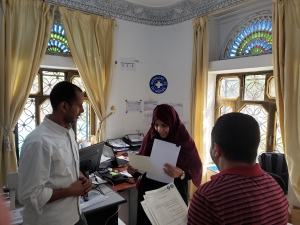
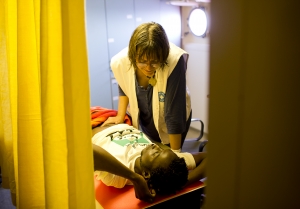
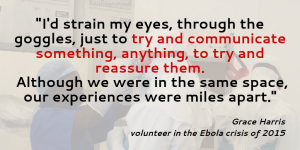
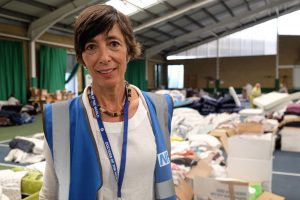
From the clinic in east London to the governorate of Sana’a in Yemen, every day women humanitarians are changing the world. They want to share their stories with you:


“It has become very clear to me that, if I want to see things changed, I should be in the arena. So, here I am, choosing courage over comfort every single day.” Meaza Semaw, Medical Coordinator, Ethiopia.


“In this patriarchal society where beating wives is considered the norm, my greatest motivation is that at least I am doing something to create awareness to prevent and reduce gender-based violence. The main challenge I face as a woman is to change the way of thinking of men because I am a “woman”. Why they would listen to a “woman”.” Dr. Syeda Mushrefa Jahan, GBV Programme Coordinator, Bangladesh.


In comparison to women (and especially mothers) suffering the war in my country, I feel extremely lucky to be on the side that provides help rather than the side in need of help. Feeling that I can make a difference, even little, to support men, women, boys, and girls in such a dire situation is just a bless!” Wafa’a Al Saidy, General Coordinator, Yemen. 


“As Nelson Mandela said: “What counts in life is not the mere fact that we have lived. It is what difference we have made to the lives of others that will determine the significance of the life we lead.” This quote inspires me a lot and Doctors of the World is providing us this platform to make a difference in others’ lives. Working with them as a pharmacist, involved in drug procurement, supply, and management, gives me the satisfaction of being part of this humanitarian work and help in the provision of essential drugs to needy people.” Aneela Tahir, Senior Pharmacist, Pakistan. 


“As a feminist, I think individual and collective self-care should be recognized as key strategies to enable female humanitarian professionals, especially national staff, to build up personal resilience and maintain their participation in humanitarian movements and actions. This latter is key if we want to achieve our objectives.” Lucille Terré, Former Programme Coordinator, Central African Republic.


“Being a humanitarian worker is a very fulfilling work: it’s a way to contribute, through my field of experience, in strengthening links between populations and individuals throughout the world. I share, give, receive, meet, especially with those most in need of material help, but often so rich in moral values.” Anne Kamel, Medical Coordinator, Emergency Relief Programmes.


Joint Letter to the Home Secretary

Published 30th July 2019

30th July 2019


Dear Home Secretary,


Congratulations on your appointment to one of the great offices of state. You will lead the Home Office through a period of great challenge, but at a moment of great opportunity for reform. We are writing to you as organisations that work with, are led by, or represent people who have moved to the UK and have made it their home. We want to raise a number of pressing issues, which require action if the immigration and asylum system is to regain the trust of the public.


Allowing people who seek safety in the UK to re-build their lives

As a global power and as the fifth richest country in the world with a proud history of providing safety to those in need, Britain has an obligation to lead by example and guarantee shelter and safe passage to those who seek asylum or refuge from conflict, persecution and crisis. We can and must build a system where safe, legal routes to asylum are accessible to all who need them. We must build a system where asylum decisions are made quickly and fairly, so that people can rebuild their lives in the UK. Currently, people seeking asylum in the UK are effectively banned from working, meaning that they are at a high risk of destitution and denied the opportunity to provide for their families and contribute to the economy. Funding cuts to ESOL (English for speakers of other languages) classes must be reversed and new long-term funding guaranteed. We need comprehensive support systems which help those who seek asylum to navigate life here and become active members of their local communities by allowing them to work and study.


Keep families together

All families belong together. Under current rules however, British nationals must demonstrate they earn an income well above the minimum wage in order to live with their partner in the UK. British nationals with parents abroad find it almost impossible to bring them here as they grow older. As a result, tens of thousands of British families live in separation, with children unable to see their parents except through Skype. The UK should make it easier for its citizens to build a life here with the people they love. Refugees in the UK who have lost everything should have the right to be reunited with their close family in the UK so that they can make a fresh start together and integrate in their new community. Reintroducing legal aid is vital for them to navigate the complicated process of being reunited with their families.


Secure the rights of European citizensand their family members and protect vulnerable groups

We welcome the Prime Minister’s announcement to guarantee the rights of European citizens in the UK, but we urge the government to enshrine those rights in UK law. The Home Office must step up its efforts to provide adequate and concrete information about the EU Settlement Scheme to EU citizens and their family members who are often non-EU nationals. This should include targeted outreach activities to vulnerable EU citizens such as elderly people, children in care, disabled people, rough sleepers and victims of domestic violence. These groups are at risk of not being aware of the scheme at all, of being misinformed, of not having access to accurate information and support services to navigate the scheme and of eventually facing the hostile environment if they miss the application deadline.


Stable work and study routes

Our current immigration system ties workers to employers, distorting the market and creating opportunities for exploitation and short-term visas. Ever-changing requirements make workers’ lives unstable. We need more sensible, more flexible rules that encourage long-term integration and stability for families. Children and young people who grew up in the UK or were born in this country should have equal access to education and work as their British peers regardless of their parents’ immigration status. The Home Office should guarantee easy and affordable access to citizenship for this young generation.


Treat human beings with humanityand end indefinite detention

Our immigration enforcement system treats people brutally: families are woken in the middle of the night by immigration raids and parents are taken away in front of their children. Too many people are detained unlawfully and with no idea when they may be set free. Access to healthcare within detention is often inadequate. The Home Office under your predecessors started to take important steps in reforming immigration detention and pursuing alternatives to detention. There is cross-party support in Parliament for a 28-day time limit on detention. We ask you to pursue these reforms with urgency.


End the Hostile Environment

Our communities, our public spaces, our public services and our workplaces should be places open to us all, where no one fears discrimination or persecution. The hostile environment builds a border through our hospitals, homes, schools, police stations and communities. Doctors, landlords, police officers and teachers have been tasked with verifying immigration status and often people who look or sound ‘foreign’ are asked to show their papers in order to see a doctor or go to school. We are also concerned about the collection and processing of increasing amounts of personal data of migrants and the lack of safeguarding in place to regulate its use in the broader immigration process. We must end the hostile environment so that discrimination is effectively challenged and communities can unite, build bridges and prosper. Additionally, the recommendations of Wendy Williams’ Lessons Learned Review must be published immediately. We ask you to commit to ending the Hostile Environment.


Build a better Home Office

The Home Office should make timely, correct and fair decisions about people’s status, supporting people to get on with their lives and become active members of their community. It should not price people out of status or citizenship and should be transparent and accountable. Cuts to funding and a lack of investment in training and support mean that caseworkers are overstretched and the department struggles to retain staff. Only a department that works efficiently, values its staff, embraces transparency and uses evidence to make policy can deliver an immigration system that earns public trust. We ask you to invest in that reform as a matter of urgency.


Recent governments have seen scandal after scandal rooted in the failure of the immigration and asylum system to work effectively and fairly. Building a better one will not be easy, but it is more essential than ever. We look forward to working with you and your department to make it happen.


Yours sincerely


Leila Zadeh, Executive Director, UK Lesbian & Gay Immigration Group

Tahmid Chowdhury, Joint-CEO, Here for Good

Kerry Smith, Chief Executive Officer, Helen Bamber Foundation

Emma Harrison, CEO, IMIX

Satbir Singh, Chief Executive, the Joint Council for the Welfare of Immigrants (JCWI)

Rosario Guimba-Stewart, Chief Executive Officer, Lewisham Refugee and Migrant Network

Josie Naughton, Chief Executive Officer, Help Refugees

Eiri Ohtani, Project Director, The Detention Forum

Arten Llazari, CEO, The Refugee and Migrant Centre (Black Country and Birmingham)

Toni Soni, Centre Director, CRMC, Coventry Refugee and Migrant Centre

Wayne Myslik, Chief Executive, Consonant

Emily Crowley, Chief Executive, Student Action for Refugees

Dr Laura Miller, Interim Director, Solidarity with Refugees

Nazek Ramadan, Director of Migrant Voice, Migrant Voice

Alice Lucas, Advocacy and Policy Manager, Refugee Rights Europe

Maya Mailer, Campaigns Director, Asylum Matters

Kate Smart, Director, Asylum Welcome

Sarah Teather, Director, Jesuit Refugee Service UK

Jo Cobley, Director, Young Roots

Jill Rutter, Director of Strategy and Relationships, British Future.

Dr Edie Friedman, Executive Director, The Jewish Council for Racial Equality (JCORE)

Nicolas Hatton, CEO, the3million

Hazel Williams, National Director, NACCOM Network

Rt Revd Jonathan Clark, Chair, Churches’ Refugee Network

Kat Smithson, Director of Policy and Campaigns, National Aids Trust

Siân Summers-Rees, Chief Officer, City of Sanctuary

Lucy Jones, Director of Programmes, Doctors of the World UK

Clare Moseley, Founder & CEO, Care4Calais

Dr Ruvi Ziegler, Chair, New Europeans

Anna Jones, Co-Founder, RefuAid

Dr Mohamed Nasreldin, Director, North of England Refugee Service

Ali Harris, CEO, Equally Ours

Kush Chottera, Executive Director of Europia

Gus Hosein. Executive Director, Privacy International

Eleanor Harrison, CEO, Safe Passage

James Wilson, Acting Director, Detention Action

Sally Daghlian OBE, CEO, Praxis

Salah Mohamed, Chief Executive, Welsh Refugee Council


“We are happy to register you” Practice Manager, Anwar Hussain

Published 26th July 2019

“We thought, ‘Let’s go out to the community and ask people and get them to work together with us to achieve some of the things we want to do”


Anwar Hussain is the Practice Manager at St Paul’s Way Medical Centre, a growing GP practice in Tower Hamlets, east London, with a list size of over 13,000 patients. The GPs and nurses at St Paul’s are supported by on-site benefit advisors, midwives, psychologists and more.

A Safe Surgery since February 2019, Anwar spoke to us about how he and his colleagues have actively engaged patients to ensure accessible, high quality care. Reflecting the ethnic make-up of the borough, the majority of St Paul’s Way’s patients are of Bangladeshi origin.

Patient and community involvement are a clear priority for the practice. They both are encouraged to help shape services, and patient Health Champions are recruited and trained to engage and empower their communities, friends, and families. Anwar says:

“When we first took over the practice we wanted to learn from patients… we thought ‘how do we open this up for more people to come in and give us ideas about how we can improve services?’ And we thought ‘Let’s go out to the community and ask people and get them to work together with us to achieve some of the things we want to do’”.

St. Paul’s takes an open approach to patient registration, but accessibility remains one of their greatest challenges. They used to require proof of address and ID, but as many patients had neither, they realised a change was needed.  Having met patients who were turned away elsewhere, Anwar is conscious that other local practices have a different approach. He explained:

“We say, “You know what, we’re happy to register you” and it works out fine. There are still some surgeries who probably are not aware of how flexible they can be”.

Patients without a fixed address can register with the practice address and according to Anwar, this hasn’t raised any challenges – patients generally have a phone number or email address that staff can use to contact them. He’s hopeful about the potential for online services to improve access and raising awareness of these services is a current focus.

When one of their GPs heard about Safe Surgeries, St Paul’s decided it was a perfect fit, as well as a way to celebrate and share the work they’ve been doing for some time. Anwar says:

“We’re always kind of a forward-thinking surgery, we always want to try something new… to learn and try new incentives…We thought, ‘Actually we’re already doing this so why not buddy up with these guys and shout out about it a bit more’”.

Anwar is keen to raise awareness about what Safe Surgeries does and how GP surgeries, doctors and managers can make registration processes easier for patients. Ultimately, he hopes it will improve access for their wider community too, because there are still so many patients who are not seeing a doctor because they think they can’t or because they don’t have the right documents to hand.


To sign your practice up as a Safe Surgery and become part of a group of over 200 inclusive practices, click here.

*The GP practice in the image is not St Paul’s Way Medical Centre.

Written by Isabel Abbs and Jennie Corbett.

Emergency: Ebola, a growing crisis in DRC

Published 22nd July 2019

In the Democratic Republic of Congo, the second-worst outbreak in history is spreading quickly.


Doctors of the World is concerned about the spread of Ebola that is affecting a growing number of areas in DRC.

Our team is working in Butembo and Katwa, in North Kivu, the main centres of contagion. The most recent data from the Ministry of Health shows the escalation of Ebola cases in DRC.

2,484 cases of Ebola have been confirmed, and 1,698 people have died due to the outbreak. The numbers are likely to be higher as cases aren’t been referred due to mistrust in the system and fear of being stigmatised.

The geographical location of the DRC makes the situation more complex. Bordering with nine countries, the DRC risks becoming the epicenter of an international outbreak. “The areas most impacted by the epidemic are close to neighboring countries like Uganda, where there has already been a case, and Rwanda”, says Ricardo Angora, coordinator of mental health and psychosocial support in the DRC for Doctors of the World.

Ebola infects humans through close contact with animals and people. It can spread very quickly, through small amounts of bodily fluids and through contact with contaminated environments. This creates a series of challenges in containing the outbreak.

We are currently supporting the Ministry of Health in responding to the epidemic through training in control and prevention of the infection. Further, we train personnel to identify and refer potential cases without putting themselves at risk. We also offer psychosocial support to those working in the first line, helping to rebuild social support networks that have been destroyed by the disease and by the context of violence and poverty.

The effects of Ebola go beyond the deaths it causes and the people it infects. Perhaps the most devastating consequences are those derived from its weakening and destructuring of health systems. The population, which already had low confidence in them, has stopped coming seeking treatment for fear of contagion or to be falsely diagnosed and stigmatized.

We continue to work to provide care for all those affected and are planning to scale up. Please consider making a donation today to ensure our work can continue.

Volunteer Week Messages

Published 4th July 2019

During Volunteer Week, in June 2019, we asked some of our supporters to share a message for our volunteers. Here are some of them:


I think it’s wonderful that the volunteers give up their time to help those in need. It seems this help is needed more and more in our country – and with the state of Politics at the moment will become even more relevant. Thank goodness there are good people around like you who have empathy for others and behave in an unselfish manner. – Kay

GP-Paquita-De-Zulueta

After this week’s Woman’s Hour serial about Modern Slavery and Ken Loach’s film “I Daniel Blake”, it’s obvious that there is a desperate need for your services. I am so grateful than in this time of a heartless government, someone is doing something to treat people who would otherwise not be able to find medical help either through fear or inaccessibility of services otherwise. I am fortunate in not needing the services, but I am so pleased that you don’t mess about talking the talk, but just get on with it. Thank you from the bottom of my heart. – Rwth


It was wonderful to receive a message such as yours about volunteers and their heroic work. Although I am not one of them, I am well aware of the roles they play to make life better for others. So I take this opportunity to join you and the rest in praising and thanking them for what they are. Thank you, volunteers. – John

I am so proud of you all at DOTW, and although I’ve never met you personally, I feel privileged to be a small part of the organisation and to help in a small capacity – wish I could do more! Your brilliant medical volunteers are superb, and thank goodness they are there to help where and when needed. Bravo to you ALL at DOTW – Jean

x

With your support, Doctors of the World will make sure nobody suffers or dies due to lack of access to healthcare.