Refugee Week 2019 – Abelarda’s story

Published 21st June 2019

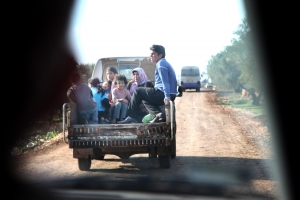
“Without Doctors of the World’s support in the Mother and Child Centre in Yemen, we could have died! I was in my ninth month of pregnancy and I was bleeding. We had a similar case in our village before Doctors of the World came, where the pregnant girl had died, and I was so scared that the same thing might happen to me. I was admitted to the Mother and Child Centre and was advised to have a cesarean operation. Doctors of the World’s doctors and referral team transported me to a hospital where I had my operation and gave birth to my healthy baby. I was discharged after one week. May Allah reward Doctors of the World.”
Refugee Week 2019 – Aaminah’s story

Published 19th June 2019

As part of Refugee Week, we are sharing stories about doctors and patients across the globe, with a special focus on post-natal care. Read our first story:

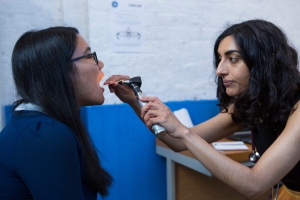
Aaminah, Doctor and volunteer in Slovenia:

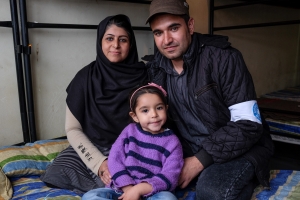
“One patient I transferred was a desperately sick little baby who was only two months old and had been born just before his family fled from Syria. He had a respiratory infection, was unable to feed and was in bad respiratory distress.

The parents and baby were travelling together with no extended family members, and we managed to negotiate with the hospital to keep all of them together at the hospital. They had already been admitted in Turkey for a few days during their travels, and I think they knew that their child was still unwell.

The mother was only 20 years old but she was so strong. The pediatrician I referred them to was an amazing old school doctor who spoke excellent English and was clearly very skilled. After a thorough history and examination, her first action was to give the baby a bath. She was amazing at reassuring the parents and was very empathetic; offering them showers and washing all their clothes.

I thought the child would have to be admitted for at least 48 hours and the pediatrician agreed, but it was nice to see the family all together in a safe space in the meantime.”


Refugee Week 2019

Published 18th June 2019

We’re celebrating Refugee Week! June 17th– 23rd is Refugee Week, which celebrates refugees’ contributions across the UK and promotes the fostering of a better sense of community.

This year, we are celebrating Refugee Week in two ways. Firstly, we have taken over the walls on the upper floor at BoxPark Croydon with our latest Print for Refugees collection. This is a part of an on-going project where talented photographers donate their works to be sold at reduced rates, with all proceeds going to Doctors of the World! You can browse the stunning collection or buy one of our stylish Prints for Refugees t-shirts here. And don’t miss your chance to come and see the collection in person before the end of June!

Secondly, we will be sharing some thoughts around maternity and the early stages of life for refugee children. We will explore the concept that the first thousand days of a child’s life are instrumental in shaping their future circumstances, and taking a look at how refugee families can access health care to shape better futures for their children.

The cost of life: historical vote on transparency

Published 31st May 2019

After several days of negotiations, accompanied by an intense mobilization of activists and health associations, the resolution on the transparency for medicines, vaccines, and other health products was adopted at the World Health Assembly (WHA) in Geneva.

Today, when new treatments are launched in the market they are at prices in the tens and hundreds of thousands of pounds per year, and per person. This is especially true for treatments against cancer: just this week, a treatment was marketed in the United States at a price exceeding $2 million per person.

These prices threaten the right to access to care, and the bases for these prices are not made public.

A resolution on transparency for drug pricing was proposed by Italy, and quickly joined by several countries including Spain, Greece, the Netherlands, and South Africa. It was voted on at the 72nd World Health Assembly in May, 28th 2019.

In the market of medicines, vaccines, and health technologies, opacity is the rule. Citizens, states, and health systems do not have access to basic information on the products, such as the investments in research and development, the share of public investment and the costs of clinical trials.

States negotiate prices in competition with each other, without having all the necessary information, including the prices of medicines negotiated by other countries.

By demanding greater transparency, this resolution rebalances the negotiating framework and facilitates cooperation between states. It will now be possible to better understand and be aware of the real value of new health products, and to move towards fairer prices, allowing access to the best care for all in sustainable health systems.

This resolution represents democratic progress, as it strengthens the right to information, and also progress for global public health. Transparency and cooperation between states will make it possible to move towards more affordable prices, no longer based on maximizing profits.

We celebrate this resolution as first step towards a fairer system. The commitments made by this proposal must now be followed by concrete measures across Europe and further clarity on markups, production costs, research and development costs, and transparency over the sources of investment.

Impunity Remains: Attacks on Health Care in 23 Countries in Conflict

Published 23rd May 2019

 Washington – There were at least 973 attacks on health workers, health facilities, health transports and patients in 23 countries in conflict in 2018, the Safeguarding Health in Conflict Coalition reported today. At least 167 health workers died and at least 710 were injured. This marks an increase in the number of documented attacks compared to 2017, when the Coalition reported 701 such instances.

The Coalition’s sixth annual report documents attacks on vaccination workers, paramedics, nurses, doctors, midwives, community volunteers, drivers and guards, in violation of international norms and interrupting global efforts to stop dangerous disease outbreaks such as Ebola and eradicate polio.

Evidence of attacks in the report, Impunity Remains: 2018 Attacks on Health Care in 23 Countries in Conflict, was gathered from humanitarian organizations, the World Health Organization and other United Nations (UN) agencies and Coalition members, as well as from open source data.


The report offers accounts of specific attacks, including:

  • In Afghanistan in January, a suicide bomber drove an ambulance packed with explosives through a busy checkpoint then detonated a bomb that killed at least 95 bystanders.
  • In February, 13 Médecins Sans Frontières International-supported hospitals and clinics in East Ghouta, Syria, were hit by bombs or shells.
  • In March in the northern Nigerian state of Borno, Boko Haram insurgents armed with automatic weapons, rocket-propelled grenades and gun trucks attacked an internally displaced persons camp, killed two Nigerians working for the International Organization for Migration and a doctor working for UNICEF, and kidnapped two midwives and a nurse. The two midwives were executed in September and October.
  • In one mass demonstration in the occupied Palestinian territory in April, at least 33 health workers were injured. Four paramedics were struck by direct fire and 29 health workers suffered from tear gas inhalation.
  • In May and June, armed men entered Bambari Hospital in the Central African Republic, firing shots, pillaging the hospital and threatening Muslim patients, who were forced to flee.
  • In November in the Democratic Republic of the Congo (DRC), the Allied Democratic Forces group attacked near the Ebola Emergency Operations Center and hotels where many Ebola responders were staying, killing seven UN peacekeepers and 12 members of the DRC military. Ebola treatment centers in the area were closed for two days as a result.


The greatest number of attacks occurred in Afghanistan, the Central African Republic, Libya, the oPt, Syria and Yemen. Airstrikes were conducted against hospitals in Syria and Yemen. Vaccinators were attacked in Afghanistan, the CAR, the DRC, Pakistan, Somalia and Sudan. Eighty-eight health workers were killed in Syria. More than 500 health workers were injured in the oPt. Armed men entered a health facility in the DRC, looted and beat patients, and attacked and raped a nurse.

“Attacks on health facilities and health workers not only cause immediate damage and loss of life but also impede access to essential health services for vulnerable people around the world, jeopardizing universal health coverage and global health security,” says Carol Bales, advocacy and policy communications manager at IntraHealth International, who oversaw the report’s production. “We need to do more to ensure health workers are safe and able to improve and save lives.”


International humanitarian law—codified in the Geneva Conventions and its Additional Protocols, as well as international human rights law—prohibits attacks on health facilities and health workers. The United Nations Security Council has repeatedly condemned attacks on health facilities and health workers and demanded that governments take concrete actions to protect health facilities and medical workers during armed conflict.


The new Safeguarding Health in Conflict report calls on states in conflict, through their ministries of defense, interior and health, to do more to protect health workers, end impunity and ensure that access to health care is available to all. Its recommendations include:

  • States should strengthen military doctrine and training, reform laws that permit parties to deny health care to those they deem enemies and arrest caregivers, and improve investigations and accountability mechanisms for those who initiate attacks.
  • The UN Security Council and the UN Secretary-General must ensure that international investigations and accountability procedures take place for states that permit impunity.


The Safeguarding Health in Conflict Coalition, of which Doctors of the World is a member, consists of 40 organizations working to protect health workers and services threatened by war or civil unrest. The Coalition presses governments and United Nations agencies for greater global action to protect the security of health care.

MHAW: Orange blossom and green fields

Published 17th May 2019

Nada was fond of orange blossom, and green fields.

She dreamed about learning the piano, she loved the way the music notes could speak to a person’s soul. She believed in another version of reality, a reality far away from the reality she had to suddenly face.

Nada is 25 years old, a mother of two girls, and a Syrian refugee. She comes from a village called Ghouta. As she described, Ghouta is “a village that you recall even if you are far away… recall the smell of the earth and the beauty of its blue sky.”

In 2014, she had to move to Damascus because her green land had transformed into military dark green. Her nightmare started when she had to escape to Lebanon because her husband had been abducted. They took him from the house, leaving her alone with two little girls, who were  just three and one years old.

Her husband’s family, who had also escaped to Lebanon, asked her to live with them. She followed them with her two girls to Bekaa valley. She had to leave her parents behind.

From the deadly war she moved to a personal battle, fighting mental health issues. A fight that doesn’t leave apparent wounds behind.

During her first year in Lebanon, she felt that like there was no tomorrow. She felt as if she was stuck, while the rest of the world continued moving. She felt like she was drowning in loneliness, facing continuous harassment, feeling unworthy, and losing any hope of return.

She tried to kill herself many times. She wanted to have control at least over something in this unsteady reality.

She felt she only had control over ending her life. But all her attempts failed.


cc: Olivier Papegnies / Collectif Huma


In 2014, Nada was referred to Fatima, one of Doctors of the World’s case managers. At first, she found it difficult to discuss what she had been through, but day after day she started opening up.

She began to feel that she could trust Fatima and that finally she could talk to and be heard by someone. It made her feel like someone cared to listen, and that was more than what she was used to.

Soon she shared with Fatima that her husband’s family were mistreating her, and her landlord was sexually harassing her. Fatima referred Nada to Noelle, our psychologist, and together they provided Nada with the comprehensive care she needed.

Doctors of the World’s team linked her to organisations that could support her. This eventually led Nada to find employment. By saving her new earnings, within a year she was able to move with  her girls into their own rented house. She was finally independent, and free from mistreatment.

Now, Nada recalls how, through this support, she was able to breathe easily again. She never imagined that mental health mattered that much. She told us: “When the war takes away all the colours, mental health support helps in bringing them back”.

Nada is still struggling with many challenges, but she is more resilient and stronger, and she feels she can cope with these challenges. She wants to go back to Syria once the green fields are back.

She plans to visit her parents, but she is afraid to see the colours of Syria now.

MHAW: 2 years and a lifetime ago

Published 15th May 2019

Jad is a tailor who has a passion for sewing . He is also known in his neighborhood in Aleppo for his beautifully tailored wedding dresses.

Jad never imagined that he would have to leave Syria, his dear homeland. But after his house was bombed, he had to escape to save his family. Jad had to leave behind the life he built there and flee to Lebanon. He wished he could tailor his life events, regardless of the atrocity around him.

He first settled in the south of Lebanon, as he felt there would be better opportunities there. As the days went by, Jad realized that it wouldn’t be as easy as he had imagined. The dream of restarting his life quickly turned into a nightmare.

He was badly treated at work and some people took advantage of him only because he was a refugee. Jad was no longer able to be the dad, the husband and the tailor he was before fleeing. He felt he had lost his dignity.

Each day, Jad made a wish: to fall asleep and never wake up again.

His situation convinced him that he was controlled by demons, that he was “crazy”. He felt like he was a visitor in his own house, his dark thoughts controlling and conspiring against him.

In Syria, Jad used to tailor white dresses and he loved happy moments, but he now felt that he was preparing his own funeral. He tried to commit suicide, and his wife was able save him just by instants. She sought help from his parents who were living in the Bekaa valley, who asked them to move and live with them.

Jad was no longer able to work. His thoughts weighed so heavily on his conscience that he could hardly breathe.

When he arrived to the Bekaa, he was a stranger to himself, wandering in unknown roads. Those places had no name nor meaning for him.

cc: Olivier Papegnies

His family decided to take him to a neurologist, who prescribed him medications that only worsened his condition. Everyone was worried about him, until a neighbour referred him to one of the Primary Healthcare Centers where Doctors of the World operates.

The neighbour knew that Jad needed mental health support, as he had had a similar need himself.

Mental health was a blurry term for Jad and his family. In their belief, a man should always be mentally strong. However, they were ready to do anything to make him feel better.

When he arrived at the centre a Doctors of the World case manager, Reem, listened to his story. She quickly referred him to our psychotherapist, as it was clear that Jad needed urgent support. He was diagnosed with severe depression and was given information about the condition and treatment options.

He was then referred to a psychiatrist who advised him to go to hospital for intensive support. Jad stayed there for ten days receiving quality care.

After finishing this part of the treatment, he went back home, where he would continue to be supported by the case manager and the psychiatrist. He now started to remember who he was. He remembered that he was Jad, who loved living.

Reem visited him several times to make sure Jad knew what was happening and helped him get back on track with his family. Jad’s own words ,“I want a better life”, illustrated what kept him going forward.

His wife and children played a crucial role in lifting his spirit as they stood strongly next to him. Little by little, the roads of Bekaa started to have their own identity, and his growing hope made the days less blurry. Jad now understood the importance of taking care of his mental health, he said:

“I started to see the light at the end of the tunnel… My faith grew stronger, I became free with my own thoughts. Having someone showing me what I am going through, helping me find ways to see differently, and listening to me without labeling me, helped me breathe again… two years has passed since this dark period ended… and it feels like two years and a lifetime ago…”

Mental Health Awareness Week: Wellbeing in Crisis

Published 13th May 2019

15% of Syrians are in need of mental health services because of the trauma they have suffered in their home country or while seeking refuge. After more than eight years since the start of the conflict, healthcare needs are urgent and vast.

13th to 19thMay marks Mental Health Awareness Week. During this period, we want to raise awareness on the impact of conflict, displacement, and life in limbo, on the mental health of Syrian people.

We will be sharing stories and data from our clinics, working to support access to mental health in the Middle East.

Today, we share our publication, “An Invisible Crisis: Exploring Mental Health Needs in the Syrian and Iraqi Crises”. There, we highlight the numerous challenges in providing quality service, along with our response to mental health needs, and recommendations for international and regional decision-makers.

Read it today and share it on social media for #MentalHealthAwarenessWeek.

We’ll publish a new story on Wednesday.

The nurses helping excluded people access healthcare

Published 12th May 2019

Around the world, nurses are transforming health care and health systems so that no one is left behind. In our east London Clinic, many of them volunteer their time supporting refugees, migrants, and people in vulnerable circumstances.

International Nurses Day, marking the anniversary of the birth of Florence Nightingale, is a perfect time to reflect on the fundamental role of nurses.

With the 2019 theme of “Nurses: A voice to lead healthcare for all”, we celebrate their hard work and achievements in providing for access to healthcare for those who need it the most.

To celebrate, we’d like you to meet just a few of the incredible nurses we rely on.


Sheila


Registered Nurse, MSc Nursing, former Oncology/ Haematology Nurse and Lecturer in Medical Education.


Sheila is a nurse and lecturer in medical education who volunteers in the east London Clinic, where we work to support vulnerable groups including asylum seekers, undocumented migrants, victims of trafficking, and homeless people. “I always wanted to be a nurse. I really value the privilege of being able to work with people, in a caring role, and of being there to make a difference and support people through difficult times in their lives”.

She often has to use telephone translation to communicate with patients who do not speak English as a first language, but stresses that non-verbal communication is as essential in building relationships and rapport with patients. “Recently, I sent a man to A&E who had a broken hand. As he left the clinic he wanted to shake my hand but was unable to as his right hand was badly injured, so with the other hand he gave me a high five. His gesture was very moving.  He was keen to show me that he felt happy with the care and support he had received – even though we couldn’t actually fix his hand there and then”.

Sheila’s patients at our clinic are often concerned about going to the GP or to A&E. “When we pass them on for further treatment we try to be as reassuring as possible to help them feel confident to go and access the urgent treatment they need”.


Bethany


Registered Nurse, MSc International Public Health, Nurse Diplomat from the Faculty of Sexual and Reproductive Health.


Bethany has been a nurse for five and half years and she has been volunteering with Doctors of the World for over ten months. Many of the patients she sees suffer from mental health issues, often due to the traumatic experiences they have faced in their lives. However, they would normally come in for other concerns and symptoms initially.

“It is great to provide a space for patients to discuss medical and non-medical concerns. As a nurse, we often ask how clients are feeling, not just physically, and this provides an opportunity to explore other concerns.

“There are a lot of barriers people face accessing healthcare in the UK”.

One of her patients had been diagnosed with TB in his home country but couldn’t access all the medication he needed due to shortages. With Bethany’s help, he has been able to visit the local TB team and access the care he needed.


Nurses have a central role to addressing the multiple health challenges that are being faced around the world, to ensure everyone can access healthcare. Please join us today in celebrating the incredible work of our volunteer nurses!

You can support nurses like Bethany and Sheila through our Sponsor a Doctor scheme.

Healthcare for domestic workers

Published 1st May 2019

Everyone in the UK is entitled to register with and see a GP. However, many migrants are unable to access the healthcare they are entitled to as they are wrongly turned away from GP practices.


Doctors of the World UK’s volunteers help people access their right to care. On International Workers Day, we want to share the stories of the domestic workers we meet at our clinic. Some of them are undocumented as they were trafficked to the country, others have fled from abusive employers, once in the UK.

Joanna was one of these women. She is a member of The Voice of Domestic Workers, an education and support group for migrant workers that we work closely with. Yasmin recounted her experience at a workshop on healthcare and storytelling we ran in collaboration with Migrant Voice.


“I arrived here in the UK in 2013 and started working as a housekeeper/nanny. In 2017, I felt pain on my neck so I searched online for a private clinic because I am scared of my legal status here. I went to a walk-in centre and they charged me £200 to see a doctor, who just gave me some antibiotics.

Then a “friend” of mine asked me if I wanted to be registered with a GP and she said I have to pay her £300 but I never saw her again! My last resort was to get a private GP, which we all know costs a lot of money.”

Joanna’s situation is a common one for domestic workers in the UK. Many are asked for documents they simply don’t have, and they are too scared to access a GP, afraid that the information they provide will be used to deport them.

Joanna, however, managed to access support.

“Thankfully I met a friend who is a member of The Voice of Domestic Workers and they helped me a lot to find a GP, through the help of Doctors of the World. Now I have full access to the GP and they are treating me.”


Credit: Ben Langdon


Many people like Joanna are wrongly turned away from GP practices. Some of them, however, aren’t able to get help in time.

Mona was in a lot of pain when she went to see her local GP, but they refused to register her. She was too afraid to visit A&E and she lost her baby, which she did not know she was carrying.

In 2018, 98% of the patients we saw at out London Clinic were not registered with a GP despite being fully entitled. On average, they had lived in the UK for six years.  This is despite the fact that GP practices are not required to ask for proof of identification or address from patients wishing to register.

Moreover, domestic workers may find themselves in the hands of abusive employers with little opportunities to leave and regularize their status. In many cases, domestic workers have little free time or are allowed little time off. Their free time is not always when GPs practices are open, providing a further barrier to finding and registering with a GP. For them, we run a mobile clinic that visits the project monthly and ensure that they are not overlooked in their healthcare needs.

Joanna is determined that everyone has access to healthcare. She said:

“I think there should be equality: whether the person is documented or undocumented, she should be treated the same. If healthcare staff had proper training about people’s status, the inequality issue would be eliminated.
We are human, we all have rights!”


Note: the women in these pictures are not Joanna and Mona.

Mozambique: healthcare after Cyclone Idai

Published 26th April 2019

Update 2nd August

It’s been almost five months since cyclone Idai shook Mozambique.

The natural disaster killed more than 600 people died and thousands of people were displaced after losing everything: their homes, their crops, their tools, their means to survive.

To provide help, Doctors of the World activated the emergency protocol and arrived to work in the area devastated by the cyclone. We focused on three basic areas:

  • support to local health centers in the region,
  • health care in various camps of displaced persons and
  • psychosocial support at Dondo Hospital, in the Sofala region.

We have conducted more than 18,000 consultations to provide support and make people’s lives more dignified again.

This is the story of Paulo

Paulo is one of the hundreds of displaced children in the Djon Segredo camp (Sofala, Mozambique).

This is the story of Ana Paula

Ana Paula was a nurse at the Nhangau health center.

This is the story of Rosa Antonio

Rosa Antonio was one of the women surviving in the camp for displaced people from Djon Segredo. She lost everything: her house, her belongings and the food she stored.


Update 26th April – Doctors of the World teams are currently monitoring the impact of Cyclone Kenneth and will provide support if needed.

John Segredo Accommodation Centre is a makeshift camp set up for those displaced by Cyclone Idai.


100 km from the port city of Beira, the camp is currently housing thousands of people. There are serious concerns about the source of drinking water, which is located many miles away and was significantly damaged by the passing storm, and food is currently rationed.

“We help repair and equip local health centers so that they can resume operations. At the same time, we are providing care to people who have lost their homes” said Doctors of World Emergency Coordinator Cristina Miñana, summarizing the on-site activities.


A cholera outbreak has been confirmed in the city of Beira. Mozambique’s government has recorded more than 4,000 cholera cases including 7 deaths. 

In response, we are supporting the cholera vaccination campaign carried out with the Ministry of Health and World Health Organisation. Our teams have also built field hospitals within the camp to provide families with consultations and access to healthcare.


Centre of primary care and sanitary management in field of John Segredo – Czuko Williams


Cyclone Idai swept across Mozambique in March causing severe flooding and damage to infrastructure.

The storm caused over 1,000 deaths and an estimated 110,000 people were displaced into camps. More than 50 health centers and hospitals in Mozambique have been partially destroyed.

Doctors of the World, present in Mozambique since 2000, quickly mobilized our emergency teams who travelled to Beira and the surrounding areas in order to assess the immediate health needs of the affected communities. Our teams continue to work to locate and assist those in the hardest hit regions.


Major roads have been destroyed by Cyclone Idai – Czuko Williams


In response to the Cyclone Idai emergency, Doctors of the World sent 7,000 kg of medical supplies and equipment to Mozambique, including kits for the prevention and treatment of cholera, to prevent the current outbreak from becoming an epidemic.

As health needs have greatly increased, an immense strain has been put on local health infrastructure. It is essential to ensure continued access to healthcare in the aftermath of a natural disaster in order to prevent the spread of disease. 

Our teams are working alongside national health actors in order to strengthen their capacity and ability to deal with the influx of patients they are receiving. Through coordinated efforts, Doctors of the World hopes to support the communities affected by the cyclone and to prevent further spreading of disease and premature death.


x

With your support, Doctors of the World will make sure nobody suffers or dies due to lack of access to healthcare.