Migrant Charging

Published 13th November 2019

Since 2015 undocumented migrants living in the UK have been charged to access ‘non-urgent’ healthcare upfront. This means that, if they are unable to pay, they will not be treated. The costs are calculated at 150% of the cost to the NHS resulting in bills of thousands of pounds.The rules are so complex that hospitals have ended up denying urgent care to patients, including cancer treatment and heart transplants.

People who can’t pay are being turned away from hospitals. Others agree payment plans but after six months any debt of more than £500, the Home Office has access to their information.

Most doctors do not want to play any role in immigration enforcement. They simply want to treat people in need, regardless of their race, religion, nationality, or any other such factor.

Many of the people we see at our clinic are desperate and frightened – we often see victims of trafficking and torture,” says Dr. Gough. “The threat of making their details known to the Home Office will deter many vulnerable people from going to the GP, even though they have every right to go. Many might instead simply disappear.”

Supporters of the system are quick to point the finger at ‘health tourism’ – the concept that non UK citizens travel here purely to access free healthcare. At Doctors of the World we know these claims are hugely inflated. The majority of patients we see are people who have lived in the UK for six years on average. Some came to the UK as part of the Windrush Generation.

We recognise the NHS is under pressure but it’s not migrants causing this and it’s definitely not their responsibility to fill the funding gaps.

At our clinic in east London our volunteer doctors and nurses provide medical consultations for undocumented migrants, while our caseworkers help them register to see a GP so that they can see a doctor in the future.
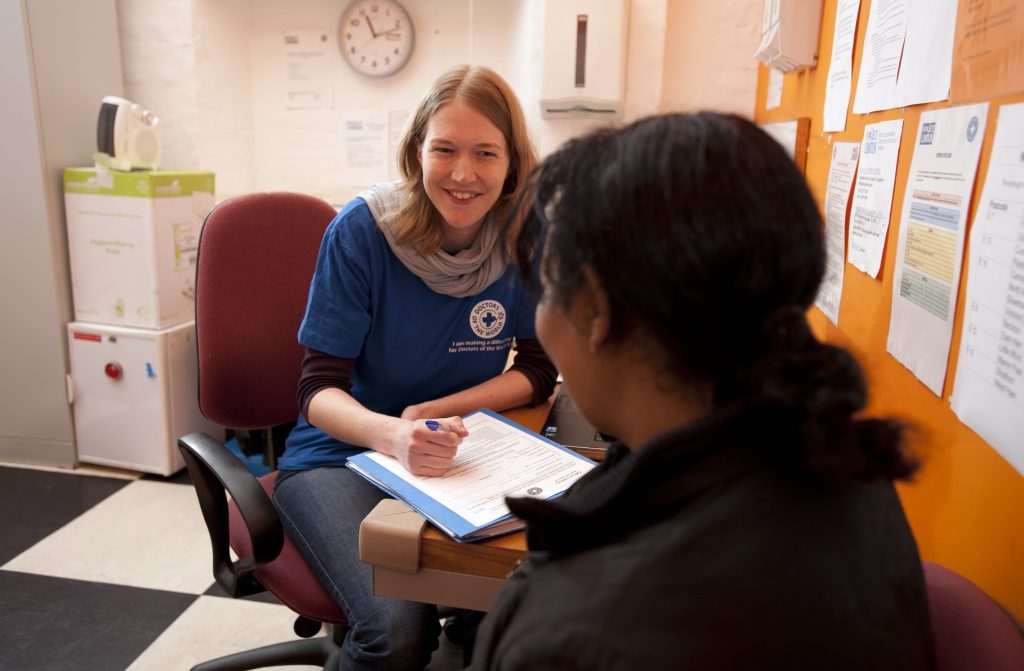
We spend many hours in the clinic persuading people who are very sick or heavily pregnant that the risk of not accessing the healthcare they need outweighs their fears of the Hostile Environment.

Let’s make sure everyone in Britain can access the healthcare they need

Published 7th November 2019

Doctors of the World is an independent humanitarian organisation and we will not stay quiet when it comes to protecting the right to healthcare and the health of our patients, beyond party politics and easy electoral slogans.

For the General Election 2019, we put forward our policy recommendations outlining the key changes the next government needs to make to ensure everyone living in the UK can get the healthcare they need. Our recommendations are grounded in our patients’ experience of accessing NHS services.

We include eight questions you can ask candidates to better understand their stance on access to healthcare and a brief containing more information about the status of EU citizens in the UK after Brexit.

Share it with your friends and family, ask questions at hustings and on social media. Help ensure everyone in Britain can access the healthcare they need, even if they cannot vote.

Let’s make sure everyone in Britain can access the healthcare they need

The UK has a proud history of accessible healthcare. The NHS is one of the most inclusive services in the world, founded in 1948 to universally provide comprehensive healthcare, free at the point of delivery. The UK committed to working towards universal health coverage in the 2015 Sustainable Development Goals – meaning the system should be seeking to expand coverage to everyone in the country.

Refugees and migrants have long been excluded from healthcare by restrictive policies and laws that undermine the NHS’s founding principles and efforts to achieve universal health coverage. This includes an excessive immigration health surcharge (IHS) for migrant workers, prohibitive “pay in advance” charging in secondary care, and also assigns immigration enforcement duties to NHS healthcare staff. This puts immense pressure on clinicians, denies timely care for people in need and means that migrants and refugees, including vulnerable and destitute people, experience catastrophic health costs which they simply cannot afford.

Britain must continue the global leadership it showed when the NHS was founded, by ensuring that those who are being shut out of healthcare services are instead welcomed into a genuinely universal system.

The fundamental principle underscoring the recommendations below is that health systems ought to be designed and equipped to ensure that everyone can fulfill their right to health. We call on policy-makers to guarantee that:

Everyone living in the UK gets timely access to affordable healthcare
  • Withdraw all charging, so that services are always given on need rather than ability to pay.
  • Allow everyone who has lived in the UK for 3 months or longer to receive free NHS care.
  • Guarantee that EU nationals will be exempt from health charges, including the IHS, after Brexit.
  • For those who are charged for NHS care, set healthcare bills at the NHS tariff (rather than 150%) and allow patients on lower incomes to pay NHS bills in installments.
There is a clear separation between the NHS and immigration enforcement
  • End all policies obliging NHS services to check patients’ immigration status.
  • Prohibit documentation of immigration status on patients’ NHS records.
  • Implement an information firewall between the NHS and the Home Office.
  • Remove all Home Office staff from NHS services.

You can find out more about access to healthcare for EU nationals living in England here.

Northeast Syria Response

Published 1st November 2019

Over 180,000 people have had to flee their homes in northeast Syria following a military intervention launched by Turkey. Their could be up to 80,000 children.

While the need for humanitarian aid has increased dramatically, military operations have forced many humanitarian organisations to evacuate their expatriate personnel and suspend or reduce their provision of services.

We have been in the area for two years and are currently supporting the displaced population receive the healthcare support they so desperately need.

Despite the difficult circumstances, our teams are currently supporting seven health facilities. These centres are providing an increased number of consultations as a result of the growing numbers of displaced people. We are evaluating the possibility of supporting an additional four facilities.

The teams continue to facilitate the training of health and management staff in the area and offer clinical advice in case treatment. We are also continuing to provide mental health training to primary care staff.

“The people of this region have been subjected to extreme levels of physical and mental stress for years,” Sonja Mardešić, coordinator of our Complex Crisis unit.
“We are very concerned about the critical situation in which they find themselves and the vulnerability of their right to health, especially in such a volatile context where secure access to humanitarian aid is not guaranteed,” explains Mardešić.


At the moment, we are supplying medicines to seven health centres. These are mainly to treat respiratory diseases – especially important as winter approaches – and chronic pathologies, such as diabetes, hypertension and cardiovascular diseases. In addition, we are also providing medical equipment, such as gauze, sutures, and disinfectant.

We’re currently considering whether we are able to offer healthcare treatment outside of these centres, to reach the informal camps where the population displaced by the advance of troops is moving to. Our teams are supporting the Syrian population in the area affected by the military offensive, though the humanitarian situation is extemely challenging. Local organizations that continue to provide assistance face increasingly difficult circumstances and security risks.

We’re reinforcing the work that we were already doing in primary care, supporting health centers with medicines and health personnel, and remaining alert to growing needs . The crisis in Syria is far from over, and we need your help to help those most affected and for our doctors and staff to deliver healthcare.

“You are welcome here”

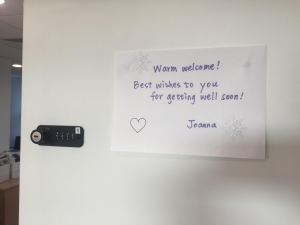
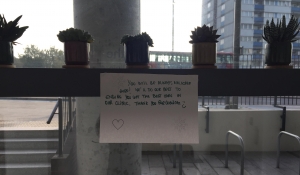
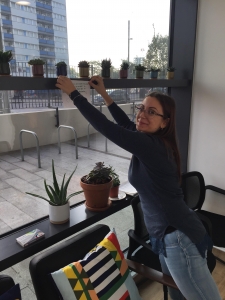
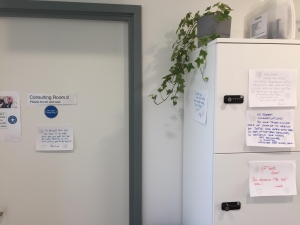
To celebrate the clinic launch, our supporters have sent over 130 messages to show their solidarity with our patients.

For many, the winter months and Christmas are a period of longing for their loved ones, when isolation and loneliness feels the strongest. These heart-warming words of peace, welcome, and support can make patients feel less alone in this difficult time.

Thank you for all those who sent in their messages. If you’d like to share yours, you can send it through this link.

Here are some of the messages we received:


“I am so pleased that you are able to access health care. I am proud to be part of the human race when we are at our best. Wishing you good health and general wellness” – Angela


“Welcome! You are special. I am amazed at the courage and perseverance that has brought you so far – and am so sorry for any bad experiences you have had. Please be strong. I hope you will soon find a place of safety, fulfillment and joy. God bless you” -Elisabeth


“Dear Patients, You are all welcome in this country and entitled to free health care. I applaud the actions of all medical and supporting staff who have set up this clinic. A retired GP” – Anne


“Hello, I’m pleased that you are now getting treatment at the new clinic but very sorry that you did not get this on the NHS. I think everyone should be treated according to need, it doesn’t matter who you are or where you come from. I hope you get better soon” – Judy (former NHS worker)


“I truly hope you get what treatment you need, being ill is bad enough without having to worry about paying for it. My daughter passed away in June this year, she had been ill for many years I don’t know what we would have done without our NHS” – Christina
“Just a short message to say that I, like many others, are thinking of you all. I wish you and your loved ones all the very best” – Filomena


“I hope you get the healthcare you deserve” – Sara


“Please believe that there are many people in this country who think you should be provided with care and support whenever you need it. I always thought our country was open, tolerant and responsive to people who need our help – no matter who they are or where they are from. I am sad that the Government is failing in its duty of care. I hope you get the help and support you need” – Jane

Here are some of the images, on view in the clinic:


Medical royal colleges and homeless charities call for doctors to receive mandatory training in keeping homeless patients off the streets

Published 25th October 2019

The Royal College of Physicians (RCP), along with seven other medical royal colleges and homeless charities, has called on the Government to urgently address the needs of homeless people treated in the NHS.

The organisations made their call in a collective response to the government’s consultation on the Homelessness Reduction Act (HRA), which includes a duty to refer homeless patients in Accident and Emergency departments to their local housing authority.

Since its implementation in 2017, it is still unclear whether the HRA’s mandate that hospitals must refer homeless people on, is having any real benefit. Anecdotal evidence suggests implementation is at best patchy, with most frontline staff receiving no training at all about the duty to refer.

The RCP’s call to government along with The Royal College of Midwives, Royal College of Nursing, Royal College of Psychiatrists, Royal College of Obstetricians and Gynaecologists, Crisis, Pathway and Doctors of the World included:

  • Collecting and publish actionable data on the implementation of the HRA (2017) to get a clear understanding of whether the act is working and, if it is not, what needs to change.
  • Provide mandatory training resources for staff subject to the duty to refer. Such training should include:
    • how to identify both homeless patients and those at risk of homelessness
    • how to approach the subject with patients and gain consent
    • what information to include to provide a useful referral.
  • Tackling wider structural barriers, such as a lack of affordable housing options, and funding for local addiction and alcohol support services, which make it much harder for local authorities to support individuals into sustainable housing.

Homeless people visit A&E at sixty times the rate of the general population, and they are much more likely to have multiple long-term health conditions. In 2010 it was estimated that homeless patients cost the NHS £85 million a year. Since then, the number of recorded visits by patients of no fixed abode to A&E departments in England has almost tripled.

Professor Andrew Goddard, president of the Royal College of Physicians said:

“We were really excited when the Act was introduced but the government needs to know that it isn’t being fully applied.

“This is mostly due to the lack of training in hospitals, making it incredibly difficult for doctors to know where to refer homeless people on to, or how to identify those who may be particularly vulnerable to rough sleeping.

“We know that before people become homeless, they tend to have more frequent interactions with the health and care system. This means the NHS has huge potential to identify and treat homeless patients and prevent those at risk from becoming homeless in the first place.

“The government’s focus on our homeless population is certainly welcome, but we now need to see words become actions.”

Thank you for joining us at the Clinic Launch

Published 23rd October 2019

What a joy to have so many of you join us to celebrate the launch of our new east London clinic.

Portraits from the collection “Undocumented” exhibited at the clinic.

On October 16th, our wonderful supporters, volunteers, and staff members came together to celebrate the opening of our new clinic, now located in Stratford. Since opening in 1998, we have directly helped almost 20,000 people in the UK. This new medical space will provide new opportunities for our patients and volunteers, allowing us to provide more holistic care to our patients in need.

Ellen Waters, Director of Development, and Peter Gough, volunteer GP and Trustee.

We were delighted to be joined by two guest speakers, Gulwali Passarlay and Hassan Akkad, who shared their stories of seeking asylum and their experiences in the UK. The video of the speeches is available through this link.

Thanks to everyone who attended and to all our supporters who made this possible.


Tim Dudderidge, President, opens the floor on the night.


Peter Gough, volunteer GP and Trustee, discussing his experience at the clinic.
Hassan Akkad, guest speaker, reflects on his experience fleeing from Syria and the environment he faced in the UK.
Gulwali Passarlay, guest speaker, talks about his experience as child refugee in the UK.
Volunteers and speakers discuss their experiences of healthcare.
Pete Aldridge, Philanthropy Manager, speaking with Joanna Dudderidge, professional photographer.
Volunteers and Trustees discuss the state of access to healthcare in the UK.
Ella Johnson, Outreach Lead, shows the Mobile Clinic to our guests.

Doctors of the World launches new clinic for people in vulnerable circumstances

Published 16th October 2019

The new Doctors of the World Clinic in east London was launched today. After 16 years of work in the area, our clinical services have now moved to purpose built premises which will allow our volunteer doctors and caseworkers to support more patients than ever.

It is imperative that we are able to see more patients and scale up our services, as we estimate that between 50,000 and 500,000 people in the UK need us. These are patients who have been too frightened to go to see a doctor because they are scared that they will be deported by the Home Office, that their data will be shared, and that they will face bills of thousands of pounds which they simply can’t afford. Often, they are wrongfully turned away by frontline healthcare staff, and some simply don’t know how the system works.

Many of our patients won’t have seen a doctor for years, often waiting until it’s too late. Common conditions, if left untreated for extended periods, might become difficult to cure and are potentially life threatening. On average, our patients have been living here for over six years, and often have not been able to receive healthcare anywhere else.

These delays are also harmful for their physical and mental health, and might have repercussions on public health and treatment costs.

Fortune was born in Uganda, where he lived as a gay man in a country where homosexuality is illegal. He escaped persecution and fled to the UK, but still felt he had to hide his sexuality which led to crippling headaches and inexplicable pains. Feeling at his lowest point, he came to our clinic.

“The kind of care I received is something I had never experienced,” he says. “They are just kind, lovely people”. We helped Fortune to register with a GP, who diagnosed severe depression.

The London Clinic is at the heart of what we do in the UK. Volunteer doctors, nurses and caseworker provide essential care and support to children, women, and men who have fled conflict and discrimination, or escaped torture, exploitation, and poverty. Many of them now live under the radar, in unstable accommodation, and struggle to survive, often homeless and living below the poverty line.

Our volunteer doctors and nurses provide medical consultations for these patients, while our caseworkers help them register to see a GP so that they can see a doctor in the future. We campaign to ensure everyone can access the healthcare they need.

We spend many hours in the clinic persuading people who are very sick or heavily pregnant that the risk of not accessing the healthcare they need outweighs their fears of the Hostile Environment.

Since opening in 1998, we have directly helped almost 20,000 people in the UK. This new clinic will provide new opportunities for our patients and volunteers, allowing to provide more holistic care to our patients in need.

The Syria INGO Regional Forum statement on impact of military developments on the civilian population in northeast Syria

Published 15th October 2019

The Syria INGO Regional Forum, comprising 73 INGOs responding to the Syria crisis, expressed deep concern at the rapidly deteriorating humanitarian situation since Turkey’s military operation started on the 9 October. The UN estimates that more than 200,000 people have been displaced, and is planning to support up to 400,000 people with assistance and protection in the coming period.

Over three days Hasakeh city saw an estimated 60,000 new arrivals as a result of the violence, while hostilities in the area also damaged the main water station, leaving it out of service. 400,000 people, including 82,000 people in Al Hol and Areesha camps, now rely on the provisional solution of pumping water from a nearby dam that can only meet 50% of the needs previously supplied by the main water station. This water, which is of poorer quality, is only sufficient to support Hassakeh city for approximately 10-15 days. This leaves the population exposed to outbreaks of infectious diseases, especially as acute diarrhoea and typhoid were already two of the most reported illnesses in northeast Syria in August 2019.

To date, the most intense attacks have been on Tal Abyad, Ras al Ain and Quamishly. The use of air strikes and artillery in those areas, and in particular the 13 October attack on a convoy of civilians fleeing Tal Abyad, raise serious concerns that civilians have been targeted, which may amount to serious violations of international humanitarian law. Overall, the use of explosive weapons in populated areas has led to mass forced displacement and disproportionate damage to vital civilian infrastructure. With the recently renovated hospital in Ras al Ain again out of service and three health care providers in Tal Abyad rendered non-functional, people in the most affected areas have no access to lifesaving support.

SIRF is concerned that several major humanitarian facilities fall within the 30 kilometre border area in which Turkey has established a growing military presence, such as Mabrouka camp (which had 3,170 residents) and Ain Issa camp (12,901 residents). Mabrouka camp has largely been evacuated and is no longer accessible. The majority of its residents relocated to Areesha camp, but several families were unable to leave and now have no access to food, water or shelter.

While the need for humanitarian aid has dramatically increased, the operation has forced many INGOs to suspend service delivery. In the last few days, SIRF members lost access to their offices in Ain Issa, 50 kilometres from the Turkey-Syria border, after the town came under the control of Turkish-backed armed groups. The local organisations that are continuing to deliver assistance face increasingly difficult circumstances and risks to their safety.

Many Syrian humanitarian workers, including the staff of local organisations, fear for their lives and the lives of their families, as they are unable to seek safety in government-controlled areas inside Syria or in neighbouring countries. Humanitarian organisations report widespread displacement of Syrian staff, as well as concerns about increased restrictions on their freedom of movement due to risk of conscription.

With humanitarian access already compromised, any further sudden shifts of control or shifts in the presence of troops could further destabilize the area and the routes that humanitarian organisations currently rely on to reach people in need. In light of the recently announced political agreement between Kurdish authorities and the government of Syria, we call on relevant authorities to make continued access for humanitarian organisations a priority.

The people of northeast Syria have already endured years of conflict, with many being repeatedly displaced, and have suffered unimaginable physical and psychological distress. SIRF is very concerned that many of these civilians are now forced to flee south and may have to seek refuge in areas that are heavily contaminated with explosive ordnance. Areas that were retaken from Islamic State, like Raqqa, are littered with improvised explosive devices and landmines.

The Syria INGO Regional Forum is also concerned that one of the objectives of the military operation is to facilitate the return of large numbers of refugees. SIRF notes that most of the refugees in Turkey do not originate from areas Turkey is seeking to control, and reminds Turkey of its obligation to the respect the principle of non-refoulement.

SIRF believes that urgent action is needed and calls for:

  • all parties to the conflict to fulfil their obligations under international human rights law and international humanitarian law and refrain from targeting civilians and humanitarian workers, as well as to exercise restraint in order to protect water supplies, health facilities, schools and camps for displaced people;
  • all parties to the conflict to immediately cease hostilities and start urgent dialogue, supported by the international community
  • all parties to the conflict to stop the use of explosive weapons with wide area effects in populated areas in compliance with international humanitarian law;
  • all parties to the conflict and the international community to ensure that freedom of movement and humanitarian access are guaranteed;
  • all parties to investigate possible violations of international humanitarian law, especially unlawful attacks against civilians and civilian infrastructure, and to ensure those responsible are held to account;
  • the UN Security Council to renew Resolution 2165 to facilitate the provision of humanitarian aid in northeast Syria;
  • donor governments to be ready to provide the required level of flexible, emergency funding and assist humanitarian actors to respond effectively.


Doctors of the World present a Manifesto to fight gender-based violence

Published 11th October 2019

Gender-based violence, particularly violence against women and girls, is one of the most widespread human rights violations in the world, with serious impacts on the health, development, and identity of the individual. In a manifesto presented this afternoon, Doctors of the World warns about this problem and puts forward a set of solutions to fight it.


Portugal, 10 October 2019. Doctors of the World presented this afternoon the manifesto “Gender-based violence, particularly violence against women” addressing the persistence of this type of violence throughout the world, which is a violation of human rights and a huge obstacle to gender equality, and suggests solutions based on preventing and responding to it. The presentation was attended by 16 presidents and executive-directors from the delegations that form the Médecins du Monde Network.

Violence, particularly against women and girls, is one of the most widespread and systematic human rights violations. Around the world, 35% of women have suffered physical and/or sexual violence in 2017, as reported by the World Health Organization.

According to Doctors of the World, this violence can be based on gender inequalities, discrimination, poverty, deprivation of basic resources, wars and conflicts. It “has a serious negative impact on the individual’s physical, sexual and psychological health, development and/or identity”, the manifesto highlights.

It is therefore imperative to fight this problem in order to realise the right to health, protect and develop sexual and reproductive health and associated rights, as well as to ensure peace and promote sustainable development.

In order to prevent and respond to gender violence, Doctors of the World puts forth a set of solutions. Regarding prevention, we emphasises the need to “promote positive changes at the normative and behavioural level”. This involves transforming gender relations and identity by promoting the deconstruction of gender stereotypes to young people from an early age.

On the other hand, it is also essential to bring about “a change in perception in the groups exposed to gender violence”, through communications that protect the survivors’ dignity and highlight their ability to act.

Prevention must also include “legal frameworks and policies directly and indirectly associated with gender-based violence”. This includes reinforcing health standards following a multi-sectoral approach. In this way, the recurrence of violence can be prevented through the early identification of survivors and their referral to other fundamental services.

In terms of response to gender-based violence, Doctors of the World indicates that it is imperative to safeguard “survivors’ rights to protection and access to support services”, through a health sector that provides essential, free and flexible interventions, including reproductive health, physical and psychosocial health. The health service, moreover, should be interconnected with shelters, counselling centres, law enforcement, and legal assistance.

We must also “involve men and boys”, who can be perpetrators, victims, witnesses, and agents of change, enabling them to recognise their vulnerabilities and specific needs in relation to gender-based violence, “strengthening the bond between prevention and reaction”.

Throughout this manifesto, we reaffirm our support to international commitments already established in this area and call for increased efforts for their implementation. Finally, we are committed to fighting any type of gender-based violence within the organisation and among its partners, through a zero tolerance policy of these situations and through the promotion of gender equality.


15 aid agencies warn of humanitarian crisis in North-East Syria

Published 10th October 2019

Civilians at risk as violence escalates and humanitarian work is suspended.

Civilians in north-east Syria are at risk and humanitarian aid could be cut off following the launch of a new military operation in the area, leading aid agencies are warning.

Reports from humanitarian responders on the ground say civilians are already on the move and that some vital services have been interrupted, including medical facilities and water supplies. Agencies say that some of their staff have fled with their families, while others are on lockdown.

An estimated 450,000 people live within 5 kilometres of the Syria-Turkey border and are at risk if all sides do not exercise maximum restraint and prioritise the protection of civilians. The population includes more than 90,000 internally displaced people, who have already been forced to flee their homes at least once in Syria’s unrelenting war.

The 14 aid agencies are urging parties to the conflict to fully respect International Humanitarian Law and ensure that they refrain from using explosive weapons in populated areas. They must ensure all measures are taken to protect civilians and facilitate safe, unhindered humanitarian access. People living in the area affected by this military action have the right to freedom of movement and must not be forcibly displaced from their homes.

Likewise, there must be no forcible returns of refugees living in Turkey to Syria. Anyone returned could face threats to their safety and security, continued internal displacement and reliance on humanitarian assistance that the international community is not in a position to provide. According to the Government of Turkey, an estimated 83 per cent of the three million Syrians in Turkey do not originate from the north-east.

The international community has an important role to play in helping to resolve this crisis. The UN Security Council, which is expected to discuss the situation today (10 October 2019), must emphasize the need for restraint and reiterate importance of protecting civilians and facilitating unimpeded humanitarian operations.

The security situation in the area is already fragile, with tens of thousands of fighters and their families being held in camps and detention centres. All children must be protected and provided humanitarian assistance, and countries of origin must take immediate steps to repatriate the estimated 9,000 children from at least 40 different nationalities who are in north-east Syria.

Urgent action is needed to ensure that the humanitarian situation in north-east Syria does not worsen further, with potentially dire consequences for families and children who find themselves once again caught up in deadly violence.

Signed:

Action Against Hunger; Christian Aid; CARE International; DanChurchAid; Diakonie Katastrophenhilfe; Doctors of the World; Humanity & Inclusion; International Rescue Committee; Mercy Corps; Norwegian Refugee Council; Oxfam; People in Need; Un Ponte Per; World Vision.

Doctors of the World sounds the alarm bell in Greece

Published 2nd October 2019

The refugee crisis has become a humanitarian crisis in Lesvos, where more than 1,000 unaccompanied children are currently residing. Traffickers are constantly looking for new ports in the Aegean sea, while the absence of a united European policy regarding the reception of the refugees is resulting in charred and drowned bodies.

The shipwreck of a boat on Oinousses claimed the lives of seven people: five toddlers, one of them an infant, and two women.

The fire at the reception and identification center in Moria, Lesvos, which claimed the life of one adult and possibly two children, according to the testimonies from the field, highlighted the inhumane living conditions in the camp. No one really knows how many people were stuck in the container and how many more are the victims of this tragedy.

The transfer of  people in need to decent structures is now a matter of life and death. And just as urgent is to ensure their access to medical care so that human dignity is not violated in the most brutal way on European soil.

The refugee crisis is not about numbers, it’s about people. However the numbers in this case have long been revealing. In Moria there are about 13,000 people, when the capacity of the camp is just 3,000. The total number of the refugee population on the Greek islands is estimated at 26,273 – while the accommodation capacity is 6,338.

Doctors of the World have been present on Lesvos since 2013 offering medical and social services. We call on the Greek government to address the problem, ensuring immediate protection for vulnerable persons and expediting asylum procedures. The refugees’ flight to Europe will not stop as long as there are armed conflicts, humanitarian crises and natural disasters. Now is the time for immediate action to ensure life and dignity, access to essential goods and services for the victims of war and disaster that reach our shores every day. Now is the time again to come together · it’s the time for solidarity and to protect those who are suffering, while seeking a better tomorrow for them and their children. We urge all citizens, and all our members, to come together in search for sustainable solutions.

Doctors of the World remain on the side of any person wherever there is need.

Lesvos, after all, is not the only island in the northeast Aegean facing increasing migration flows. Refugees arrive on Kastelorizo, Karpathos, Agathonisi and Symi.

The island of Symi, which currently receives the largest number of refugees since 2015, has only one doctor for about 3,000 residents, thousands of tourists and refugees. Doctors of the World have taken over a significant part of the medical care of people on Symi.

No one is illegal. There are no excuses for more charred and drowned bodies.

Doctors of the World call on the EU to assume its responsibilities by assisting with the asylum procedures. We also call on all stakeholders involved to respect international humanitarian law.

x

With your support, Doctors of the World will make sure nobody suffers or dies due to lack of access to healthcare.