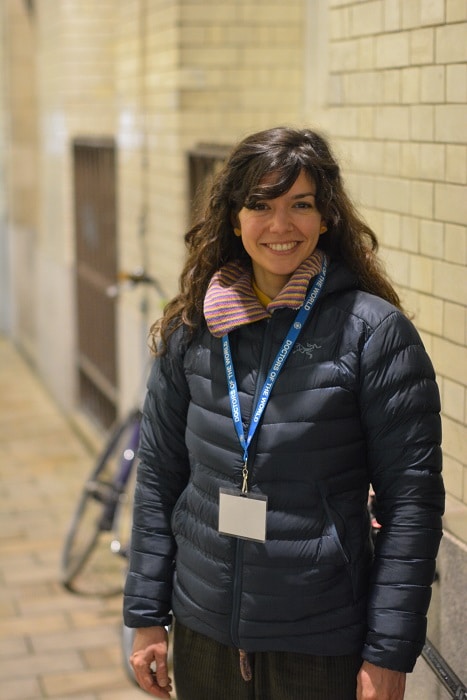
My story – We can’t let people die in silence

Published 19th December 2022

My name is Abiola. I’m a survivor of trafficking and I’ve been through the process of seeking asylum. 

One of the hardest things was when my son (who was born in the UK) was denied the prescription he needed for his asthma and skin condition. 

I couldn’t afford the medicine myself, because as an asylum seeker I’m not allowed to work. I feared asking for help as I thought it would put my asylum application at risk when we so urgently needed stability to start building our lives, away from the past. 

Eventually a charity helped me challenge the GPs decision. They helped me stand up for my rights and get my son the medicine he needed.  

There are so many people who refuse to help and turn their back. Sometimes I feel we’re living a compassion crisis.  But I know there are also many who do care, are listening and want to  support people who faced trafficking, torture and war. I know you are one of them, one of us. 

My story of survival is why I now volunteer with Doctors of the World as National Health Advisor. I deliver training sessions. I use my knowledge to create resources. I give back to my community in any way I can. 

We can’t let people die in silence.  

We can’t let people die because they’re scared of the immigration system, and what it can do to them.  

Some people get to the GP and they face language barriers, discrimination, so many obstacles. Healthcare should be one of the most important things, to look after our health, look after the people’s life. It shouldn’t be something you need to fight for. 

That’s why an act of kindness like paying for someone’s prescription when they’re not able to can make a huge difference.  

Please, if you can, do something wonderful and donate £16 so someone seeking asylum can access the medicine they need.  

Abiola

Photo shows model and name changed to protect the author’s identity.

My story – Surviving abuse and becoming a Human Rights advocate

Published 25th November 2022

Content warning: mention of child abuse, neglect, suicidal thoughts.

The look on the doctor’s face said it all. The patronising tone confirmed it. The GP practice was going to turn me away and stop me registering.

They made me feel less than human. It wasn’t the first time this had happened. I’d tried so many times to get registered with a GP, but kept getting refused. I felt insulted. I felt like nobody would help me. Nobody would let me see a doctor. I had given up believing I could access medical care.

My name is Rose (name changed) and I’m sharing my story with you as I believe in the fight for health for everyone. If you found your way to this page, I believe you do too. That’s why I hope you’ll choose to support my appeal and help others who have experienced what I have.

Fleeing from severe abuse

I’m from Nigeria. Before I was barely a teenager I experienced child neglect, child abuse, sexual abuse.

The mental trauma cut deep and left scars. I couldn’t trust anybody. I tried to talk to grown-ups but they all shut me down. They didn’t believe me. Nobody helped me. That’s how my struggles started. I began drinking, smoking and became suicidal. I didn’t decide to leave my country. I was trafficked to the UK with the promise of better education, which I never got. One day, I finally managed to run away from my traffickers. I became homeless. I didn’t have anyone in London. I lived in emergency accommodation. I didn’t have a doctor and couldn’t trust anybody.

Doctors of the World got me the help I needed

A friend introduced me to a place where I could get food vouchers and some clothes.

That’s when I first saw the Doctors of the World sign for their mobile clinic, where I could see one of their case workers. I’ll never forget that moment. The caseworker I met was the first person to listen to me and my story, to tell me it was ok to feel the way I did. I could trust her, I could get help. She recognised I was suffering from PTSD, that I needed help.

I told her about GP surgeries repeatedly turning me away. She wrote a letter with her contact details, explaining my situation and rights to see a doctor, for me to show the GP. And just like that, because of this letter, they finally accepted to register me. If it was not for her and her letter, I wouldn’t have got help and that’s why I will remember her forever.

The power of kindness

That’s why when I meet someone now, I ask how they’re doing, if they want to talk, if I can help them. Caring about people – even with something as small as asking about their day – makes such a difference when you feel like you’re alone and can’t see the end of that tunnel.

I joined Doctors of the World’s National Health Advisors when my friend from the choir told me about this group raising awareness for people in the same situation I was in. It was an opportunity for us to share our story and for our voices to be heard. We try to change this system and make things easier for people to see a doctor and get registered.

The system is broken

When you’re a person seeking asylum, it’s easy to give up on yourself. You’re too scared to go to A&E, you don’t have any information, people turn you away just because of what you’ve been through. It’s very, very, hard.

Some people don’t treat you like a human being because you have an asylum card. I was suffering, I didn’t know anything, I had no information. But, life and safety, they’re our basic rights.

Being part of the National Health Advisors; it is something I’ve always wanted to do. I joined to have our voices heard, to help people, to hear and listen to others who’ve been through the same stories of exclusion, for many different reasons. I want to be a part of positive change. We say ‘you’re not alone, we’ve been through all this too.’

I felt really accomplished and proud when our group participated in the creation of leaflets distributed at the hospital, giving information about important services available to people who need them most. It makes me feel like I belong.

Show you care this Christmas

My friends at Doctors of the World explained how much of the funding for the services they run comes from people like you. I’ve experienced the worst of humanity in my life, but also great kindness and compassion too. Thank you for being one of the good people who doesn’t turn their back on people when they need help.

I’m proud to tell my story now and contribute to the important work of Doctors of the World. I know times are tough for many people, but I’d appreciate it so much if you were able to make a gift this Christmas.

My dreams for the future

I have more dreams. I want to keep singing with the choir. I want to learn about childcare and the mental health sector, which are complex issues and environments for people to navigate. I want to be able to say to a child that it’s ok to speak out, that I will believe them, just like I would have needed to hear when I was younger. To the people who will be reading this: your voice matters.

You can join us in the fight for health. There’s this saying I know that goes: ‘No matter how strong the wind is, if we stand together hand in hand, we will win.’ There’s always light at the end of every tunnel. With you by our side, we are guaranteed victory.

In solidarity, Rose

Photo shows model and name changed to protect the author’s identity.

1,000+ Safe Surgeries: GPs stand up for all in their community

Published 17th October 2022

In 2018, Doctors of the World launched the Safe Surgeries initiative to create a community of GPs committed to welcoming everyone in need of a doctor, no matter their circumstances. Four years later, there are now just over 1,000 Safe Surgeries across the UK, represented by 1,017 members, promoting inclusive registration processes in line with NHS Guidance. 

What is a Safe Surgery? 

Doctors of the World’s (DOTW) Safe Surgeries initiative supports GP practices to tackle the barriers to healthcare faced by people in vulnerable circumstances, especially migrants.   

A Safe Surgery can be any GP practice which registers with us, to commit to taking steps to ensure that their services are available to everyone in their community. At a minimum, this means ensuring that lack of ID or proof of address, immigration status or language are not barriers to patient registration.  

How are surgeries supported? 

Member practices receive free resources, training and a regular newsletter with policy updates and good practice tips. Practices that sign up as a Safe Surgery become part of a national network of practices and receive ongoing support and advice from DOTW throughout the process. GP trainees can also complete a Safe Surgeries Quality Improvement Project in their practice. 

How can my GP get involved? 

If you work within a GP practice, you can sign up your practice by completing this quick form and you’ll be informed with next steps instantly.  For any queries, you can email safesurgeries@doctorsoftheworld.org.uk.  

If you are a healthcare worker who does not operate within a GP practice (e.g., community health services, secondary care services, social prescribing link worker) and would like to receive our newsletter, please sign up here (https://www.doctorsoftheworld.org.uk/safesurgeries/). 

If you are a patient and would like your practice to become a Safe Surgery, you can share our website and recommend they contact us at safesurgeries@doctorsoftheworld.org.uk to get started. To find out whether your practice is already a Safe Surgery, ask a member of staff or see if they have our posters in the patient waiting area. Thank you for helping us create a world where everyone can access healthcare through Safe Surgeries! 

If you need support to register with a GP or would like to learn more about our London clinic, please click here. 

A word from the Safe Surgeries Community

“The safe surgeries information and resources are so helpful and accessible – and the campaign and website are also really inspiring. I really value the whole team resources and the practical guidance, including QI project ideas. I found the vaccination and COVID materials hugely helpful in clinical practice at a complex time. 
Thank you DOTW for all that you do to support making primary care accessible for all.”
– Sharon Dixon, GP

 “We have a really positive response to our Safe Surgeries training sessions; GP practice staff feel that it improves their knowledge and provides practical tips and resources to use in their practice. Taking part in the Safe Surgeries training is an important step towards ensuring GP practices are accessible for everyone in their community”.
– Marina Davidson, Advocacy Manager and Primary Care Lead

Struggling with Mental Health – 35 signs and ways to help

Published 10th October 2022


People in vulnerable circumstances like asylum seekers, refugees and migrants are met with inconceivable challenges while seeking safety. In addition to having made harrowing journeys to the UK, people are to navigate the overly complex and prolonged asylum system, built by this government’s hostile environment. The multiple barriers they face all have a real and serious impact on people’s mental health and feelings of isolation and hopelessness.  

For World Mental Health Awareness Day 2022, we have made a list to help you spot the signs someone might be struggling, ways you can help and resources and services available to people seeking asylum and refugees. 

Physical signs 

  1. lack of energy, tiredness 
  2. restlessness and agitation 
  3. difficulty sleeping or sleeping more than usual 
  4. increase or decrease in appetite 
  5. unexplained aches and pains 
  6. self-harming 

Emotional signs  

  1. an unshakable feeling of sadness 
  2. having no interest in activities you usually enjoy 
  3. anxiousness 
  4. trouble concentrating or remembering things 
  5. difficulty making decisions 
  6. loneliness 
  7. low self-confidence and self-esteem 
  8. withdrawing from family and friends 
  9. irritability and impatience 
  10. feeling guilty for everything, as if everything that goes wrong is their fault 

Behavioural signs

  1. avoiding social events and activities you usually enjoy 
  2. self-harming or suicidal behaviour 
  3. difficulty speaking, thinking clearly or making decisions 
  4. losing interest in sex 
  5. difficulty remembering or concentrating on things 
  6. using more tobacco, alcohol or other drugs than usual 
  7. difficulty sleeping, or sleeping too much 
  8. feeling tired all the time 
  9. no appetite and losing weight, or eating too much and gaining weight 
  10. physical aches and pains with no obvious physical cause 
  11. moving very slowly, or being restless and agitated 

How to help 

  1. listen when they open up to you about their struggle. Don’t necessarily try to find solutions for them.
  2. learn as much as you can about their condition. Understand they are not lazy or unmotivated. Mental health issues affect your brain. 
  3. encourage the person to seek help and support and offer to accompany them to appointments if they are anxious about going 
  4. offer your help with small tasks like bringing food or reminding them of an event
  5. remember depression is an illness. They won’t be able to recover straight away and you won’t be able to rescue them or fix the problem for them. 
  6. reassure them that they are loved and they are not alone 
  7. helping a loved one with mental health struggles can put a huge strain on you so make sure to look after yourself 
  8. get support through family and friends or through organisations. There are plenty of people who want to help. 

Mental health services and resources available to asylum seekers and refugees

Make mental health and wellbeing for all a global priority. Please share this post and join our movement.

Black History Month – 5 people who made Healthcare History and challenged Black race discrimination

Published 3rd October 2022

From members of the Windrush generation, who were recruited to become NHS staff, to the 27,612 people from an African background currently working in the NHS, the work and passion of Black people have played a huge role in building our healthcare system and providing care for free at the point of need.

Today, like before, Black people make up a significant part of the NHS workforce, continue to contribute to the improvement of healthcare, and serve their communities. 


Dame Donna Kinnair – former Chief Executive and General Secretary of the Royal College of Nursing

Professor Dame Donna Kinnair DBE (born 1960 or 1961) is a British nurse and former Chief Executive and General Secretary of the Royal College of Nursing (RCN). She has specialised in child protection, providing leadership in major hospital trusts in London, teaching, and advising on legal and governmental committees. 

In 2020 Kinnair had been recognised for her influence, having been listed in the 2020 Powerlist – which lists the 100 most influential Britons of African/African Caribbean descent, and in 2021 Kinnair reached the top 10 of the Powerlist 2021 in recognition of her work during the COVID-19 pandemic.

Dr Harold Moody – GP and civil rights activist

Born in Jamaica on 08 October 1882, Harold Moody travelled to England in 1904 and studied medicine at Kings College London, graduating top of his class in 1910. Despite his clear academic brilliance however, he was unable to gain work as a doctor because of the colour of his skin.

He was left with little option but to set up his own practice from his home in 1913. At a time before the NHS began in 1948, Dr Moody used his medical ability and compassion for others to treat poor children free of charge. He also welcomed into his home those who had been refused lodgings due to the colour of their skin. Through his interactions within the community he became more and more aware of the racial injustices that others were facing, and he took it upon himself to use his position, wherever he could, to right those wrongs. 

In 1931 Dr Moody founded the ‘League of Coloured Peoples’ and as President he worked tirelessly lobbying politicians, the civil service and trade unions seeking to build and strengthen race relations and challenge injustices. 

Daphne Steele – first Black Matron in the NHS

Born in British Guyana (as it then was) in 1929, Daphne Steele was one of the many people from the Caribbean who dedicated their lives to the National Health Service.

In 1964, Steele was appointed as Matron at St. Winifred’s Hospital in Ilkley, West Yorkshire. This was the first time that a Black person had been appointed as a Matron anywhere in the NHS. The appointment made news worldwide, with Steele receiving around 350 letters from well-wishers. After the hospital closed in 1971, Steele became a health visitor at Leeds University

Louise Da-Cocodia – activist and first Black senior nursing officer

Louise moved to England in 1955 after being invited by the government to train as a nurse in the newly formed NHS. Hard work and determination saw Louise rise through the ranks to become Assistant Superintendent of District Nurses, the first Black senior nursing officer in Manchester. Despite her success, Louise faced discrimination and racism from patients and colleagues alike. Determined to combat discrimination after the racism she experienced, Louise became one of Manchester’s most important anti-racism campaigners and community activist. 

Dr Martin Griffith – national clinical director for violence reduction

Martin set up the UK’s first hospital ward-based violence reduction service at Barts Health in 2015. The award-winning programme sees hospital staff and case workers from the charity St Giles Trust help young patients injured through knife crime while they are still being treated in the hospital, to help break the cycle of violence at the point of crisis.   

Rwanda plan: Doctors express concerns over patients’ distress

Published 30th September 2022

On September 23, Doctors of the World UK sent a joint letter to Prime Minister Truss, signed and endorsed by fellow medical organisations and bodies, asking her to abandon the detrimental Rwanda plan looking to forcibly expulse people seeking safety in the UK.

The letter said that, to doctors and representatives of leading medical bodies, it is apparent that the scheme is already making a severe impact on people’s health and wellbeing, as outlined by a recent report by the charity Medical Justice.

For more information, contact Doctors of the World UK Communications and Engagement Manager at mdelaroche@doctorsoftheworld.org.uk 


Read the letter:

Dear Prime Minister Truss, 

We are writing jointly as representatives of leading medical bodies in the UK to express concern about the severe impact that your decision to remove asylum seekers to Rwanda is already having on people’s health and wellbeing. 

As stated in a public statement from June 20221, we are horrified by the UK Government’s plans, as laid out in the ‘Migration and Economic Development Partnership’ to forcibly deport people seeking protection in the UK to Rwanda, with no option to return.  As you will be aware, the only removal flight to Rwanda scheduled as part of this policy did not depart and no forced expulsion has taken place so far.  Yet the scheme is already causing profound harm to people, whilst they are held indefinitely in immigration detention pending their removal to Rwanda at some unspecified point in the future. The chair of the Royal College of GPs Council spoke out in April, on the mental and physical harms of detention and deportation on refugees and asylum seekers as well as on the GP experience of providing care to an already vulnerable and distressed population.2 

A recent report by the charity Medical Justice has documented the experiences of 36 people with whom they have worked and who have been targeted for removal to Rwanda. All arrived in the UK since mid-May 2022. 

The 36 extremely vulnerable people includes individuals from Albania, Egypt, Eritrea, Iran, Iraq, Sudan, Syria and Vietnam. They include men, women, age disputed children / young people, and some who have family in the UK.  Many of these asylum seekers have a history of trafficking, torture and trauma, and have serious mental health conditions, including Post Traumatic Stress Disorder (PTSD) and psychosis. Some have self-harmed and/or expressed suicidal ideation whilst in detention, including one person who including one person who attempted suicide twice whilst in detention.  No individual should be forcibly removed to another country for seeking safety and protection in the UK. In addition, the current screening process fails to identify people with specific vulnerabilities, including health conditions. 

The report documents how people are detained upon arrival, transferred to an immigration removal centre and issued with a Notice of Intent (NOI) for removal to Rwanda. Many people who were served with an NOI did not understand its content or its gravity. Several people received the NOI in English without a written translation in their first language, and many people have not had adequate legal advice, creating confusion and uncertainty. One client was not even aware that he had been issued an NOI – a Medical Justice caseworker spotted it by chance in the client’s paperwork and had to tell him what it meant. 

We are concerned that such a vulnerable group of people are being detained upon arrival and issued NOIs, given the research consensus on the detrimental impact of detention on mental health3, the lack of pre-detention screening and the evidence of ineffectual safeguards in IRCs4

Medical Justice doctors conducted clinical assessments for 17 people issued with an NOI for removal to Rwanda, and documented signs of severe harm due to being detained in immigration detention and the prospect of removal to Rwanda. The doctors found that the threat of being deported to Rwanda is further exacerbating people’s mental health conditions, causing them to experience fear, confusion, and uncertainty about their safety and a loss of hope. This is particularly concerning given the prevalence of mental health conditions within the detained population. Research has shown that “a high proportion of immigration detainees display clinically significant levels of depression, PTSD and anxiety, as well as intense fear, sleep disturbances, profound hopelessness, self-harm and suicidal ideation”.5 Specifically, 16 out of the 17 had symptoms of, or were diagnosed with, depression. This is concerning as research has identified hopelessness as the biggest risk factor in predicting suicidal ideation in individuals with depression.6 

Medical Justice doctors found that for some clients, the prospect of removal to Rwanda has increased their risk of self-harm and suicide. For example, one person has written a suicide note to his family. 

This fear of removal to Rwanda results in a worsened sense of safety, which causes distress and exacerbates individuals’ mental health symptoms, including PTSD. It is a significant re-traumatising factor, which would impact the effectiveness of any medical treatment accessed while they remain in the UK, as well as once they are removed to Rwanda. 

The UNHCR has raised their concerns with this policy, which is in contravention with the Refugee Convention and fundamental right to seek asylum.7 The UK has a moral responsibility to process asylum claims fairly and provide protection to those whose claims are ultimately accepted regardless of how they arrived in the UK, rather than shirking this responsibility. 

Evidence is coming to light clearly demonstrating that this is a cruel and damaging policy, which is already causing profound harm to people’s health and wellbeing. The evidence from Medical Justice’s casework makes it clear that the prospect of removal to Rwanda is already exacerbating existing mental health issues for people seeking safety in the UK. 

We urge you to revoke all NOIs, immediately release asylum seekers who have been issued with NOIs from immigration detention, and abandon this policy of forced expulsions to Rwanda, or any other country. It is cruel and unconscionable on ethical and medical grounds and has already caused severe damage to individual’s health and wellbeing. 

Home Office officials have warned that this policy will put vulnerable people in danger. We add to this warning by highlighting the harm and danger that has already been caused to vulnerable people. 

Yours sincerely,  

British Medical Association  – Jan Wise, Medical Ethics Committee Chair  
Faculty of Public Health – Professor Maggie Rae, President  
International Child Health Group, a special interest group of the Royal College of Paediatrics and Child Health  
Royal College of Obstetrics and Gynaecologists – Dr Eddie Morris, President,  
Doctors of the World – Simon Tyler, Executive Director  
Freedom from Torture –Tamara Jaftham, Director of Clinical Services 
Helen Bamber Foundation – Dr Katy Robjant, Executive Director Clinical and Counter-Trafficking  
Medact – Sophie Neuburg, Executive Director 
Medical Justice – Emma Ginn, Director 

Individuals: 
Dr Laura B Nellums, Associate Professor, School of Medicine, University of Nottingham   
Monika Hartmann (NHS nurse)  
Professor Jenny Phillimore PhD, FAcSS, Institute for Research into Superdiversity, School of Social Policy, University of Birmingham 

Report proves Home Office’s accommodation plans leave people seeking sanctuary in the UK without adequate medical care

Published 27th April 2022

A new report  by the humanitarian medical organisation Doctors of the World and the University of Birmingham details how the Home Office’s new asylum accommodation plan leaves people seeking safety without medical care.

Researchers at the Institute for Research into Superdiversity and the Institute of Applied Health Research at the University of Birmingham found how the policy of housing asylum seekers in initial and contingency accommodation is unsafe for asylum seekers due to the lack of access to adequate and appropriate healthcare including people with acute conditions not getting timely urgent care.

The report, drawn from evidence and medical data of DOTW’s work providing medical care to people in initial and contingency accommodation such as Napier Barracks, demonstrates the unsuitability of a model of accommodation that has been hailed as a prototype for the upcoming Nationality and Borders Bill currently going through Parliament.

Amongst the key findings:

  • Accommodation conditions were not meeting basic human standards which contributed to poor health.  This included poor food, access to basic sanitary products, inability to store medication or have professionals visit to provide care.
  • People reported a significant mental health impact of the loneliness, isolation and feelings of being imprisoned engendered by the conditions. 
  • Many people required intensive support to access and navigate the system which often took weeks/months thus delaying access to care.
  • People were unable to get prescriptions, medical care for pregnancy and children, referrals to specialists and ongoing support for medical conditions both chronic and acute.
  • People did not know how to get and pay for medication they were prescribed.
  • No access to health professional led information or support left to navigate the system with advice from hotel staff who often provide poor info/support, no covid information in languages or left to rely on NGOs like DOTW who have to fight hard to navigate the system with them.
  • Lack of access to timely and continuous care meant people were left without treatment and were left to suffer on their own.
  • The evidence in this report shows that institutional accommodation is unsafe for asylum seekers due to the lack of access to adequate and appropriate healthcare services and the nature and conditions risk causing harm to health directly.

The model of accommodation established with sites such as Napier Barracks has been defined as a ‘quasi-detention’ by the All-Party Parliamentary Group in Immigration Detention who following their visit to the site in February described it as “fundamentally unsuitable for use as asylum accommodation.”

The Bill will give power to the Secretary of State to indefinitely house people seeking asylum in these reception centres with the risk of creating a de-facto indefinite immigration detention system in the UK, with well documented impact on migrants psychological and physical wellbeing.

Under Priti Patel’s plans to reform the asylum system the Home Office will develop more large-scale asylum accommodation in remote areas where evidence shows access to medical care is extremely limited.


Street Outreach: the golden standard to deliver healthcare

Published 4th April 2022

In this brief interview, Alex Malet, our Homeless Health Nurse speaks about her experiences in delivering healthcare to people experiencing street homelessness in the City of London and on how street-based outreach is the golden standard of bringing healthcare to people living in the streets. 


Alex Malet, Homeless Health Nurse at Doctors of the World UK

How did you come to the role?

I was volunteering with Doctors of the World since 2019 in the Clinic and supporting asylum seekers and undocumented migrants during our outreach with the mobile clinic in various locations.

Alongside this, I also work in A&E and in the past I have worked with other humanitarian organisations as well delivering medical care to vulnerable people including inmates in prison.

When the role came up it sounded really interesting and a really good opportunity to work with this group of patients.

What does your day-to-day work involve?

When I joined DOTW’s project in the City of London, it had been running for just under 2 years delivering street-based outreach services to people experiencing street homelessness.

This means normally cycling or walking with a backpack with all clinical materials and delivering primary care and supporting people to register with a GP.

We also liaise with other services to make sure people are receiving the multi-pronged support they need. It could be that they need to be put in touch with mental health services, substance misuse services or  adult social care if there are safeguarding concerns.

What do you think are the differences between this group of patients, the general population and other patient groups DOTW works with (such as people seeking asylum and people with precarious immigration status)? What were your learnings?

For me this project has helped me understand that unless you work with this population specifically you cannot appreciate the specificity of their needs.

The people we have worked with during this project are very vulnerable and often have had traumatic experiences in their lives, in some cases from when they were children.

It could be that their parents separated, they went into care, or their parents had issues with substance misuse or poor mental health.

Often, these experiences have remained undealt with, and they still carry and are affected by them, or repeat the same traumatic experiences.

It was quite hard to engage with lot of the people we worked with, because whilst the City is quite small, there are often hidden places where people experiencing homelessness go which are difficult for us to reach.

It is often very difficult to unpick the reasons why someone might decide to remain on the streets and not want to be housed. Often in these cases quite a few organisations need to work together to try and improve a person’s situation.

What are the ways to help people when they don’t want to move off the streets?

In my experience working on the project, I can think of few cases where people wanted to live on the streets and not depend on anybody (including the state), to maintain what they see as their independence. Often, they would not engage with us in terms of monitoring their health. In these cases, we always tried to assess as best as we could their health needs and involve other teams to avoid situations such as self-neglect.

However, in some cases we were able to really help.

For instance, I can think of a particular person who had had a long experience of rough sleeping but really engaged with me on their health.

He had high blood pressure, and through our initial interaction we were able to provide clinical support and also reconnect him with the homeless charity St Mungo’s, which he hadn’t wanted to talk or interact with for a long time.

It was great that as a result of that initial conversation, he has now moved to a house managed by the charity.

After the initial registration, do people go on and use GP services?

It depends.  If you keep supporting people and prompt them to go to the appointments you booked for them some of them will engage really well with the health system.

Prompting and reminding people of their medical appointments has been a key part of the role, as you have to make sure that people manage to receive the care they need despite the challenging circumstances they find themselves in.

Are there more informal networks of support that you can tap in to expand the number of people you are helping?

If somebody is homeless and on the street you can refer them to specialist local charities through an app called StreetLink. It allows anyone to signal that they have seen someone sleeping rough in a particular area. This then goes onto specialist charities such as St Mungo’s or ThamesReach.

Another amazing organisation is StreetBuddy. They are really good at working with people that are often quite reluctant to move inside. This is helped by the fact that many people working for them have lived experience of sleeping rough and they can use their experiences to explore the reasons why some people don’t want to be housed inside.

What was the immigration status of the people you were seeing?

I would say that the majority (60%) were UK citizens. The rest were from the EU or other countries with some having No Recourse to Public Funds.

Did they know their entitlement to primary care?

Yes, and I don’t think for this group concerns in relation to their immigration status was the most pressing issue. In fact, both primary care and A&E are free to everyone but due to their complex personal circumstances, we found that it can be more difficult for them to engage with additional medical investigations compare to other patients we support in our clinics.  

How has the pandemic affected people experiencing street homelessness?

I started in the role in September 2021, just as the end of the Everyone In policy which colleagues told me led to most rough sleepers being accommodated temporarily in accommodations including hotels.

Speaking to people in Tower Hamlets, where we are working now, we have been told that since the end of the policy they have seen an increase in the number of people sleeping rough. This is also due to the fact that if you have No Recourse to Public Funds, it is basically impossible to get accommodation. Many people are from the EU, but have really struggled to apply to the EU Settlement Scheme and secure their status due the digital first approach of the scheme which for many of our patients it is so difficult to engage with.

It will be more difficult for people who are not UK citizens to receive accommodation and get the help they need. There is a risk of accommodation for homeless people with NRPF being reduced, worsening an already precarious situation.

How is the City of London building on our 3-year project there?

It was the City of London Corporation that commissioned our project, to better understand the health needs of people experiencing street homelessness in the area, and we have worked in close collaboration with them for these three years. As a result of our findings and recommendations, they have decided to utilise a mobile bus called “Change Please” run by a charity who offers several services to people experiencing homelessness including a washing machine, getting a haircut and the possibility of consulting with a nurse.

Our main recommendation has been that, to deliver effective healthcare for people living on the street, active, street-based outreach is the gold standard, as you are reducing health inequalities and bringing healthcare directly to the people who in many cases will face huge barriers in accessing healthcare.

What would be the best model to make sure that people living on the street can get the healthcare they need?

It would be great to see a blended approach that includes a mobile clinic where people can go if they want to access healthcare and other services as well as targeted street outreach to reach the largest number of people.   

In some boroughs, street outreach is done by the NHS through nurses attached to a specific GP practice, which streamlines the process of registering them and then supporting them in their healthcare needs.

I think another really good learning from our experience in the City of London has been the importance of a multi-agency approach in supporting people living on the street, and good communication between various partners working on the ground to help and support people ,including helping people receive accommodation fairly quickly depending on a local authority’s budget.

Has there been someone who you have helped and has become an advocate for our work or healthcare more in general?

Yes, the person I was mentioning who, despite his quite serious cardiac problems wasn’t engaging with us, has now become super engaged with his health, got his second Covid vaccine and is convinced about the importance of taking care of his health. He now regularly goes to his GP.

Simple steps to make your surgery more welcoming to refugees

Published 28th March 2022

In this blog, our Policy and Advocacy Manager Dr Yusuf Ciftci writes on the simple steps and resources that GP surgeries across the country can utilise to welcome newcomers in our communities.   

What are the entitlements for refugees? Are they different from other migrants?

Entitlement to register for and receive primary care is same for everyone in England, Scotland and Wales regardless of nationality or immigration status. Anybody can register and consult with a GP without charge and this includes all asylum seekers and refugees, overseas visitors, students, people on work visas and those who are homeless, whether lawfully in the UK or not. It is important to let new migrants and refugees in the UK know their entitlements and how the NHS works; you can download and share these new translated leaflets which are also available in Ukrainian and Russian.

Why is important for everyone to be registered with a GP and have an NHS number?

A GP is often the first point of contact for many physical and mental health concerns and plays a key role in safeguarding people of all ages. The GP can offer medical advice, provide a diagnosis, prescribe medicines, manage long term healthcare needs and refer to specialised hospital services if needed. It is vital for everyone to be able to register with a GP practice to meet their ongoing health needs.

What steps could I take to make my surgery more welcoming to migrants?

Any GP practice can take simple steps to provide a warm welcome to migrants and refugees. Some important improvements include:

  • Reviewing your registration policy and information on your website to make sure no one is refused GP registration regardless of whether they are able to show proof of ID or address or a passport.
  • Using interpreters when needed, including when registering new migrants.
  • Using translated posters in reception area
  • Upskilling your reception and frontline staff with vital information on migrants’ entitlement to healthcare by using our resources and training

GP practices can sign up for our Safe Surgeries Initiative to get further help, resources and training to tackle the barriers to healthcare faced by people in vulnerable circumstances, especially migrants and refugees. Through its membership network of over 700 GP practices (and counting), it aims to spread and celebrate good practice in making primary healthcare inclusive and welcoming.

Once GPs have registered these migrants as new patients, how do we know which support they are entitled to in terms of accessing prescriptions/support for costs or who do we direct them to in order to advise about this?

Many new refugees and migrants may not know that prescription medicines, dental and eye care are not usually free in England. Anyone who is on low income regardless of immigration status is eligible for the NHS Low Income Scheme and may be eligible to receive financial help with the costs of prescriptions, dental and eye care, and travel expenses for hospital appointments. The NHS Business Services Authority website offers more information on the scheme, including information on help with health costs in several languages.

GP practices can refer new migrants to associated social prescribing link workers to provide a holistic care. We have created a toolkit for link workers, care navigators and frontline workers to support this.

Which organisations in the areas of the surgery could be important to talk to reach more prospective patients?

Reach out to local authorities, community organisations, charities, food banks and worship centres. A good starting point would be The University of East London’s online national directory of services and organisations supporting refugees, asylum seekers and migrants.

Where can I find specific health needs for new refugees?

Check out or sign up for updates on migrant health on the government website. Some advice and guidance is available from the Office of Health Improvement and Disparities’ on health needs of migrants from Ukraine and Afghanistan

Listen to Yusuf and Janet one of the National Health Advisors speaking with The General Practice Podcast.

MPs last night voted for profound harm to the health and wellbeing of people seeking sanctuary

Published 23rd March 2022

Doctors of the World are deeply disappointed that MPs have voted to reject all of the House Of Lords amendments to the Nationality and Borders Bill, which would have significantly improved this hostile and dangerous piece of legislation. MPs have voted to reintroduce two key parts of the Bill which will cause lasting and profound harm to the health and wellbeing of people seeking sanctuary in the UK – a deeply unfair two-tiered refugee system, which will penalise many people in need of protection, and offshore asylum processing sites.

Plans to introduce a new two-tiered refugee system will trap many refugees in a cycle of temporary status making it harder for them to rebuild their lived in the UK. In our clinic we see how insecure immigration status leads to poor access to medical services and worse outcomes for people.  

The Bill’s proposal for asylum seekers and refugees to be detained offshore indefinitely whilst their asylum claims are processed is deeply alarming from a health perspective. The Australian Government has a similar policy which has resulted in severe and well documented harm to people’s physical and mental health whilst concealing their suffering from public scrutiny. This must not be replicated by the UK.

Recent events in the Ukraine and Afghanistan have shown why we need a well-functioning and fair asylum system that prioritise health and wellbeing of people seeking protection. Today MPs have voted in support of a Bill will achieve the opposite, make it harder for people to get refugee protection and to access medical care. As a humanitarian medical organisation, Doctors of the World has consistently highlighted the harmful impact that hostile immigration policies have on the health and wellbeing of people seeking sanctuary and migrants living in the UK, drawing on decades of experience providing medical care to refugees in areas afflicted by conflicts (including Ukraine and Afghanistan) and running clinics  for people struggling to access NHS care.

With the British Medical Association and royal medical colleges, we have raised concerns about the serious mental and physical health impacts of the Bill and called on the UK Government to re-think its plans to reform the asylum system and prioritise the health and wellbeing of people seeking sanctuary in the UK.

We need to reject the UK government’s bespoke approach to refugees

Published 9th March 2022

Matteo Besana, COVID-19 Advocacy Project Lead

This article originally appeared on the British Medical Journal’s website

As I was writing this article yesterday, I watched the UK government announce in Parliament yet another change of policy towards Ukrainians fleeing their country.

The Médecins du Monde network, of which Doctors of the World is a member, has operated in eastern Ukraine since 2015, just after the conflict started in 2014. When the current hostility broke out, we had to ensure the safety of our doctors, support staff, and vital medical supplies, as well as reassess how we can continue to support the country as it descends further into war. This will include supporting refugees who are fleeing to the neighbouring nations that will provide safe refuge for the majority.

This latest change in the UK’s policy came after the government had previously suggested, among other things, that people fleeing for their lives should apply for seasonal work visas, such as to pick fruit in the UK, or that to qualify for sanctuary in the UK, they had to meet a very restrictive definition of joining family members.

While the latest changes, which were announced on 1 March, are certainly welcomed, they do not match either the rhetoric or the effort put in place by Ukraine’s EU neighbours to welcome refugees fleeing the conflict.

The UK government is asking people who have fled their homes in Ukraine for fear of their lives to go through a lengthy bureaucratic process to apply for a visa to join family members in the UK, when what would be needed instead is to prepare the machinery of government to welcome every Ukrainian refugee who wants to come here in search of safety.

These latest policy decisions come with the backdrop of the Nationality and Borders Bill, which is still going through Parliament. As Lord Kerr rightly said in a debate on the bill in the House of Lords, which saw the government repeatedly defeated, the bill, if already in place now, would disqualify the large majority if not all the Ukrainians seeking sanctuary in this country. It would do so by using a very twisted view of the “first safe country” and “regular or irregular” means of entry in the country. Both of which are not part of the Refugee Convention, signed shortly after World War II.

As my colleagues and I have previously argued in The BMJ, the bill would massively increase the government’s use of institutional accommodation and temporary refugee status.1 Both of which, our experience shows, lead to worse health and wellbeing outcomes for people seeking sanctuary in the country.

More broadly, and even more importantly, the government’s approach to Ukrainian refugees represents a dangerous view of the refugee system. One that Priti Patel, the home secretary, states will in the intention of the government be “bespoke” to the situation at hand.

As colleagues from Refugee Action have rightly said, the refugee system that was built after the Second World War and the Holocaust wasn’t built with the ability for nations to decide which specific group of refugees a nation should welcome, and which one it was allowed to reject.3 The Refugee Convention was built on the key principle of universality, of being available to everyone fleeing violence or persecution.

The latest conflict in Ukraine proves that a bespoke system such as the one that the government wants to build, will never be able to adapt to a world in which conflicts, violence, or oppression are sadly still too diverse to be predictable. Such a system would undermine one significant step of progress that emerged following the shame and horror of the Holocaust and would represent a step backwards at a time of greater uncertainty on the world stage.

This proposed bespoke approach is a direct result of allowing the “hostile environment” to penetrate and influence the Government’s asylum policies and principles over the past decade. This has had deleterious impact on the efficacy and speed in which asylum seekers’ applications are processed. The “hostile environment” broke, or at least makes significantly worse, the asylum system and the latest statistics published in the last week prove this key point once again.4

Compounding all of this has been a continuous reference and narrative around “genuine” vs “non genuine” refugees or “refugees” vs “economic migrants.” This narrative seeks to sow divisions and suspicions in our communities and implies doubt regarding the person living next door or the patient entering our surgeries and our hospitals.

That is a narrative that, as we see every day at Doctors of the World, undermines people’s health and wellbeing and pushes them to the margins of society. A narrative that, as the pandemic has shown, does not represent good public health or basic humanity.

We need to continue lobbying our elected politicians to stop this bill in its tracks, but also continue to evidence how with this bill the government is failing at its own test while further undermining the health and wellbeing of people seeking sanctuary in the UK.

This article originally appeared on the British Medical Journal’s blog

x

With your support, Doctors of the World will make sure nobody suffers or dies due to lack of access to healthcare.