Unsung Hero: Anny

Published 4th March 2019

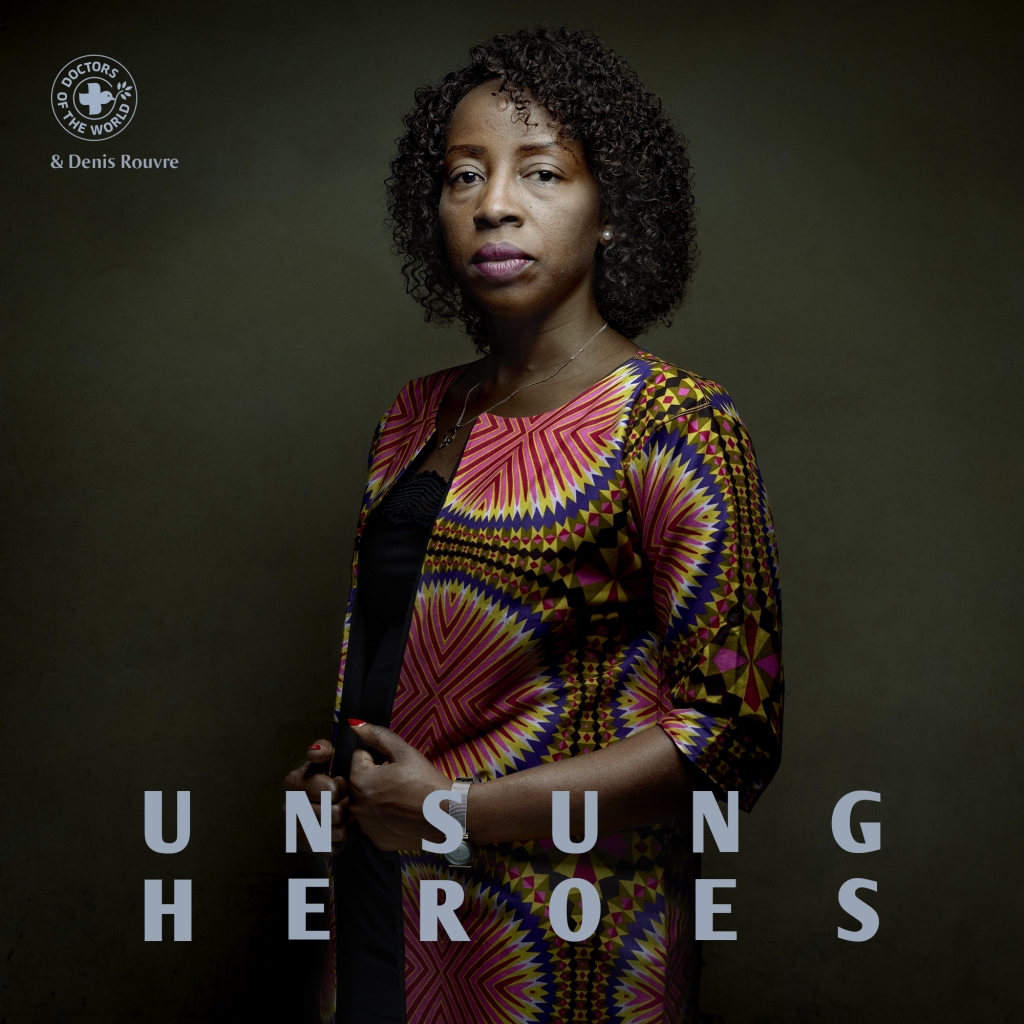
My name is Anny Tenga Modi. I’m 37 and I have an 18-year old daughter. I became an orphan when I was 13.

I run an organisation called AFIA MAMA. I’m a feminist activist campaigning for women and children’s rights, particularly regarding issues of leadership and participation.

I’ve been living in Kinshasa for four years now. I came back to DRC from South Africa where I spent over 10 years as a refugee. I was my father’s princess. He was in politics. He died when I turned 13. It was one year before the genocide and two before the first so-called war of liberation.

As an orphan, I was displaced to a town in east DRC called Goma. Goma is famous not only for the number of wars it has been through, but also for the sexual and gender-based violence women and girls have been victims of for many years. My community rejected me because of my physical appearance. I look as if I belong to a different ethnic group, but I actually don’t.

During the war, when I was 17, I became a mother; a teenage mum. I went to Kinshasa, but the stigma was just as bad. It was a lot of psychological pressure and a lot of pain for a teenager. At the same time, I had to be a mother to my daughter while I was still a child myself.

I went back to school in Kinshasa to get my high school diploma. But even there my appearance didn’t allow me to live freely, so my uncle decided to send me to South Africa where I spent over 10 years as a refugee. Imagine the psychological and moral suffering I had to endure, and then ending up a refugee and victim to xenophobia and racism.

This was the time when I promised myself that I would become a “Voice of the Voiceless”. My activism began by advocating on behalf of women and girls in refugee reception centres. They had no access to basic services even though they were available free of charge, because they couldn’t speak the language, couldn’t pay bribes or didn’t have the resource to fight their way in.

Over time we saw women in my home country who needed me. DRC had by then been dubbed “rape capital” because of the sexual violence being used as a weapon of war. I wanted to return to my country, to speak out for the women and girls left behind, for the ones who continued to live facing the violence and suffering I had endured but had been fortunate enough to escape.

I decided to see how I could contribute, make a difference, spread women’s voices while helping them to improve their status, their well-being, economic empowering and their personal development along with enhancing their participation in the running of their country.

Wars in DRC, especially in the East, are territorial as well as political. Amid the multitude of power struggles at play, it has become clear that women constitute a goldmine because, to some extent, they represent the pride of the men who possess them. One way to humiliate and destroy an enemy and secure control of his space is to target his weak spot by taking ‘his’ women and girls and systematically rape them in front of their men. We’ve turned the children into war machines, killing machines. It is systematic. So, I decided to talk about it until the world recognises this is a genocide. Violence is used to indicate victory over the enemy camp.

DRC has Dr Mukwege, who was recently awarded the Nobel Peace Prize. To us, this is an acknowledgement that this suffering is a reality. That somebody who has contributed to mitigating women’s pain can be recognised in such a way is a real comfort. One day this will be recognised as a genocide. That is why DRC has been labelled “rape capital”.

A woman who’s been raped is dead. Her life is over. After such an appalling experience, her life is gone. She breathes, she gets by, often for the people around her but not for herself. If she has children, a family, she keeps going for them. We live in a patriarchal society with lots of so-called “values” used to define what women should be. How we should behave, and what’s expected of us.

A raped woman carries all the blame – even though she’s the victim. What often gives women strength is the solidarity they have with other women who have experienced similar or other forms of violence. They share their experiences and also their suffering. Some areas benefit from a lot of awareness raising and various humanitarian initiatives, and these help.

Sexual and reproductive health is an issue for women who have endured violence. We have very few hospitals who cater for fistulas. Lack of information and high rates of illiteracy are two of the barriers. Many materials are written in French rather than the vernacular language, which means that even when information is available, women can’t read it because it’s not in a language most of them speak. It doesn’t help a lot.

As Congolese women, our campaigning for the rights of women consists first of getting women’s voices heard and fostering their participation. We are in a country that has a legal system to protect us. This is something I have to acknowledge. On paper, we have lots of rights, but ensuring they are enacted is quite another story. Whenever we bring up our rights women are always in the minority, as female representation in parliament has never exceeded 15%. So the men have decided to reduce the package of rights legally we’re entitled to.

Second, not many women work in the judiciary system, so getting these laws enforced is problematic. We’re helping provide information in the field, for women to know their rights so as to defend them. The more decision makers are conscious of these issues, the more we can hope to gradually change mentalities. We’ve talked about stigma and discrimination, both of which result from people’s mindsets. People aren’t moving away from traditional practices and what they hear in churches.

Unsung Hero: Magdalena

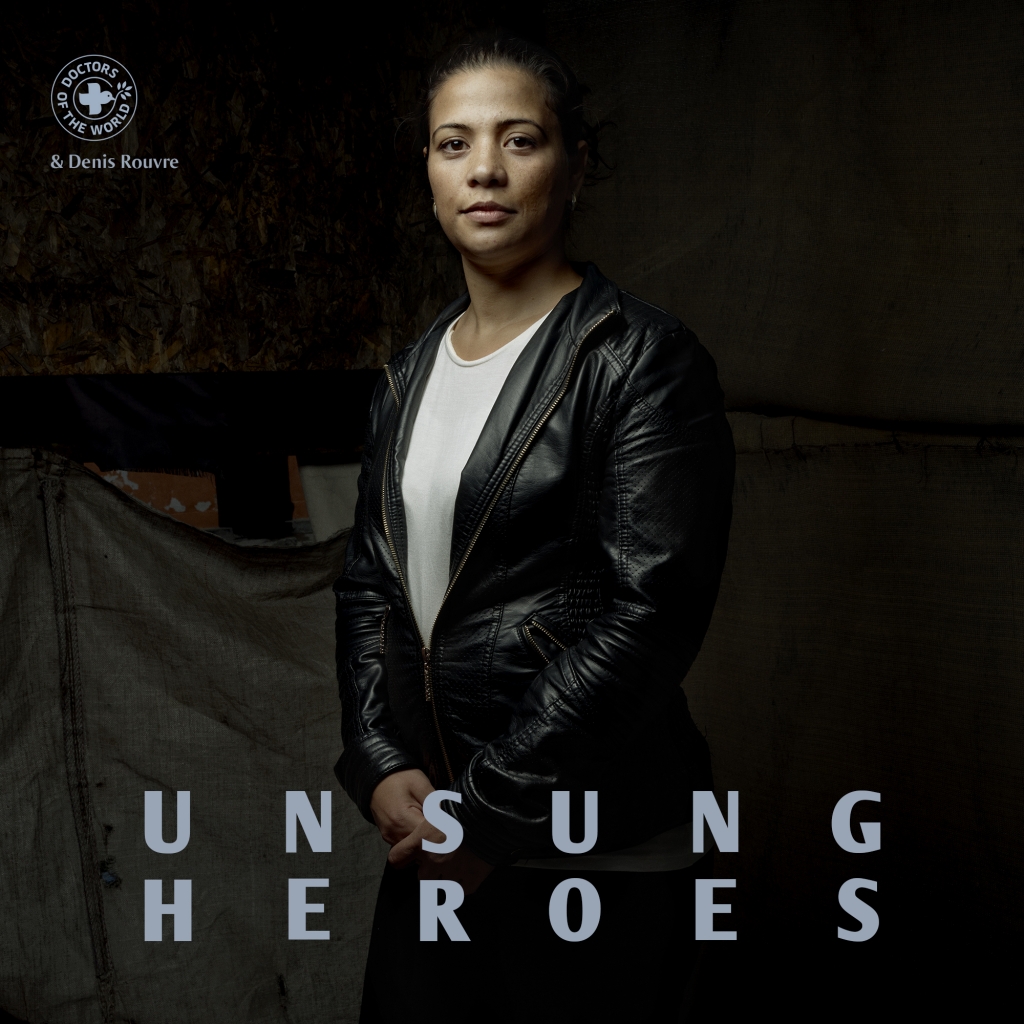
My name is Magdalena Simeonova. I am 28 years old and I have two children who are 9 and 5.

I was born and raised in the Nadezhda neighborhood in the Bulgarian town of Sliven. We only moved out of the ghetto a year ago to settle in Sini Kamani.

I got married when I was 14. Today, I am strongly opposed to people getting married so young, but the environment in the Nadezhda neighborhood influences your decisions. I had lovely parents who wanted me to continue with my education and I had good grades at school, but I was influenced by my environment.

I met my husband and wanted to get married, but my parents were firmly against it. I insisted, and in the end, they stopped fighting it and we got married. My husband was 18 but I was only 14. Marrying young is the tradition in Nadezhda and the people themselves accept it as something normal. They do not see it as a problem and think that that’s how it should be.

Once you are married, as a woman in Nadezhda you are expected to drop out of school. You are supposed to have children and look after your family. In our community, your husband and in-laws expect you to have children straight away. There’s no waiting.

Doctors of the World France was running a project for women on how to prevent unplanned pregnancies and avoid sexually transmitted diseases. I took part and followed their 4-week training course.

At the course I met Fanya Rameva, a lecturer and midwife. After I met her, I knew I wanted to go back to school and pursue higher education.

At the time, my 47 year old father in law had also decided to finally finish his secondary education and so had my husband. I secretly wanted to do the same, but I was scared to tell anyone because I am a woman and women are not allowed to study in Nadezhda.

My husband knew about my dreams though. One day he surprised me and told me that he had enrolled me at night school. At first, everyone was against it. People had problems with us because I had decided to continue my education.

But we never gave up. I completed my secondary education, then I started studying at Varna Medical University and was accepted with a focus on midwifery. I am now in my last year and am completing an internship. Once it is finished, I will graduate.

I don’t want the same thing to happen to my children, so we moved out of the Nadezhda neighborhood. My husband and I will do our best to educate them and make sure they have a better life.

I also decided to work in a center for mothers in the ghetto. I help to motivate them, discuss their dreams, and to make sure they don’t drop out of school.

I feel confident that more women will decide to pursue their education and play their part in society.


Joint INGOs Message – Yemen Pledging Conference, 26 February 2019

Published 26th February 2019

Since the escalation of conflict in Yemen almost four years ago, the humanitarian needs have increased drastically, with an estimated 24 million people or 80% of the population in need of some form of humanitarian assistance in 2019. [1] This figure represents an increase of 2 million people or 10% in just12 months contributed to by an almost total collapse of Yemen’s economy, conflict across the country, violations of international law, as well as increased destruction of civilian infrastructure, notably schools and hospitals, and denial of access to basic services which in turns contribute to deaths by preventable diseases and significant increases in the number of displaced families and in gender-based violence.


Today, Yemen is closer to famine than ever before. A total of 15.9 million people, over 50% of the population, are severely food insecure, despite ongoing humanitarian food assistance. [2] Current estimates show that around a quarter of a million people are living in famine-like conditions. [3]

  •  The number of internally displaced people has reached 3.3 million, 76% of whom are women and children, and this number is expected to increase to 3.9 million in 2019. [4]
  •  7 million people are malnourished, including 2 million children making it one child in five, [5] and more than 1 million pregnant and lactating women. [6]
  • 400,000 children under five years old suffer from severe acute malnutrition (SAM) and an estimated 85,000 children might have already died [7] from malnutrition or other treatable diseases since the beginning of the conflict.
  • 16 million people are in need of WASH assistance and basic health care.
  • 4.1 million children are out of school or in need of educational assistance.
  • 3 million Yemeni women and girls are at risk of gender-based violence [8] and the rate of forced and early marriage of girls has tripled since 2015. [9]
  • The UN estimates that there are 7.5 million Yemenis that humanitarian partners do not have regular access to. [10]


We, both national and international humanitarian organisations in Yemen are working tirelessly to address these needs despite security concerns, access restrictions and other bureaucratic impediments. Collectively we are working in 19 governorates and each year we reach millions of people, including women and children. Yet we are constantly confronted by the scale of human suffering and we struggle to deliver at such a large scale when so many people are in dire need of assistance.


As we approach the 2019 High-Level Pledging Event for Yemen, in addition to requesting adequate levels of funding to implement the UN Yemen Humanitarian Response Plan for this year, we urge donors to:

  • Ensure a broad representation of donors contribute generously to funding the Humanitarian Response Plan in order to guarantee a principled and accountable response. It is critical to have a more inclusive group of donors at the table where decisions on Yemen’s humanitarianresponse are being made.
  • Reconsider the modality and conditionality of funding, including the need for increased flexibility and long-term funding, to enable humanitarian organisations to better respond to this humanitarian crisis while navigating prohibitive bureaucratic impediments and security challenges.
  • Increase funding to specific sectors such as protection, reproductive health and mental health and psychosocial support services, gender-based violence services and education. Investing in these sectors is likely to reduce the long-term damaging impact of the conflict on the Yemeni population, particularly women and children.
  • Invest in early recovery and development in areas that are not directly affected by the conflict to strengthen the resilience of the Yemeni people, allowing them to recover their livelihoods and resume their lives. In addition to the focus on conflict affected areas, donors need to think creatively about supporting other parts of the country which may be less affected by the conflict but are also experiencing insecurity, political instability, weak governance and poor access to resources and services.
  • Use their leverage with national authorities in Sana’a and Aden to negotiate access andremove conditionalities imposed on the humanitarian community. While access constraints have been challenging, NGOs have been able to deliver and save many lives across large parts of the country, and remain the main implementers on the ground. Donors must not stop funding us because of access challenges but rather we need your support to overcome these obstacles and that is why we report them.


As international organisations working in the field we believe that money alone is not the solution for the Yemen crisis, which has been described as the ‘worst humanitarian crisis of our time’. Above all,we urge the donors and the international community to support measures that protect Yemeni civilians, demand accountability for violations and disregard for the laws of war, along with peace negotiations and pressure their allies to find a peaceful political solution to the conflict in Yemen.Whilst only peace can end the suffering of the Yemeni people, humanitarian assistance must not be contingent on the peace process. The road to peace in Yemen is long with many steps ahead, but people are suffering now. Humanitarian and early recovery assistance will still be required for years to come to recover the damage that has been done during the years of war, and the international community must not lose any time to continue to sustainably and comprehensively address the needs of the Yemeni people.


page3image544page3image712page3image880page3image1048page3image1216page3image1384page3image1552page3image1720page3image1888page3image2056page3image2224page3image2392page3image2560page3image2728page3image2896page3image3064page3image3232page3image3400page3image3568page3image3736


[1] UN ‘ Overview of the Humanitarian Needs in Yemen’

[2] Yemen: Acute Food Insecurity Situation December 2018 – January 2019, available at: http://www.ipcinfo.org/ipc-country-analysis/details-map/en/c/115185

[3] This means they are in IPC category 5.

[4] https://reliefweb.int/sites/reliefweb.int/files/resources/GHO2019.pdf5 Nutrition Cluster Data

[6] https://reliefweb.int/sites/reliefweb.int/files/resources/GHO2019.pdf

[7] Save PR

[8] UNFPA Humanitarian Response Plan in Yemen 2018, available at:

https://yemen.unfpa.org/sites/default/files/pub- pdf/UNFPA%20Yemen%202018%20Respone%20brochure%20-%20English%20- %20printed%20final.compressed.pdf

[9] Female respondents aged 15 to 49 years in six governorates. UNICEF, Falling through the cracks. The Children of Yemen, 2017.

[10] Famine Action Mechanism Workshop, Amman, January 24, 2019.

Nobi, 42 – Testimony of Rohingya

Published 22nd February 2019

As I walked with him through the camp, we could hear the residents call: “Nobi vai!” (Brother Nobi!).
Nobi is undoubtedly very popular in the area. As a leader among Doctors of the World’s volunteers, he is also a major pillar in community work. Nevertheless, his gestures and words are humble, smart, and calm. He discusses quietly about the need for a clinic for the inhabitants, but then he wells up as he starts to talk about his 2-year-old son. Being a father, a community leader, and a community worker is a heavy burden. His warm human nature feels like a healing energy for the inhabitants of the camp who have experienced unimaginable hardship and fear.
Since January 2018, Nobi has been participating and helping the Rohingya community by conducting health education activities. Ranging from disaster prevention and first aid to hygiene education, vaccination, family planning, maternal and newborn health, diarrhea, malaria, and dengue fever, many  different topics and issues have been covered in the activities.
Akiko, Doctors of the World’s nurse


Nobi’s Story

I think that health education is necessary for the people living here. How can we live healthily here without knowledge? Clean water and hygiene education are important.


There is a long distance between the area we live and the clinic, so most people don’t go to the hospital, even when they are sick. It is also hard to get medicines. Many households have small children and for them it is difficult to visit a clinic which is far away. Sometimes children are left alone in the house and one can hear their non-stop crying. Sometimes, as I drive on these trails, I see accidents involving cars and rickshaws. It makes me think that we definitely need a clinic nearby.

I arrived here soon after August 25th, 2017. It was forbidden to cross the border from Myanmar to Bangladesh, so I hiked across the mountains with my family. During the rainy season the river too is dangerous and we thought that there will not be any army guards in the mountains, so we chose that route to escape. It took us six days to come here.

It was really difficult to escape with my father. He has a paralysis and was 103 years old at the time. I had to use a blanket as a stretcher. I have a two-year-old son, but he had to walk alone. I felt very guilty because I made my son witness such harshness, and no one offered us any help.

We crossed the border with this heavy feeling. In the middle of nowhere during our escape, we saw a woman giving birth at the roadside.

In Myanmar, I lived in Maungdaw. The reasons why we left was not shortage of food. The only reason why we decided to leave was to escape Myanmar government forces’ cruel violence. Innocent children and pregnant women were killed. Women were raped.

I am currently living with my family in the camp. Both my father and my 85-year-old mother are fine. But thinking about those events is very hard. I am grateful that you gave me the opportunity to speak. Thank you

“There is not a lot of clear guidance about what to do…” Practice Manager, Sandra Connolly

Safe Surgery case study: Beckett House Practice, Lambeth, London


“Patients often come back to the practice when they’re struggling to get help elsewhere in the system and not just in the NHS, but also government services such as housing and benefits services, as they tend to have more of a relationship with us”


Beckett House Practice, in Lambeth, London, was one of the first Safe Surgeries to come on board last year. Our GP Champion, Dr Katherine Taylor, spoke to Practice Manager Sandra Connolly about their experiences of providing care in their community.

Beckett House has had an inclusive patient registration policy for a long time, which didn’t require patients to produce documentation to register. So for them, the decision to become a Safe Surgery fitted well with their ethos of making the registration process as straightforward as possible.

Despite this experience, the team found the in-practice Safe Surgeries training useful to inform them about good practice for healthcare access, in a format that was easier to understand than all the complex guidance out there.

Reflecting in particular on challenges around registering patients with no address, Sandra explained how her practice tried to strike a balance and prioritise access overall:

 “There is not a lot of clear guidance about what to do with people where there is difficulty putting an address down, so some practices use the surgery address… Usually most people have some sort of address, e.g. support centre, hostel, a friend, or someone they can put down, but I think it is quite a challenge to keep in touch with those patients to make sure you can contact them in an emergency.”

Sandra also underlined how valued good face-to-face interpreters were to her practice’s work:

“Having good face to face interpreters available is important to us. There is a big push towards more phone interpreting, which is good to have in emergencies but trickier in day to day consultations”.

In terms of registering patients without proof of ID or address documents, Sandra emphasised that her team had not found this difficult to implement at all:

“In fact I can’t recall an issue we’ve had with a patient, or when their not having produced ID at reception has caused a significant problem.”

In fact, as a Practice Manager she found that not insisting on document checks was beneficial not only to patients, but to her reception team too:

“It takes the pressure off receptionists, around checking documents and trying to verify IDs and entitlement: that’s not really their expertise and it’s quite a difficult position to put them in, to have these conversations, so I think our receptionists vastly prefer not having to deal with those issues.”


Valentines to the Clinic

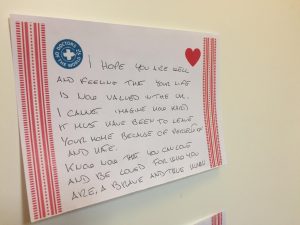
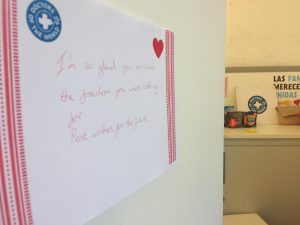
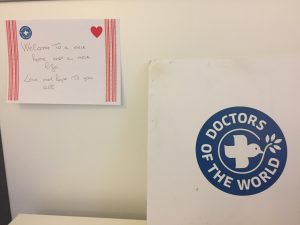
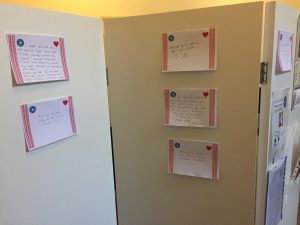
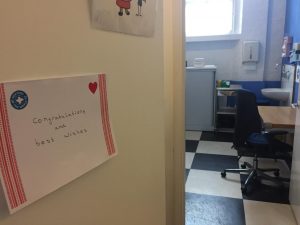
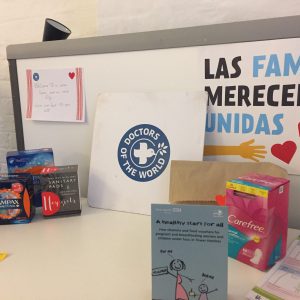
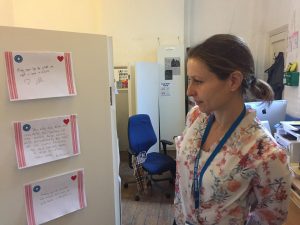
This Valentine’s Day, the clinic was filled with wonderful Valentines messages from Doctors of the World’s supporters.

Heart-warming words of peace, love, and support to those facing barriers to access healthcare. For many, this period is one of longing for the loved ones they were forced to leave behind.

Thanks to all those who participated and made this week a very special one special one.


Joint statement on Sending Humanitarian Aid to Venezuela

Published 15th February 2019

Bogota, 7th of February 2019


RE: Sending Humanitarian Aid to Venezuela


The Humanitarian INGO Forum in Colombia calls on all States to maintain the humanitarian character of aid in order to save lives, alleviate suffering, restore and protect human rights, and preserve the human dignity of persons who are victims of conflicts, complex crises and/or natural disasters. In this context, the Forum would like to express its concerns about the methods through which humanitarian aid is planned to be sent from Colombia to Venezuela.


Therefore, we would like to remind concerned parties of the situation in Venezuela that:

  • Humanitarian actors work in adherence to the humanitarian principles of humanity, impartiality, neutrality and independence.
  • We remind interested parties that any potential political use of humanitarian aid can generate risks, in particular for those the aid is intended to support, if this use is not based on technical and objective criteria.
  • The Paris Declaration on Aid Effectiveness establishes global commitments for donor and recipient states in order to improve the delivery and management of aid, with the aim of making it more efficient and transparent.
  • We invoke Resolution 71/129 of the UN General Assembly of December 8, 2016, on the safety of humanitarian workers, which reminds us that states should not regulate their work.
  • Humanitarian aid must contribute to the maintaining of peace, and the civil (not military) character of humanitarian aid must be protected.


We call on all concerned parties to: avoid any action that may cause harm; to focus aid on the needs of persons in situations of vulnerability and suffering; and to contribute to the stability and maintenance of peace.


5 reasons why the Mobile Clinic is a game changer (and 2 ways to support it)

The Bethnal Green clinic helps women, men, and children in vulnerable circumstances be seen by a doctor and register with a GP. Now, our very first Mobile Clinic has been launched into full service to support it.

But will this medical van have a real impact?

Well, here are 5 reasons why it will revolutionise our work!


1. The East London clinic is full

Our clinic is operating at full capacity. Every day, volunteers fill the consultation rooms, but the space is limited and we have to turn people away. With the Mobile Clinic fully operational, more people will have the chance to access our much-needed service.


2. Healthcare is better when it’s local

Our patients sometimes have to borrow money and travel long distances to reach our clinic. It’s common for our patients to spend hours on different buses to save the extra pounds that a quicker tube journey costs. These journeys can take a heavy toll, particularly if one is already feeling debilitated and ill. With a mobile clinic visiting all corners of London, long and expensive trips to east London will be avoided!


3. Teaming up for impact

The Mobile Clinic will drive to different service providers so our patients can access more services in the same place! Facing challenges with immigration applications and a life marked by insecurity, being able to see the doctor and register with GP while accessing legal advice, your foodbank or your ESOL class can make a huge difference.


4. Spreading the word about healthcare rights

Providing services around London can also help our reach. We will empower more patients than ever to access to healthcare! Spreading the word, more patients will be able to access the primary healthcare they are entitled to.


5. From GP appointments to HIV screening

The Mobile Clinic is not only a space for medical consultations and social assessments, but it’s also set up to carry out HIV and STI screening.


So, the Mobile Clinic is going to completely revolutionise our work.  But we need a bit of support. How?


1. Work with us on the Mobile Clinic

Do you want to support people in need access healthcare? Then join us today! We are looking for clinical and non-clinical volunteers to run our activities on the mobile clinic.


2. Donate

Maybe you can’t volunteer, but you can still help us run our activities by setting up regular donations or on a one-off basis. Please, consider donating today.


People in vulnerable circumstances across London struggle to access the healthcare they need. Help us reach them!


Testimony of Rohingya

Published 8th February 2019

On August 25, 2017, Myanmar Army conducted violent raids in Rakhine State (Western Myanmar).

The number of people who fled to Bangladesh exceeded 700,000, crossing the border from Western Rakhine State, where Rohingya live, to Bangladesh. 700,000 people escaped a large-scale sweeping operation to save their lives.

They became refugees, leaving behind their past and present life, for a future that is mostly uncertain. Girls never talk about their future dreams, they do not even grasp the meaning of the question. Women who underwent big trauma are still frightened. Men tormented because they cannot protect their family from suffering.

We must echo their voices and convey their testimony.

Doctors of the World Japan is working in the camps in Bangladesh. They have collected testimonies and stories from Rohingya refugees. Please, help us echo their voices.

‘Vulnerable migrants and wellbeing study’ highlights barriers to healthcare for migrants

Published 6th February 2019

A pilot study by the University of Birmingham has identified major barriers to healthcare access for migrants, including denial of entitlements, administrative issues, lack of understanding, language barriers and fears of being arrested. Funded by the Nuffield Foundation, the ‘Vulnerable migrants and wellbeing’ pilot study, is led by Dr Laurence Lessard-Phillips from the Institute for Research into Superdiversity (IRiS).

The team investigated gaps in knowledge regarding the relationship between vulnerability and wellbeing, by analysing six years of data provided by Doctors of the World UK , a registered charity that provides medical care and support to excluded people.

Most of the service users of Doctors of the World faced vulnerability and had difficulties accessing the NHS and other statutory services. The principal aim of this project was to build an evidence base to study the wellbeing status of migrants living in the UK who experience vulnerability, and explore factors that may contribute to shaping this.

Key findings of the study are:
  •  Access to healthcare is a major issue for service users, with large numbers reporting that they did not even attempt to access healthcare. When service users who are not registered with a GP seek to access care, they tended to use Accident and Emergency and Walk-in Centres.
  •  The most frequently mentioned barriers to healthcare access include administrative issues, lack of understanding, language barriers, fears of being arrested, and denial of entitlements.
  • The majority of service users were living below the poverty line, with a small proportion of service users reporting an activity that allowed them to earn a living.
  • In terms of living conditions, over a third of service users reported that their accommodation was not stable. Research lead Dr Laurence Lessard-Phillips said ‘the data from DOTW gives us a unique opportunity to explore issues related to vulnerability and wellbeing, especially over a period that has seen increased restrictions in terms of access to services. Our preliminary analyses highlight areas of relevance for research, policy, and practice that we are keen to explore further’.

The data covered the period from 2011 to 2016 which comprised a total of 8,489 unique consultations across the years, with most service users visiting DOTW UK clinics once. The most frequently mentioned reason for the visit was for administrative, legal, or for social issues. 48.3% of service users were female, and 51.7% male, with an average age of 35.6 years, with most users living in the vicinity of the DOTW UK clinics. With regards to immigration status, a large proportion of service users were undocumented, having been in the UK for an average of 5.6 years since last arrival, and had claimed (or planned to claim) asylum.

Lucy Jones, Director of Programmes at DOTW explained ‘Doctors of the World’s medical volunteers are seeing every day patients who are turned away from the NHS or too worried to not present for care at all as a result of government policy. This new report gives even more evidence of a rising problem resulting in vulnerable people including those who have been through the asylum process or are victims of trafficking not getting treatment, the government needs to take immediate action to stop further unnecessary harm.’

The results presented in this report highlight the richness of the data collected by DOTW UK. This data warrants further analysis, especially with regard to exploring some of the results in more detail for the various groups, demographics and wellbeing indicators.

Find the full report here.

Cancer treatments: we must serve patients, not private interests

Published 4th February 2019

Dr Françoise Sivignon, President of Doctors of the World, France.

The number of new cases of cancer continues to rise, reaching 3.7 million a year in Europe. Behind this increase lies another equally worrying trend: the rising costs of new treatments. It is no longer unusual to see cancer treatments costing between €50,000 and €90,000 per patient, per year. Worse still, prices reached new heights a few months ago, with the introduction of CAR-T therapies, billed at between €300,000 and €350,000 per patient.

Given this situation, healthcare systems are finding it increasingly difficult to ensure everyone has access to the best possible drugs. The exorbitant sums charged for cancer drugs approved by States today will constitute barriers to accessing healthcare tomorrow.

In other words, at these price levels, healthcare systems will no longer be able to pay for every patient, forcing some to be excluded from treatment.

Abuse of the patent system

These exorbitant prices are made possible by a patent system that ensures industrial pharmaceutical companies can retain their twenty-year-old monopolies. Thus, it guarantees that there will be no competition from generic and biosimilar drugs. For sixty years, drug patents in Europe have been organised as a means of promoting research and development. This system has deviated significantly from its original principle and is now subject to abuse.

The fact is that the major pharmaceutical firms invest little in research. New compounds are actually created by start-ups, which are subsequently bought up at high prices – often in the region of billions of euros – by industrial drug companies. For example, Yescarta®, Gilead’s CAR-T therapy, was not developed by this firm but by a different company, Kite Pharma, which was acquired for 12 billion dollars in 2017.

Sixty years after their creation, pharmaceutical patents are now principally financial assets and a source of income and profits. Cancer research has become as much a potential growth sector as a battle for health. It is clear that the sums billed to States include the cost of any financial transactions relating to mergers and acquisitions.

When individual citizens pay their taxes and national insurance contributions, they are therefore also helping finance these speculative financial deals. By accepting drug costs based on the misuse of patents, States make themselves complicit in the abuse of public taxes for private gain, at the expense of the health and lives of those who are ill.

Putting access to care back at the heart of the system

None of this is inevitable, however. When arrangements for pharmaceutical patents were first put in place, States voluntarily adopted measures in the form of compulsory licensing to circumvent monopolies when public health demanded it. This tool, which has since been recognised in international law, is the reminder that a reciprocal condition of drug patents is the fundamental right to access health services.

It is the duty of governments to ensure that their healthcare systems are sustainable. To mark this year’s World Cancer Day, we are therefore calling on them to guarantee that access to healthcare for all takes precedence over the private interests of the few and to use the legal tools and means at their disposal to make this happen.

Nothing less than our health and our lives are at stake.
x

With your support, Doctors of the World will make sure nobody suffers or dies due to lack of access to healthcare.