Nine Years On, Still No Justice for Grenfell’s Survivors
Published 14th June 2026
Nine years ago today, a fire broke out in a 24-storey residential tower in North Kensington. Grenfell burned for 60 hours. 72 people lost their lives, many more were injured, and hundreds were displaced from their homes.
The tragedy later exposed serious failings in building safety and regulation by the tenant management organisation, responsible for managing the building, despite repeated concerns about fire safety raised by residents.
In the aftermath, Doctors of the World UK launched an emergency clinic for survivors.
This followed reports from volunteers, including Dr Paquita de Zulueta, that people seeking safety and without documents who had lived in the tower were avoiding official relief centres and NHS services. They feared their personal information could be shared with the Home Office and used for immigration enforcement.
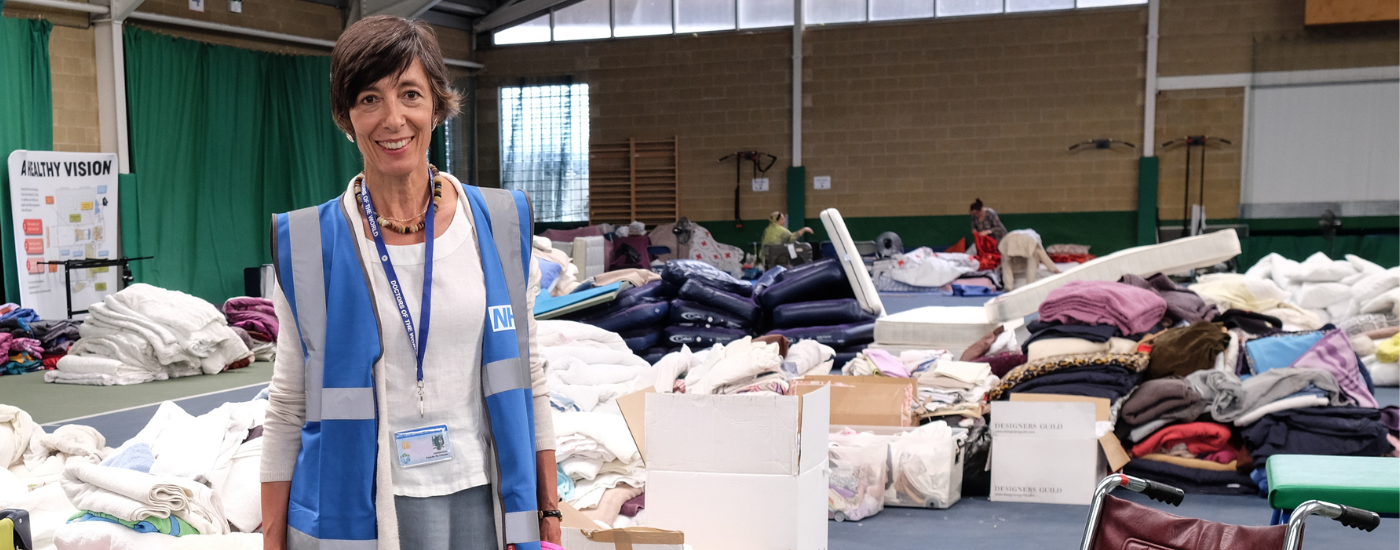
To mark the anniversary, we spoke with Dr Paquita de Zulueta, a GP and medical lecturer at Imperial College London, who worked as a clinical volunteer at a relief hub, temporarily set up by the local authority near the Tower. In 2017, having supported Doctors of the World UK as a clinical volunteer at our London Clinic for 10 years, Paquita helped coordinate our emergency response, treating survivors and helping people access care.
Immediate response
“It was only that morning when I looked at the news, that I realised, that this was happening where I lived. I was horrified and had to get back to London as soon as I could to help.”
When Paquita arrived at Grenfell, ash was still falling. A temporary medical response zone had been set up nearby. “There was no examination couch, there was no screen, no medication, nothing. There were a lot of people in a terrible state of disorientation, they hadn’t got their medication with them, they hadn’t got their clothes.”
With the help of the out-of-hours centre, Dr de Zulueta coordinated the urgent response, managing equipment, providing prescriptions, and delivering psychological first aid, all to offer immediate and necessary care. Ambulances and appropriate services were called if cases required. The priority, she recalled, was helping people regain a “sense of hope”.
As GP lead for the NHS outreach team, she visited hotels housing survivors, checked on families, and connected people with local GPs.
Healthcare exclusion, housing and inequality
As Paquita spoke with survivors, one concern surfaced repeatedly. Fear that NHS-held information could be shared with the Home Office and used for immigration enforcement. For some people, that fear became a barrier to accessing healthcare. ‘There were definitely people who were frightened of approaching healthcare professionals, because they felt we were part of the system’, Paquita highlighted.
In response, she worked with Doctors of the World UK’s London Clinic Director to establish a healthcare response for people who could not safely approach the NHS. Having already lost homes, possessions and, in many cases, loved ones, some survivors were also too afraid to seek care. Dr de Zulueta recalled supporting a young woman who had been trafficked: ‘the social worker and I were working closely together to see whether she could be rehoused in a safe way, but the Home Office were onto her’.
Concerns about personal information being shared between public authorities, local councils and the Home Office became a barrier to accessing healthcare. Many bereaved relatives who travelled from overseas also needed support registering with a GP and accessing appointments, often facing uncertainty about their entitlement to free NHS care.
The wider lessons
The Grenfell disaster unfolded in one of London’s most unequal boroughs, marked by stark inequalities in income, housing, education and health outcomes.
Longstanding frustrations remain among residents who feel their concerns were ignored and pushed to the margins. Lower-income communities are more likely to live in lower-quality housing which has a direct link to poor health outcomes. Paquita described this as an important backdrop to the Grenfell disaster. For refugees and people seeking asylum, suitable accommodation is often difficult to secure. Paquita highlights how these communities ‘often get the grottiest housing that’s available that no one else wants to live in’, she said, ‘it’s grossly inadequate’.
The same systemic inequalities that left many residents living in unsafe housing can also influence access to healthcare. Migrants, refugees and low-income households often face overlapping barriers across both systems, increasing vulnerability before and after crises.
As our conversation drew to a close, Paquita reflected on the increasingly hostile rhetoric around immigration and belonging. Many people are living in a ‘liminal space’, wanting to work, contribute, and belong to the societies they live without being able to.
She called for a ‘radical rethink for safe, affordable housing’ stating ‘What is really important for people in the healing process is moral repair, reparative justice… and it is nine years now, nearly, and we still have not had a single person charged.”
