
We have developed a set of templates to support clinicians in primary care to respond to common requests and provide letters to people seeking asylum and refugees. These resources aim to reduce pressure on busy workloads while ensuring patients receive the support they need.
Ongoing changes in the asylum system have increased the need for medical evidence to inform or challenge Home Office decisions and accommodation placements.
When a person’s health is impacted by their accommodation and other circumstances, a letter from their GP – or relevant information from their GP records – can make a significant difference and serve as an effective health intervention.
Refugees and asylum seekers often do not have the money to pay for requests. We recommend that GP practices offer these letters free of charge.
The templates and accompanying guidance, developed by a team of clinicians at DOTW UK and Dr Jo Miller at TortureID, are suggestions for how to respond to common requests based on practical GP experience.
Template Letters
Below, you will find the template letters for common requests. Each template should be reviewed, agreed upon, and adapted to the needs of your patients, practice or service.
As a clinician, if you are concerned about risks, there is scope to make sure those concerns are communicated via this document.
This is a summary of the templates you will be able to download:
Supporting Documents
• Patient letter request form
• Guidance for GPs on the use of medical records in asylum claims
Accommodation
• Letter about damp or mould
• Information from GP records to assist with food or diet problems
• Information from GP records to assist with Home Office accommodation issues
• Letter about problems with housing conditions
• Information from GP records to expedite council accommodation
Asylum claims
• Letter about delays in asylum claim and effects on health
• GP letter requested by a representative or voluntary sector
• Information from GP record requested by patient for an asylum related matter
• Letter about frequency of immigration reporting
Other
• Safeguarding letter
• Concessionary travel letter
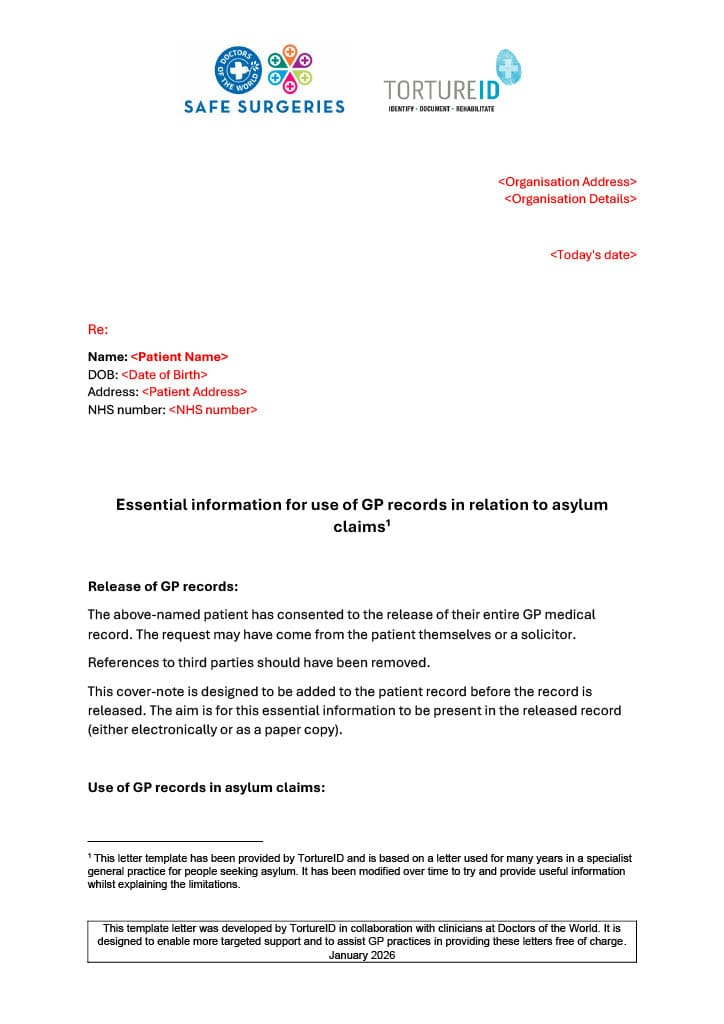
Guidance for GPs on the use of medical records in asylum claims
Please refer to this document for important information on the use of GP records in asylum claims.


Patient letter request form
Patients (or VCSE representing them) can fill out this template to request any of the letters below from the GP practice.
Accommodation

Letter about damp or mould
When the patient reports a problem about damp or mould in their accommodation. To show the negative health impact of poor air quality in the patient’s home.

Information from GP records to assist with food or diet problems
These are usually requested by people seeking asylum and refugees living in hotels who are not allowed access to cooking facilities to make their own food.

Information from GP records to expedite council accommodation
Please note some councils have their own forms for this type of request. They can be found on the relevant council’s website. Please only use this letter template when appropriate forms are not provided by the council.
Individuals are sometimes given little time to find accommodation once receiving a decision on their asylum claim. This will result in urgent requests for information to help pressurised housing departments decide who is priority for the limited amount of Council housing they have.

Letter about problems with housing conditions
When the patient reports any issue with their accommodation (except damp or mould as there is a separate template for this). To demonstrate the negative impact that these problems have on the patient’s health.

Information from GP records to assist with Home Office accommodation issues
To use this template when the patient is requesting transfer / to stay in a specific area / not room share / is not suitable to be accommodated in large sites.
Please be aware that these requests to influence asylum accommodation decisions can be very challenging to meet due to shortages of accommodation. There are criteria in the letter templates, which have been set by the Home Office.
Many people are told that they need a letter from a doctor if they want to make an accommodation related request and this creates an expectation. It is important for the patient to be aware that, if they are successful in getting their request met, should the result be less satisfactory than they hoped, a change back to the original arrangement is unlikely to be possible.
Asylum claims

Letter about delays in asylum claim and impact on health
Use this letter when a patient’s delayed asylum claim is affecting, or may affect, their physical or mental health.

GP letter requested by a representative or voluntary sector
When a representative or voluntary sector organisation requests a letter to support a patient’s asylum claim (further guidance at the end of the template).

Information from GP record requested by patient
For letters requested by a patient to support an asylum claim with medical information (further guidance at the end of the template).

Letter about frequency of immigration reporting
Use this letter when the frequency of immigration reporting is affecting a patient’s health.
Other

Safeguarding letter
When there’s safeguarding concerns with regards to a patient in Home Office accommodation. To share safeguarding concerns with the Home Office (with patient’s consent), letter to be sent to: asylumsafeguarding@homeoffice.gov.uk
It is best practice not to include the asylum safeguarding email address in the body of the letter.
If local safeguarding leads need to be contacted too, their contact details will have to be sought locally.

Concessionary travel letter
Check your local council’s travel pass criteria and use their supporting medical evidence form if available amending the template accordingly.
Notes:
Job centre enquiries: A letter is not required. Individuals should request a FIT note instead.
Benefits enquiries: Letters are not required, as benefits agencies contact the GP directly for any medical reports.
If you are a clinician interested in specialist assessment and documentation of human rights abuses, please contact admin@tortureid.org to find out more.
